

Riyadh’s history is closely connected to the formation of the Saudi state, from the establishment of the First Saudi State in Diriyah in 1727 to the recapture of Riyadh in 1902. Today, visitors can explore this history through restored palaces, traditional markets, historic neighborhoods, and museums that preserve important parts of the Kingdom’s cultural heritage.
This guide to the historical places in Riyadh goes beyond a simple list of attractions. It explains the story behind each site, what to see there, how much time to allow, and how to combine nearby landmarks into practical half-day, full-day, and two-day itineraries. Whether you are interested in architecture, museums, or traditional Saudi life, these routes will help you explore the capital’s heritage at a comfortable pace.
Why Riyadh’s History Matters
Riyadh is more than Saudi Arabia’s modern administrative and business center. Its surrounding settlements, historic districts, and restored landmarks tell the story of political change, trade, architecture, and daily life in central Arabia.
Understanding the background of each attraction makes a heritage visit more meaningful. Instead of seeing an old palace or fortress as an isolated building, you can connect it to the people and events that shaped the country.
A Short Timeline: From the First Saudi State to the 1902 Recapture
The story of modern Saudi Arabia is closely linked to two important dates and places.
In 1727, Imam Muhammad bin Saud established the First Saudi State in Diriyah, making the settlement an important political center in the Arabian Peninsula. Its influence expanded during the following decades, and the historic district of At-Turaif became a symbol of this early period.
After the First Saudi State ended in the early nineteenth century, the political center shifted through several stages. Riyadh later became the base of the Second Saudi State under Imam Turki bin Abdullah in 1824.
A major turning point came in 1902, when King Abdulaziz and his companions recaptured Riyadh from the Rashidi forces. The event took place at Masmak Fortress and marked the beginning of the process that eventually led to the unification of the Kingdom of Saudi Arabia in 1932.
These milestones explain why Diriyah and Masmak Fortress are essential stops for anyone interested in Saudi history. Visiting both sites provides a clearer picture of the country’s development across different generations.
Najdi Mud-Brick Architecture Explained
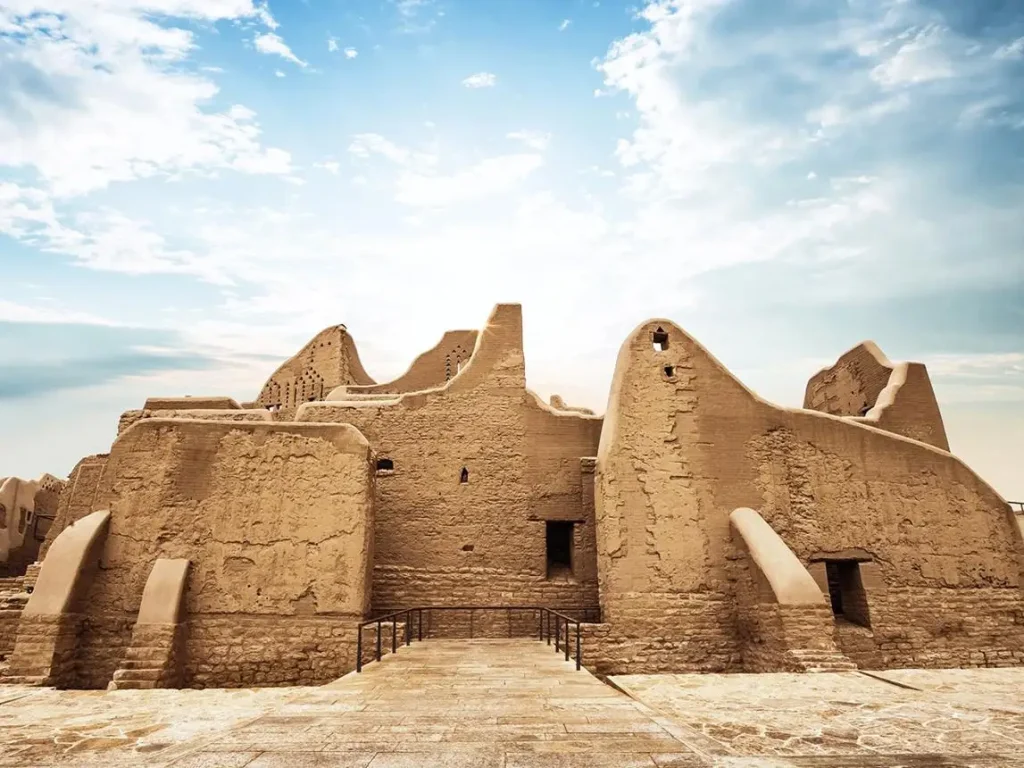
Traditional Najdi architecture developed in response to the climate, available building materials, and social needs of central Arabia. Many historic buildings were constructed using mudbrick, clay, stone, timber, and locally available materials.
Several features distinguish this architectural style:
-
Thick mudbrick walls: Helped reduce the effect of high outdoor temperatures and provided insulation.
-
Small exterior openings: Offered privacy and helped control sunlight entering the rooms.
-
Internal courtyards: Created private outdoor spaces for family activities and ventilation.
-
Decorative geometric details: Added visual character to entrances, windows, and upper sections of buildings.
-
Simple earthy colors: Reflected the natural materials used in construction and the surrounding desert environment.
You can see these features throughout At-Turaif, Murabba Palace, and restored traditional buildings in heritage villages. Looking closely at the walls, courtyards, and entrances helps explain how Najdi architecture combined practicality with local identity.
Riyadh Historical Sites at a Glance (Comparison Table)
The main historical attractions are spread across central Riyadh and the northwest. Planning them by area is the easiest way to reduce driving and leave enough time for each visit.
The following table provides approximate visit durations and practical guidance. Travel times depend on your starting point, traffic, and the day’s road conditions.
| Historical site | Area | Suggested visit time | Best suited for |
|---|---|---|---|
| At-Turaif District | Diriyah | 1.5–2.5 hours | History and architecture enthusiasts |
| Bujairi Terrace | Diriyah | 1–2 hours | Dining and cultural sightseeing |
| Masmak Fortress | Ad-Dirah | 45–75 minutes | First-time visitors and families |
| Souq Al Zal | Ad-Dirah | 45–90 minutes | Shopping and traditional culture |
| Murabba Palace | Al Murabba | 45–75 minutes | Saudi history and architecture |
| King Abdulaziz Historical Center | Al Murabba | 1–2 hours | Cultural sightseeing |
| National Museum | Al Murabba | 1.5–2.5 hours | Families and museum visitors |
| Ushaiqer Heritage Village | Outside Riyadh | 2–3 hours | Heritage and traditional village life |
For most visitors, Masmak Fortress, Souq Al Zal, Murabba Palace, and the National Museum can be combined into a central Riyadh heritage route. Diriyah deserves a separate visit, especially if you want time to explore At-Turaif and enjoy Bujairi Terrace.
Diriyah and At-Turaif: The UNESCO World Heritage Site
Diriyah is one of the most important historical destinations in Saudi Arabia. Located northwest of Riyadh, it was the original home of the First Saudi State and remains closely connected to the country’s national identity.
The most significant part of the historic settlement is At-Turaif, a UNESCO World Heritage Site recognized for its traditional Najdi architecture and historical importance. Its restored buildings, palaces, and narrow streets offer a valuable introduction to the early Saudi state.
What to See Inside At-Turaif
At-Turaif contains the remains of a historic settlement that once served as a political and administrative center. Its architecture reflects the building traditions of Najd, with mudbrick structures, courtyards, defensive features, and decorative details.
As you explore the district, look for:
-
Historic palaces: Buildings associated with the ruling family and the administration of the First Saudi State.
-
Traditional residential structures: These show how families lived within the settlement and how buildings were arranged around shared spaces.
-
Defensive features: The layout and architectural elements reflect the importance of protecting the settlement.
-
Restored pathways and public spaces: These help visitors understand the relationship between the historic buildings and the surrounding landscape.
-
Interpretive displays: Information at selected locations explains the district’s history and the role of Diriyah in the development of the Saudi state.
Allow enough time to explore rather than rushing through the site for photographs. The historic architecture is more interesting when you understand how the buildings were used and how the settlement functioned.
Al Bujairi and Wadi Hanifah Views
Bujairi Terrace is a modern dining and leisure destination located near the historic district. It combines restaurants, cafés, and visitor facilities with views of the surrounding heritage landscape.
After exploring At-Turaif, Bujairi Terrace is a convenient place to take a break, enjoy traditional or contemporary dining, and spend time in the area without needing to drive elsewhere.
The wider Diriyah landscape is also connected to Wadi Hanifah, a natural valley that runs through the Riyadh region. Its presence helps explain why this location was suitable for settlement and agriculture in the past.
Visitors can enjoy views of the valley and the surrounding architecture from selected areas. Follow marked routes and visitor instructions, particularly around restored heritage structures and restricted sections.
Best Time to Visit Diriyah
Late afternoon and evening are generally the most comfortable times to visit Diriyah, particularly during the warmer months. Arriving later in the day also allows you to experience the contrast between the historic buildings in daylight and the illuminated surroundings after sunset.
Winter, from approximately November to March, is usually more suitable for outdoor heritage sightseeing because temperatures are generally milder.
Check the official Diriyah visitor information before your visit. At-Turaif and Bujairi Terrace may follow different schedules, and ticketing arrangements can change according to the season, events, and visitor programs.
For a more organized experience, a local Diriyah heritage visit can help you combine the main historic attractions with time for dining and photography.
Masmak Fortress: Where the 1902 Recapture Happened
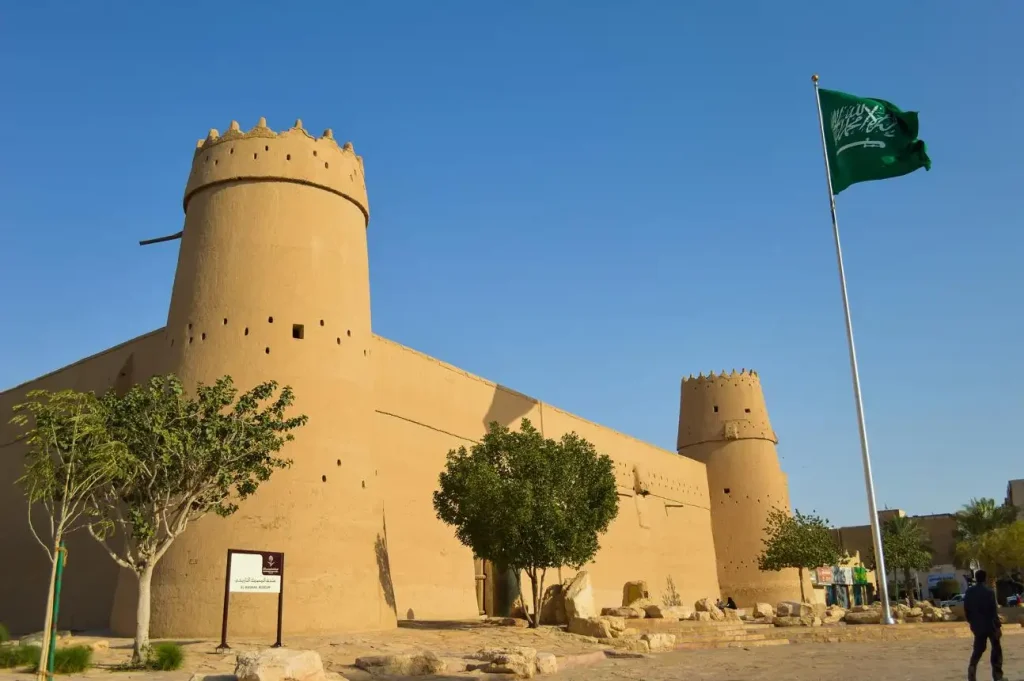
Masmak Fortress is one of the most recognizable historical landmarks in Riyadh. Located in the old city center, it is closely associated with the recapture of Riyadh by King Abdulaziz in 1902.
Its historical importance makes it an essential stop for visitors who want to understand how the modern Saudi state began.
The Story Behind the Fortress
Masmak Fortress was built in the nineteenth century as a defensive structure. Its thick walls, towers, and traditional construction reflect the military and architectural needs of the period.
Its most famous historical moment came in January 1902, when King Abdulaziz and his companions launched the operation to recapture Riyadh. The confrontation took place at the fortress and became a defining event in the history of the Kingdom.
The event is particularly important because it marked the beginning of King Abdulaziz’s campaign to restore his family’s rule and unify the country.
Today, Masmak is not simply an old defensive building. It represents a turning point in Saudi history and provides a connection between the historic center of Riyadh and the formation of the modern Kingdom.
What You Will See Inside the Museum
The fortress has been adapted into a museum where visitors can learn about the 1902 recapture and the history of Riyadh.
Inside, you can explore:
-
Historical photographs and documents related to the fortress.
-
Displays explaining the recapture of Riyadh.
-
Traditional weapons and objects connected to the period.
-
Architectural features that show how the fortress was designed for defense.
-
Exhibitions introducing the history of the city and the development of the Saudi state.
Pay attention to the traditional doors, thick walls, towers, and central courtyard. These details help explain how the fortress functioned before becoming a museum.
A visit usually takes less than an hour, making Masmak easy to combine with Souq Al Zal and other attractions in Ad-Dirah.
Souq Al Zal (Deerah Souq) and Old Riyadh
Souq Al Zal, also known as Deerah Souq, is one of the traditional markets that preserve the commercial atmosphere of old Riyadh. It is located close to Masmak Fortress, making it a natural next stop on a historical walking route.
The market offers a different experience from modern shopping centers, with traditional goods, local trading customs, and shops that reflect the city’s heritage.
What to Buy and How to Bargain
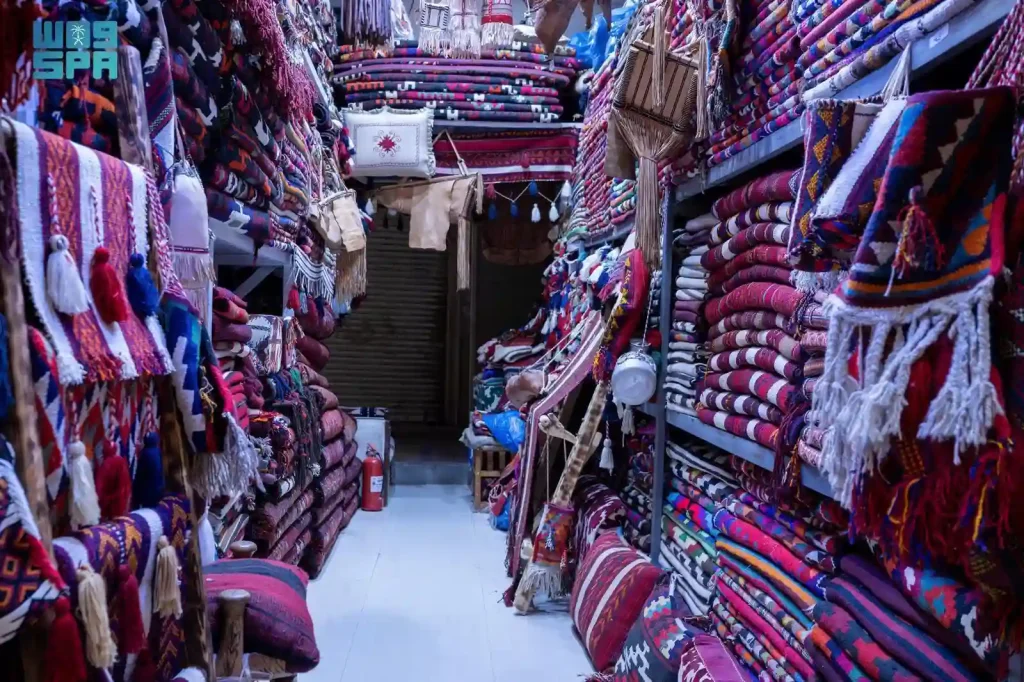
Souq Al Zal is known for products associated with Saudi and Arabian culture. Depending on the shops available during your visit, you may find:
-
Traditional carpets and rugs.
-
Antiques and decorative objects.
-
Traditional coffee pots and serving accessories.
-
Handmade items and heritage-inspired souvenirs.
-
Traditional clothing and accessories.
-
Collectible objects and old household items.
If you are buying something without a fixed price, polite bargaining is part of the shopping experience. Ask about the material, age, and condition of an item before agreeing to buy it, especially when purchasing antiques or collectibles.
It is also useful to compare prices in more than one shop. Keep some cash available for smaller purchases, although payment options differ between individual vendors.
Remember that many shops may pause business around prayer times. If you arrive during a quiet period, allow time for the market to become active again.
Walking Through Al Dirah Neighbourhood
The area around Souq Al Zal offers a glimpse of the historic commercial center of Riyadh. Its traditional market streets and older buildings create a different atmosphere from the city’s modern business districts.
Walking between Masmak Fortress and the market is one of the easiest ways to explore this part of the city. Wear comfortable shoes, stay aware of vehicle movement, and follow local directions when crossing busy streets.
The neighborhood is best explored during daylight or in the late afternoon when shops are active. It can also be combined with a visit to the nearby historical landmarks as part of a wider Riyadh heritage tour.
Murabba Palace and the King Abdulaziz Historical Center
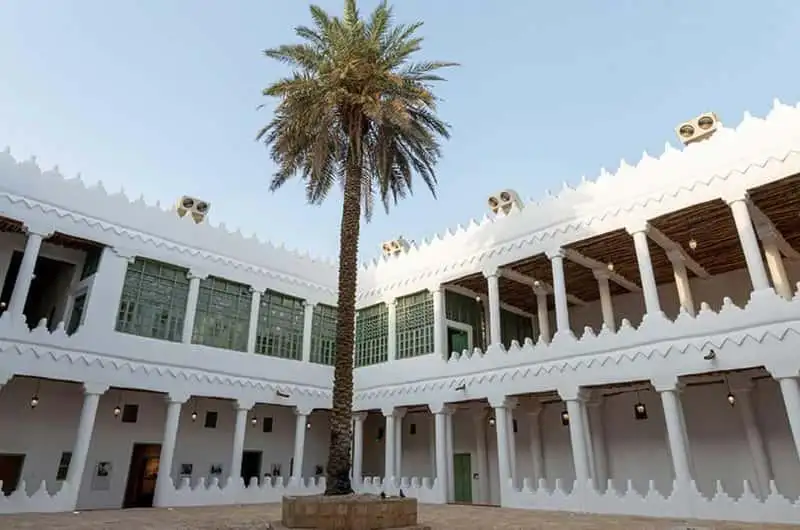
Murabba Palace is an important landmark associated with King Abdulaziz and the development of Riyadh during the early twentieth century. Its construction reflected the expansion of the city beyond its older defensive center and the growing administrative role of the capital.
The palace is known for its traditional architectural design, with courtyards, large rooms, and details that reflect the building methods of its period.
The wider King Abdulaziz Historical Center brings together cultural and historical facilities, landscaped areas, and buildings connected to Saudi heritage. It provides a useful setting for understanding how the country developed during the reign of King Abdulaziz.
Visitors should allow time to explore the palace and the surrounding center rather than treating the visit as a quick photo stop. Access to individual buildings and exhibitions may vary, so check the current visitor arrangements before traveling.
This location is particularly convenient to combine with the National Museum because both attractions are within the Al Murabba area.
The National Museum of Saudi Arabia
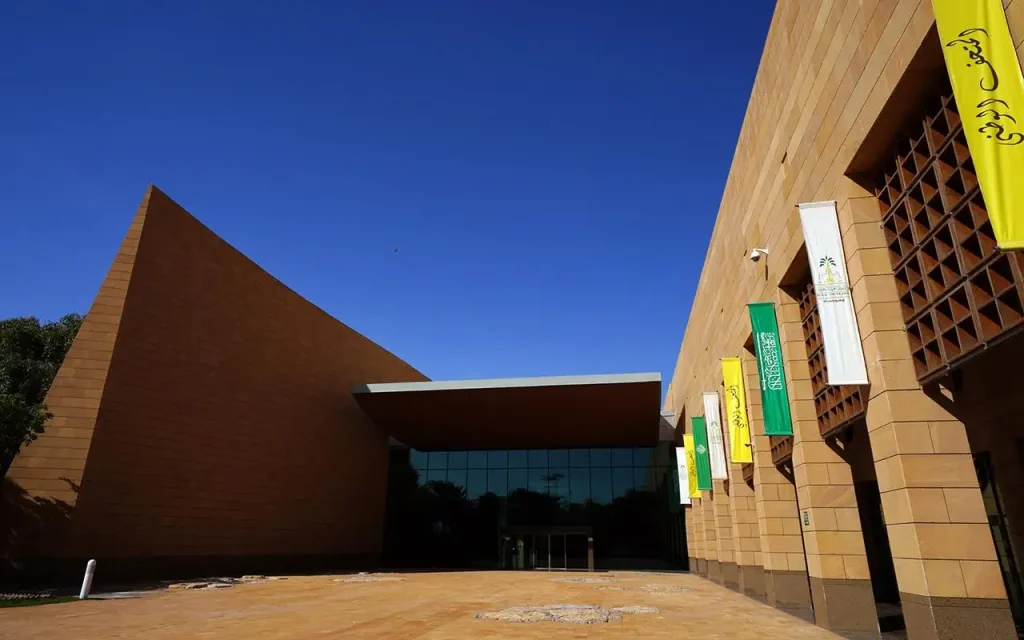
The National Museum of Saudi Arabia is one of the most informative cultural attractions in Riyadh. Located within the King Abdulaziz Historical Center, it introduces visitors to the history, geography, culture, and development of the Arabian Peninsula and the Kingdom.
The museum is organized into eight main galleries, taking visitors through different periods and themes, from the formation of the universe and early human history to the Arabian Peninsula, the rise of Islam, and the modern Saudi state.
The exhibitions use archaeological objects, manuscripts, models, photographs, and multimedia displays to explain historical events and cultural changes. This makes the museum suitable for visitors with different levels of knowledge, including families and international travelers.
Allow around 1.5 to 2.5 hours for a comfortable visit. If you are particularly interested in archaeology or Saudi history, you may want to spend longer.
Admission information and operating hours should be checked through the museum’s official visitor channels before arrival. Published information can differ across travel websites, so avoid relying on old prices or schedules.
Heritage Day Trips Beyond Riyadh
Riyadh’s historical attractions are not limited to the city itself. The surrounding region includes traditional settlements and heritage destinations that offer a different perspective on life in central Saudi Arabia.
These trips require more time and transportation planning than visits to central Riyadh.
Ushaiqer Heritage Village
Ushaiqer Heritage Village is a traditional settlement in the Shaqra area, northwest of Riyadh. The drive usually takes approximately two hours and fifteen minutes, depending on traffic, road conditions, and your starting point.
The village is known for its traditional Najdi architecture, narrow lanes, old houses, and historic community spaces. Its buildings provide an opportunity to see how settlements in central Arabia developed around family homes, courtyards, and shared neighborhood areas.
Visitors can explore restored houses, traditional architectural details, and heritage displays where access is available. The village is particularly interesting for travelers who want to understand rural life and building traditions beyond the capital.
Plan enough time for the return journey, and confirm which heritage buildings are open before departure. A visit is more comfortable during the cooler months, especially if you want to explore the outdoor streets on foot.
Combining Ushaiqer with Al Qasab Salt Flats
Al Qasab is known for its traditional salt production and is located in the wider Shaqra region. Combining it with Ushaiqer can create a fuller heritage-focused excursion, connecting traditional village architecture with a local economic activity that has been part of the area’s identity.
However, the exact route and time needed depend on the sites you plan to visit and their accessibility. Confirm the condition of the roads and whether the salt production area can be visited before setting out.
This excursion is best planned as a full-day trip rather than squeezed into a short visit from Riyadh. A private vehicle or organized tour is usually more practical because public transport options to these smaller destinations may be limited.
Ready-Made Itineraries
A well-planned heritage itinerary should balance time inside museums, outdoor exploration, and travel between districts. The following routes provide practical starting points for different lengths of stay.
One Full Day of Riyadh History
This route combines the most important historical landmarks in central Riyadh.
| Suggested time | Stop | What to do |
|---|---|---|
| 9:00 AM | Masmak Fortress | Explore the fortress and learn about the 1902 recapture |
| 10:15 AM | Souq Al Zal | Browse traditional products and heritage items |
| 11:30 AM | Transfer to Al Murabba | Travel by taxi or private vehicle |
| 12:00 PM | Murabba Palace | Explore the palace if visitor access is available |
| 1:00 PM | Lunch break | Choose a restaurant in the surrounding area |
| 2:00 PM | National Museum | Explore the main galleries |
| 4:30 PM | King Abdulaziz Historical Center | Enjoy the surrounding cultural area |
This schedule is a suggested framework, not a guarantee that every site will be open at those exact times. Adjust the order according to official opening hours and prayer times.
If you prefer to have transportation and explanations arranged in advance, a guided Riyadh City Tour can help cover the central landmarks more efficiently.
Half Day in Diriyah
Diriyah is a strong choice if you have only half a day and want to focus on one important historical destination.
| Suggested time | Stop | What to do |
|---|---|---|
| 4:00 PM | Arrive in Diriyah | Allow time for parking and entry |
| 4:30 PM | At-Turaif | Explore the historic district and its architecture |
| 6:30 PM | Bujairi Terrace | Enjoy the views and take a break |
| 7:00 PM | Dinner or café visit | Experience the dining area |
| Evening | Return to Riyadh | Travel back according to traffic |
The suggested timing works best when At-Turaif’s current operating schedule allows an afternoon or evening visit. Check the official schedule before booking transportation.
A Relaxed Two-Day Plan
If you prefer a slower pace, divide Riyadh’s heritage attractions across two days.
Day 1: Central Riyadh
-
Start at Masmak Fortress and explore its museum.
-
Walk through Souq Al Zal and the surrounding Ad-Dirah neighborhood.
-
Travel to Al Murabba.
-
Visit Murabba Palace, subject to access arrangements.
-
Spend the afternoon at the National Museum and King Abdulaziz Historical Center.
Day 2: Diriyah
-
Travel to Diriyah and explore At-Turaif.
-
Take time to understand the history of the First Saudi State.
-
Enjoy the views around the heritage district.
-
Visit Bujairi Terrace for a meal or coffee.
-
Return to central Riyadh in the evening.
This plan avoids rushing between districts and gives you more time to understand the historical background of each site.
For travelers who want a longer experience with additional cultural stops, a 4 Days Riyadh Heritage Tour Package can provide more flexibility for exploring the capital and its surrounding heritage destinations.
Practical Tips: Best Season, Tickets, Dress Code, Prayer Times, Photography
A little preparation can make a major difference when visiting Riyadh’s heritage attractions. Opening arrangements, ticket requirements, and visitor rules are not identical across all sites.
-
Best season: November to March is generally more comfortable for outdoor sightseeing. Summer temperatures can make walking through open heritage areas difficult, particularly around midday.
-
Tickets: Do not assume that every historical attraction is free. Some sites have free admission, while others use tickets, reservations, or seasonal visitor passes. Check the official website of each attraction before traveling.
-
Opening hours: Museums, heritage districts, and cultural venues may follow different schedules. Hours can also change during Ramadan, public holidays, and special events.
-
Dress code: Choose modest, comfortable clothing suitable for walking. Religious and cultural sites may have additional requirements.
-
Prayer times: Some shops and businesses may temporarily pause service around prayer times. Build flexibility into your itinerary, especially when visiting traditional markets.
-
Photography: Photography rules vary by site. Look for signs and ask staff before photographing restricted interiors, exhibits, or people.
-
Comfortable footwear: Historic districts often include uneven surfaces, stone pathways, and outdoor sections. Comfortable shoes are useful.
-
Advance planning: Reserve tickets when required and check access to restored buildings before making a long journey.
For the best experience, avoid scheduling several outdoor attractions during the hottest part of the day. Combine indoor museums with outdoor heritage visits and leave enough time for breaks.
Guided Tour or Self-Guided? How to Choose
Both guided and independent visits can work well in Riyadh. The right option depends on your interests, available time, transportation arrangements, and how much historical context you want during the visit.
A self-guided trip gives you more flexibility. You can spend longer at a museum, stop for shopping, or change your plans according to the weather. It is a good option if you are comfortable arranging transportation and checking the visitor information for each attraction.
A guided tour is often more useful when you want to understand the historical connections between sites. A knowledgeable local guide can explain the significance of the First Saudi State, the 1902 recapture of Riyadh, and the architectural details that may be easy to overlook during an independent visit.
Consider a guided experience if:
-
You have only one day and want to visit several historical landmarks efficiently.
-
You are unfamiliar with Riyadh’s districts and transportation options.
-
You want explanations of the history behind At-Turaif, Masmak Fortress, and Murabba Palace.
-
You are traveling with family or a group and prefer organized transfers.
-
You want to combine cultural sightseeing with local food and traditional markets.
Before booking, confirm what the tour includes, whether transportation and admission tickets are covered, the guide’s qualifications, the group size, and the cancellation policy.
A private Riyadh history tour can be a practical option for travelers who want a more flexible schedule and local guidance across the city’s main heritage districts.
FAQs About Historical Places in Riyadh
What are the oldest historical areas in Riyadh?
Diriyah is one of the most important historic settlements in the Riyadh region and was the capital of the First Saudi State, established in 1727. Within modern Riyadh, the Ad-Dirah district is closely connected to the city’s older urban center and includes Masmak Fortress and Souq Al Zal.
Is entry to Riyadh’s historical sites free?
Admission policies differ between attractions. Some museums and heritage areas may offer free access, while other sites require tickets or reservations. Diriyah’s At-Turaif district, for example, has its own visitor and ticketing arrangements. Always check the official website before visiting because prices and access policies can change.
How many days are enough to explore Riyadh’s historical places?
One full day is enough for a first introduction to the central historical landmarks, including Masmak Fortress, Souq Al Zal, Murabba Palace, and the National Museum, subject to opening hours. Two days are better if you also want to explore Diriyah at a relaxed pace. Add another day if you plan to visit Ushaiqer Heritage Village.
Are Riyadh’s historical sites suitable for families?
Yes. Masmak Fortress, the National Museum, Diriyah, and selected heritage attractions can be interesting for families. Museums are particularly useful for introducing children to Saudi history, while outdoor sites provide opportunities to explore traditional architecture. Parents should check walking distances, access arrangements, and visitor facilities before choosing a route.
Can I visit Diriyah and Masmak Fortress on the same day?
Yes, but they are in different parts of the city. You can visit Masmak Fortress and Souq Al Zal in the morning, then travel to Diriyah later in the day. Check At-Turaif’s opening schedule before planning the transfer, especially if you want to explore the heritage district in the evening.
What is the best way to explore historical Riyadh?
For central attractions, taxis and ride-hailing services are convenient for moving between districts, while walking works well within selected heritage areas. A private driver or organized guided tour is useful when you want to visit several sites in one day or travel to destinations outside the city.
Want to see these sites with a licensed local guide? Book a private Riyadh historical tour or message Saudi Arabia Tours on WhatsApp: +966 53 462 9489.