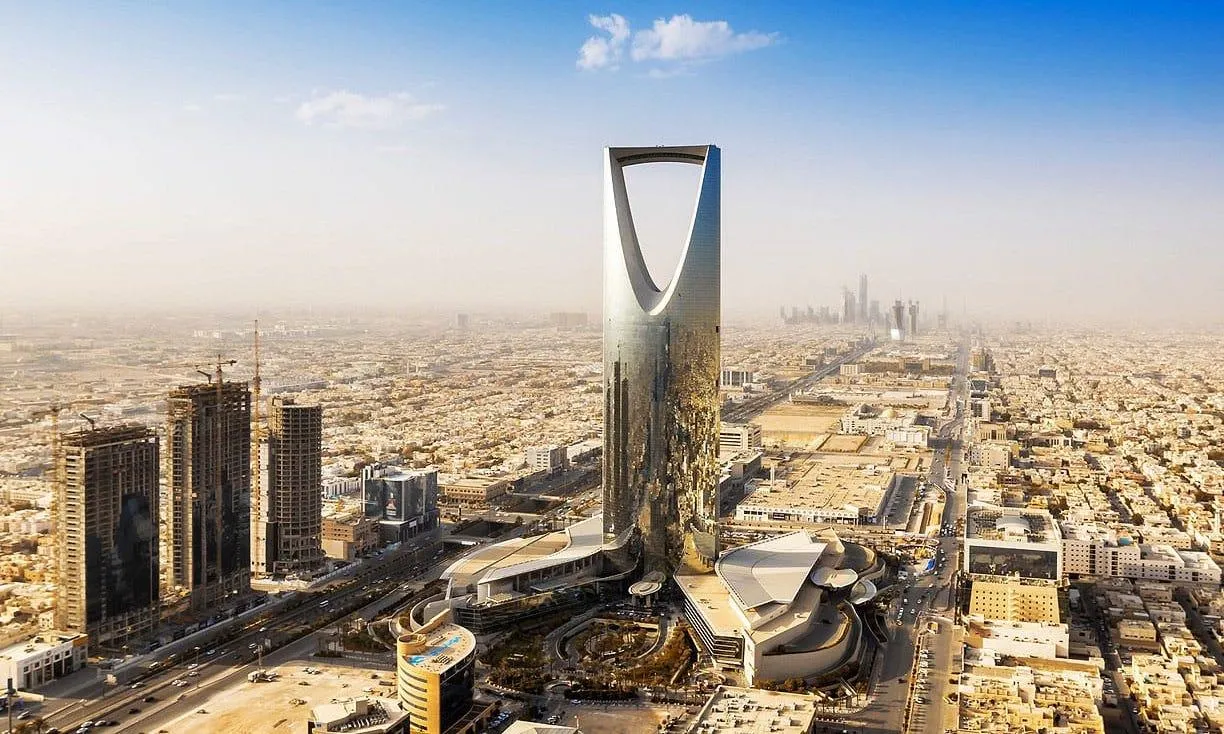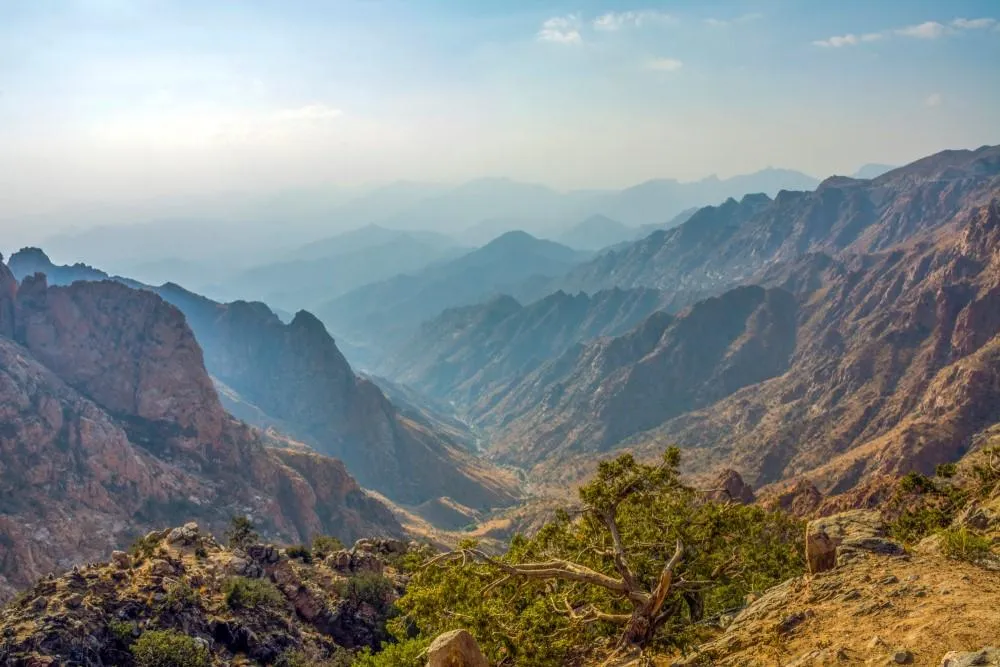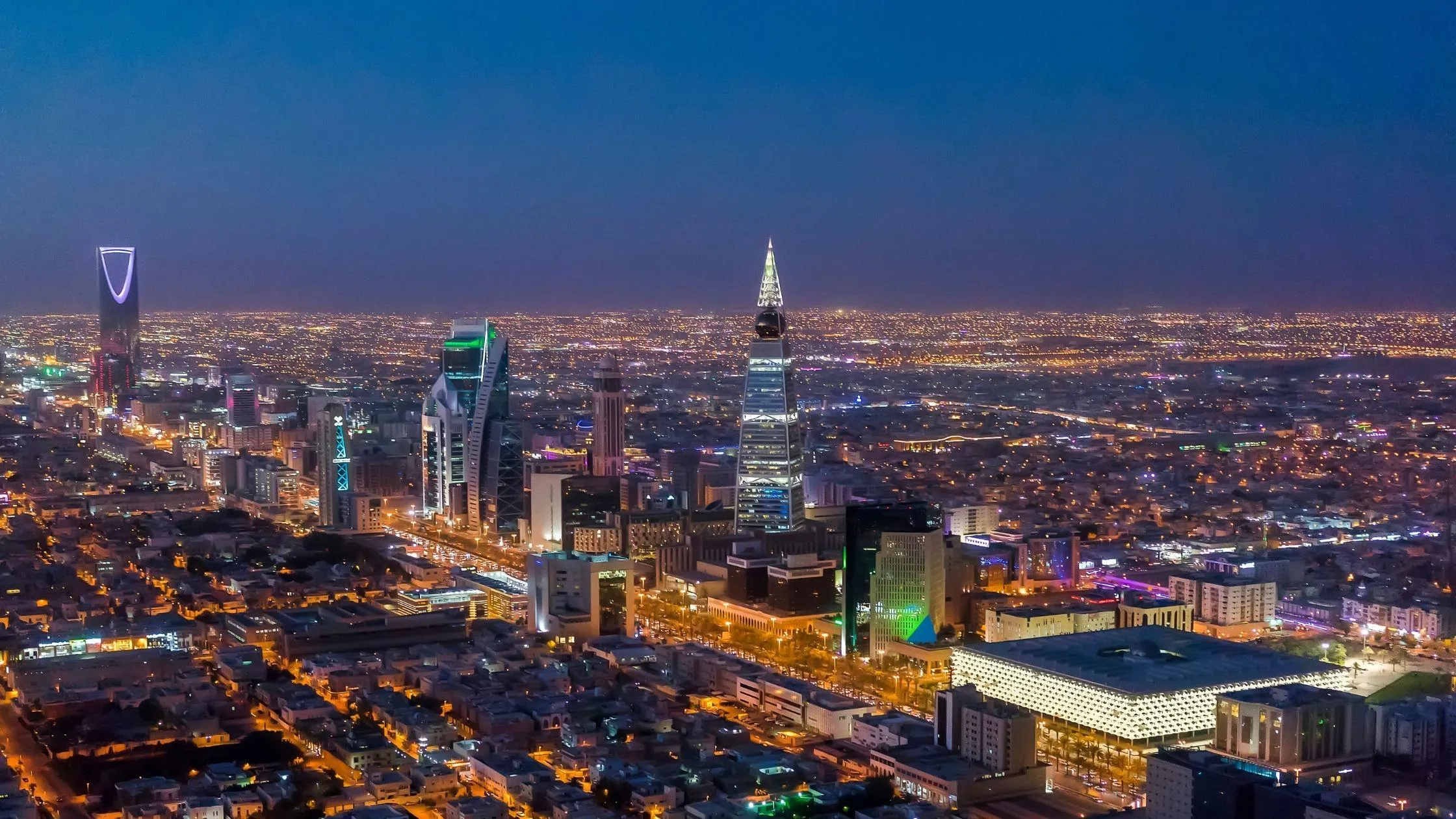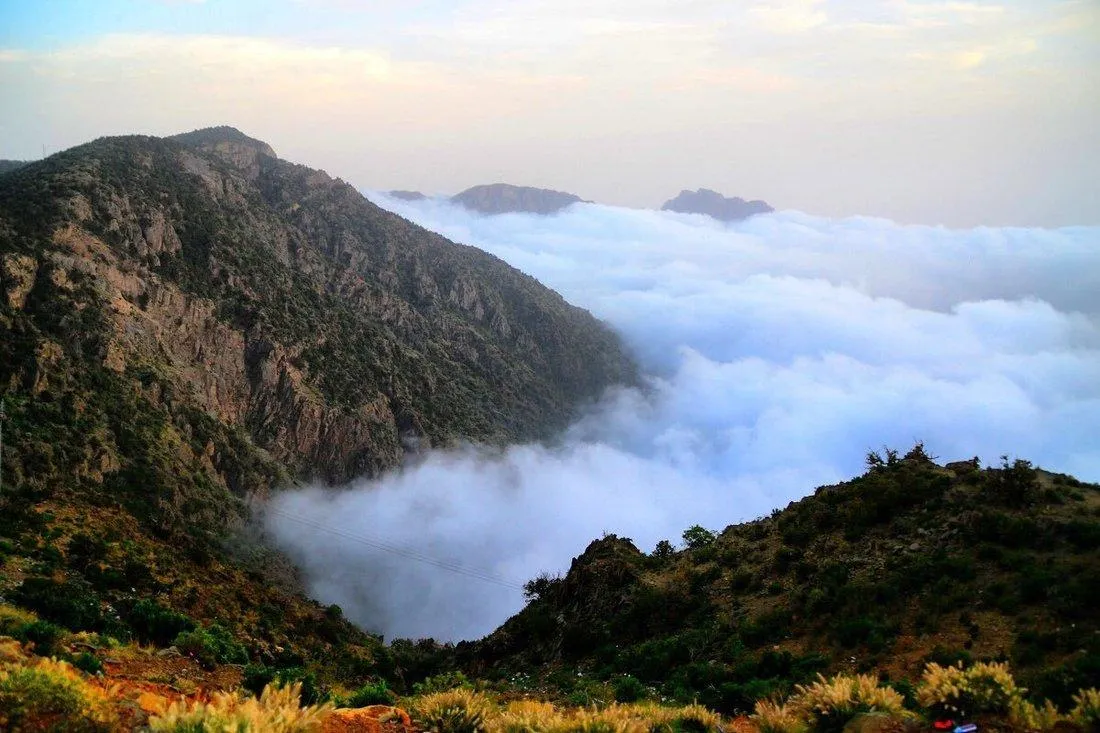

Riyadh Desert Trips: Best Tours, Prices and Tips (2026)

Riyadh Desert Trips

Riyadh offers more than city landmarks and modern attractions. Beyond the capital, the desert opens up opportunities for dune driving, quad biking, sandboarding, camel rides, sunset dinners, and overnight camping under the stars. The right experience depends on how much time you have, the activities you enjoy, and whether you are traveling with family, as a couple, or in a group.

This guide compares the main types of Riyadh desert trips to help you choose confidently. You will find practical information about destinations, activities, seasonal conditions, costs, safety, and what to confirm before booking. Whether you want an action-packed riyadh desert safari or a quiet evening in the dunes, understanding the differences will help you find the right experience.

Riyadh Desert Trips at a Glance (Comparison Table)

Desert experiences around Riyadh range from short activities on the sand to full-day excursions and overnight camps. Some focus on adventure, while others combine scenery, local food, and cultural experiences. The table below provides a starting point for comparing the main options.
Trip Type Typical Duration Main Experience Best Season Best Suited For
Red Sand Dunes Half-day or evening, depending on the tour Dune bashing, sandboarding, camel rides, and quad biking October to April Families, couples, and adventure groups
Edge of the World Usually a half-day or longer excursion Dramatic cliffs, desert scenery, hiking, and sunset views October to April Nature lovers, photographers, and active travelers
Heet Cave Short stop or part of a wider excursion Cave scenery and exploration around the site Cooler months Small groups and travelers interested in natural landscapes
Sunset Desert Dinner Evening experience Traditional food, Saudi coffee, and time around a campfire October to April Couples, families, and groups
Overnight Desert Camp Overnight experience Dinner, camping, stargazing, and breakfast October to March Couples, families, and travelers seeking a longer escape
Heritage and Nature Day Trip Half-day or full-day excursion Traditional villages, salt flats, or wildlife experiences Cooler months Culture lovers, families, and photographers

Important planning note: Distances and journey times vary according to the exact meeting point, destination access, road conditions, and stops included in the itinerary. Ask the operator for the complete route and estimated travel time before confirming your booking. The same applies to meals, equipment, transfers, and optional activities, which may not be included in every package.

Red Sand Dunes: Dune Bashing, Quad Biking and Sandboarding

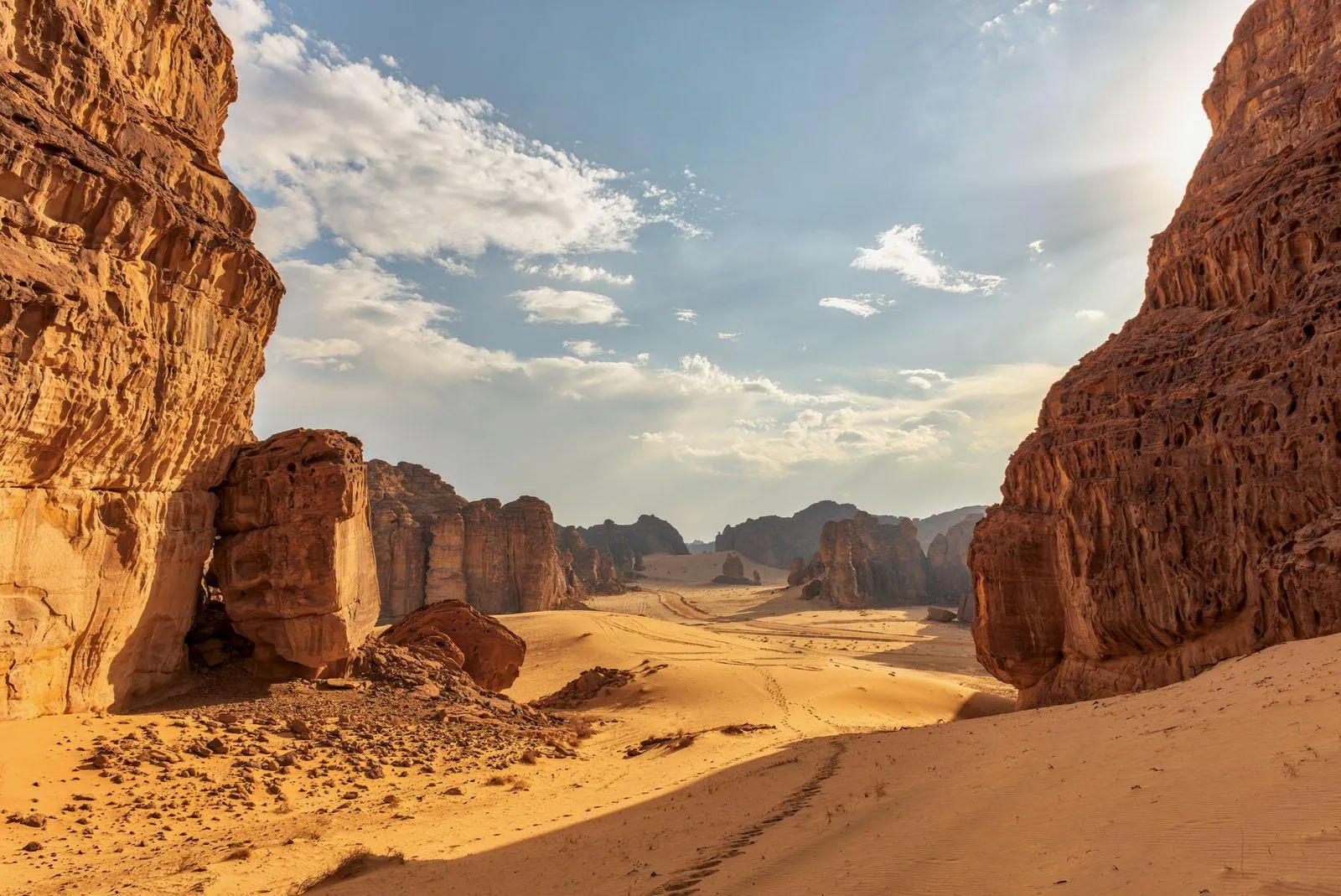
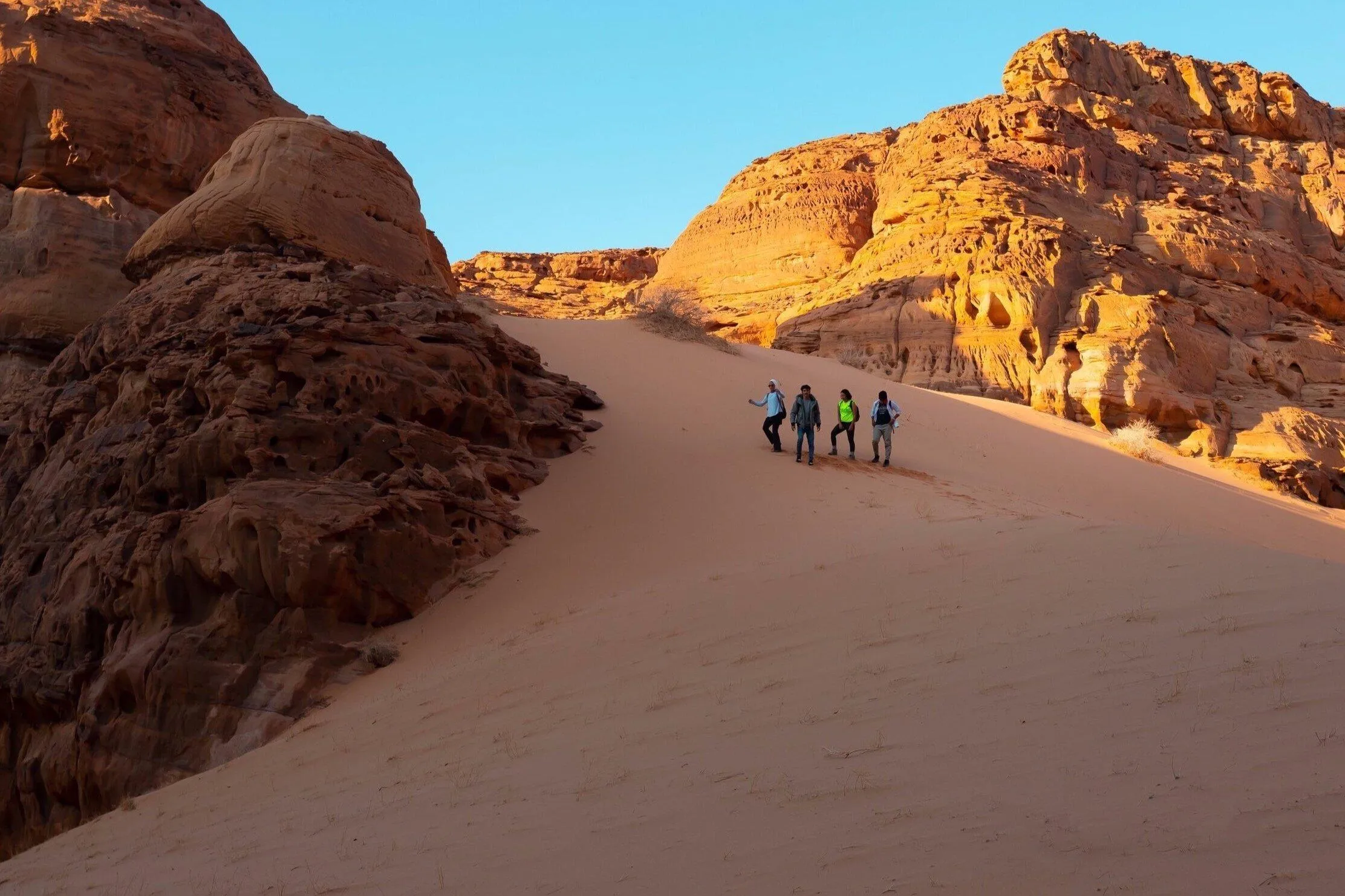
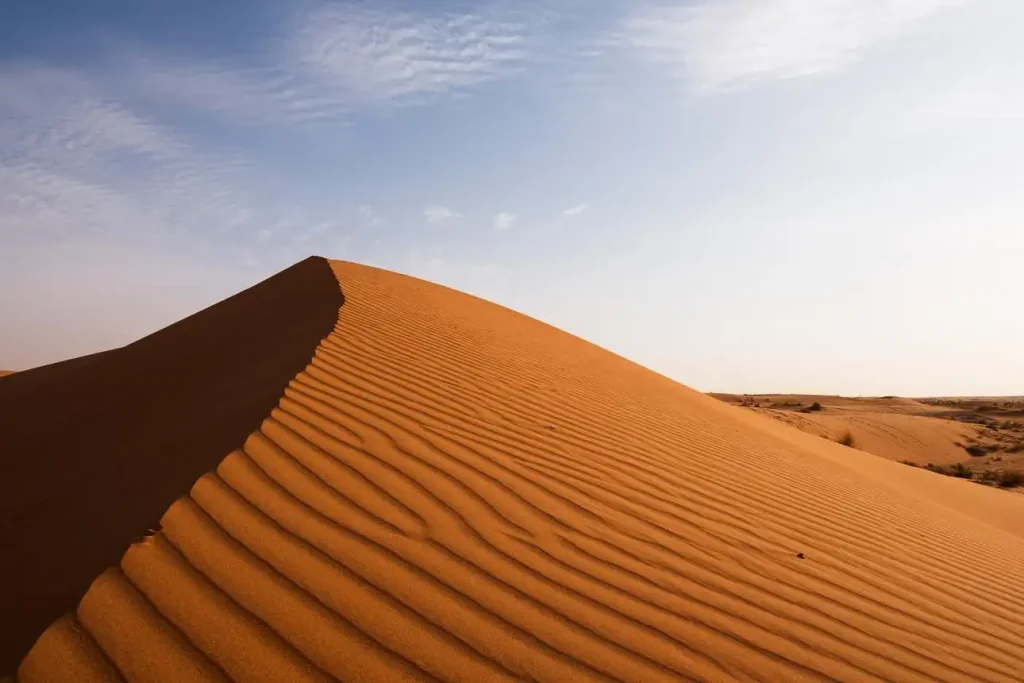
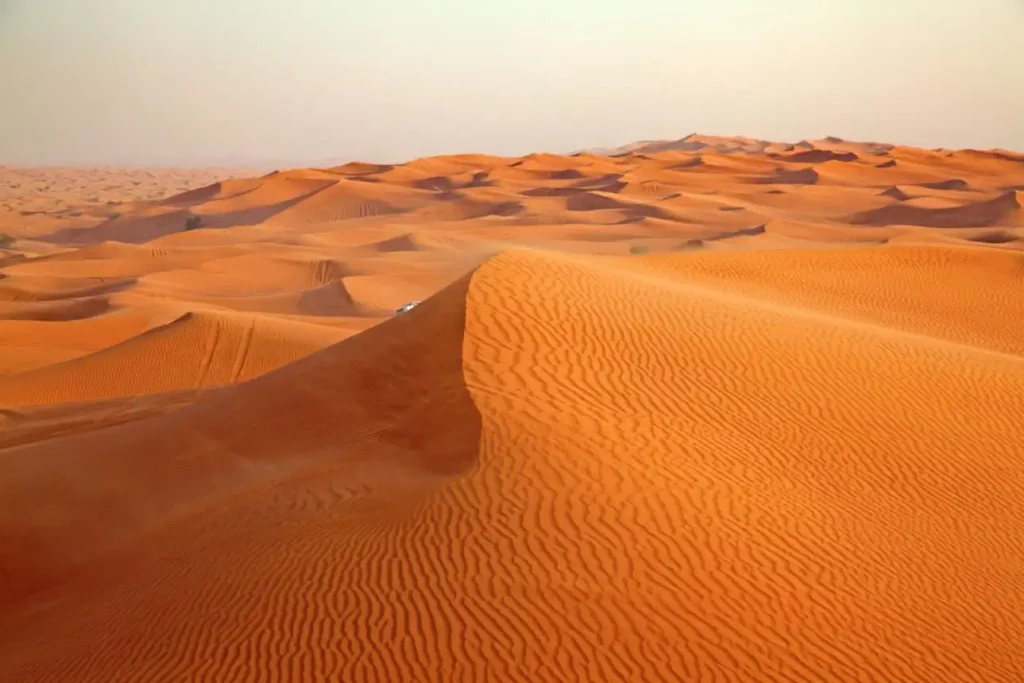
The Red Sand Dunes are among the most popular choices for travelers looking for an accessible desert adventure outside Riyadh. Their distinctive reddish landscape creates an impressive setting for outdoor activities, especially in the late afternoon when the changing sunlight makes the dunes particularly attractive for photography.

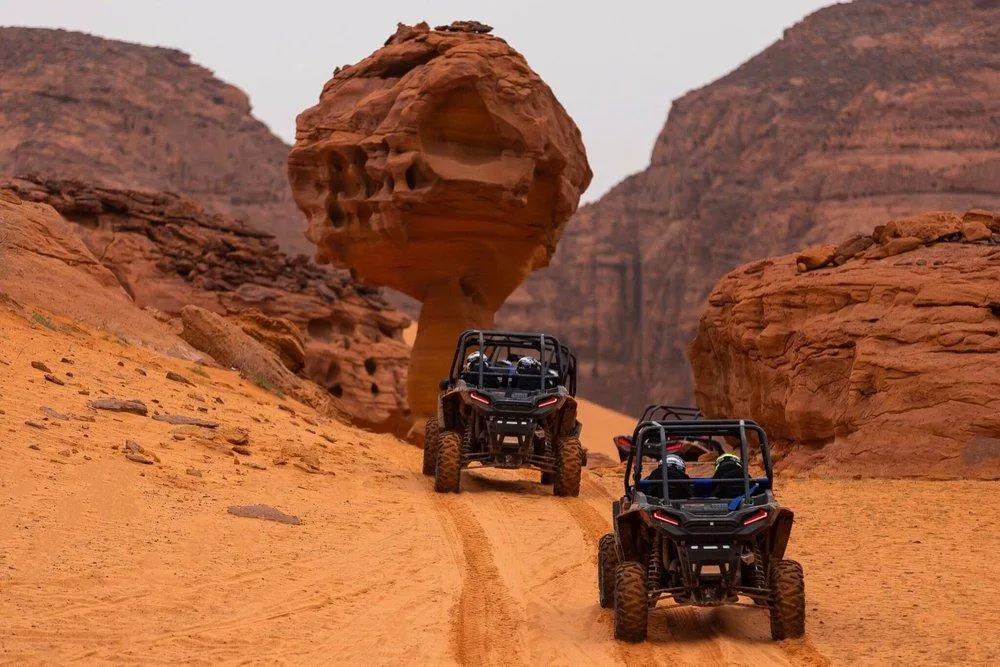
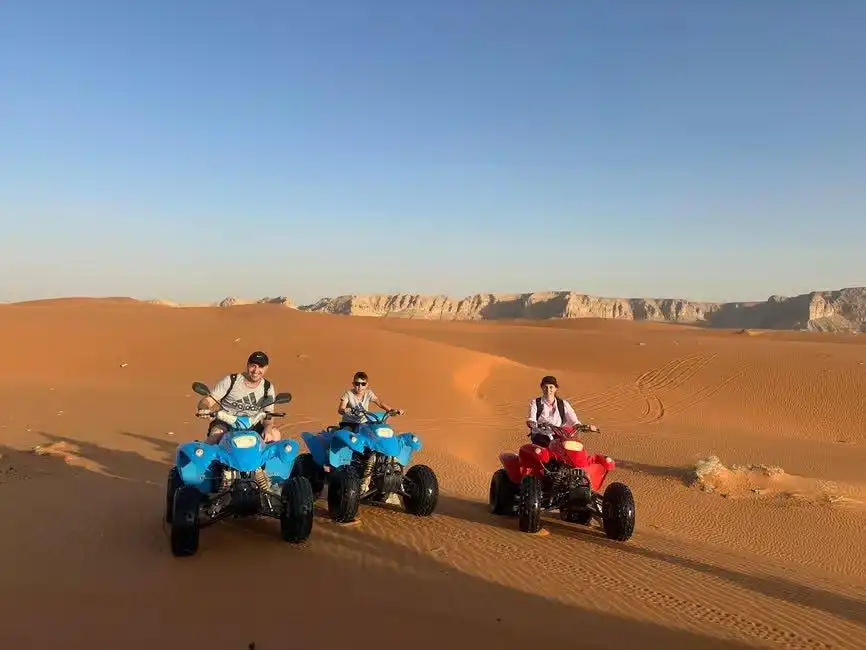
A red sand dunes riyadh experience can combine several activities in one outing. Depending on the package, you may enjoy dune driving in a 4×4 vehicle, try sandboarding, ride a camel, or book a separate quad-biking session.

For a general introduction to the experience, explore the Riyadh Desert Safari Tour. If you prefer to focus on this particular landscape, the Riyadh Red Sand Dunes Tour is another option to consider.

Distance and Travel Time from Riyadh

The Red Sand Dunes are located outside the central urban area, so reaching them requires a road transfer. The actual journey depends on the dune area selected, your pickup location, traffic, and the route used by the tour operator.

Rather than relying on a general estimate, confirm these details before booking:

  • The exact dune location included in the itinerary.
  • Whether hotel pickup and drop-off are provided.
  • The estimated driving time in each direction.
  • How long you will spend at the dunes.
  • Whether the itinerary includes additional stops or activities.

If you are planning a short visit to Riyadh, an evening excursion may fit more easily into your schedule than a full-day trip. Travelers who want several activities should allow enough time for transfers, safety instructions, and breaks between experiences.

What a Typical Tour Includes

A Red Sand Dunes excursion may offer a combination of adventure and traditional desert hospitality. However, the exact inclusions depend on the package you choose.

Dune bashing: This activity involves driving across sand dunes in a suitable 4×4 vehicle with an experienced desert driver. It is a good choice for visitors who want excitement without operating a vehicle themselves.

Quad biking: For travelers who want to control their own ride, quad biking adds an active element to the experience. Check the age requirements, safety equipment, riding area, and whether the activity is included or charged separately.

Sandboarding: Similar to snowboarding, this activity lets visitors slide down suitable sand slopes on a board. It can be enjoyable for beginners, although climbing back up the dunes requires some physical effort.

Camel rides: A short camel ride offers a slower way to experience the desert and can be a memorable addition for families and first-time visitors. Confirm the ride duration and whether it is part of the package.

Saudi coffee and tea: Some desert experiences include refreshments, allowing guests to relax and enjoy the scenery, particularly around sunset.

If quad biking is your main priority, compare the activities and inclusions in the Desert Safari By Quad Bike. Do not assume that every safari includes quad bikes, camel rides, or sandboarding automatically.

Edge of the World and Heet Cave

Not every desert trip needs to focus on driving over dunes. Travelers interested in dramatic landscapes and natural formations can consider the Edge of the World or Heet Cave. These experiences are different from a conventional dune safari and may involve walking over uneven terrain.

Both destinations require sensible planning. Check the route, access conditions, physical requirements, and weather before departure, particularly if you are traveling with children or anyone with limited mobility.
Edge of the World (Jebel Fihrayn) at Sunset

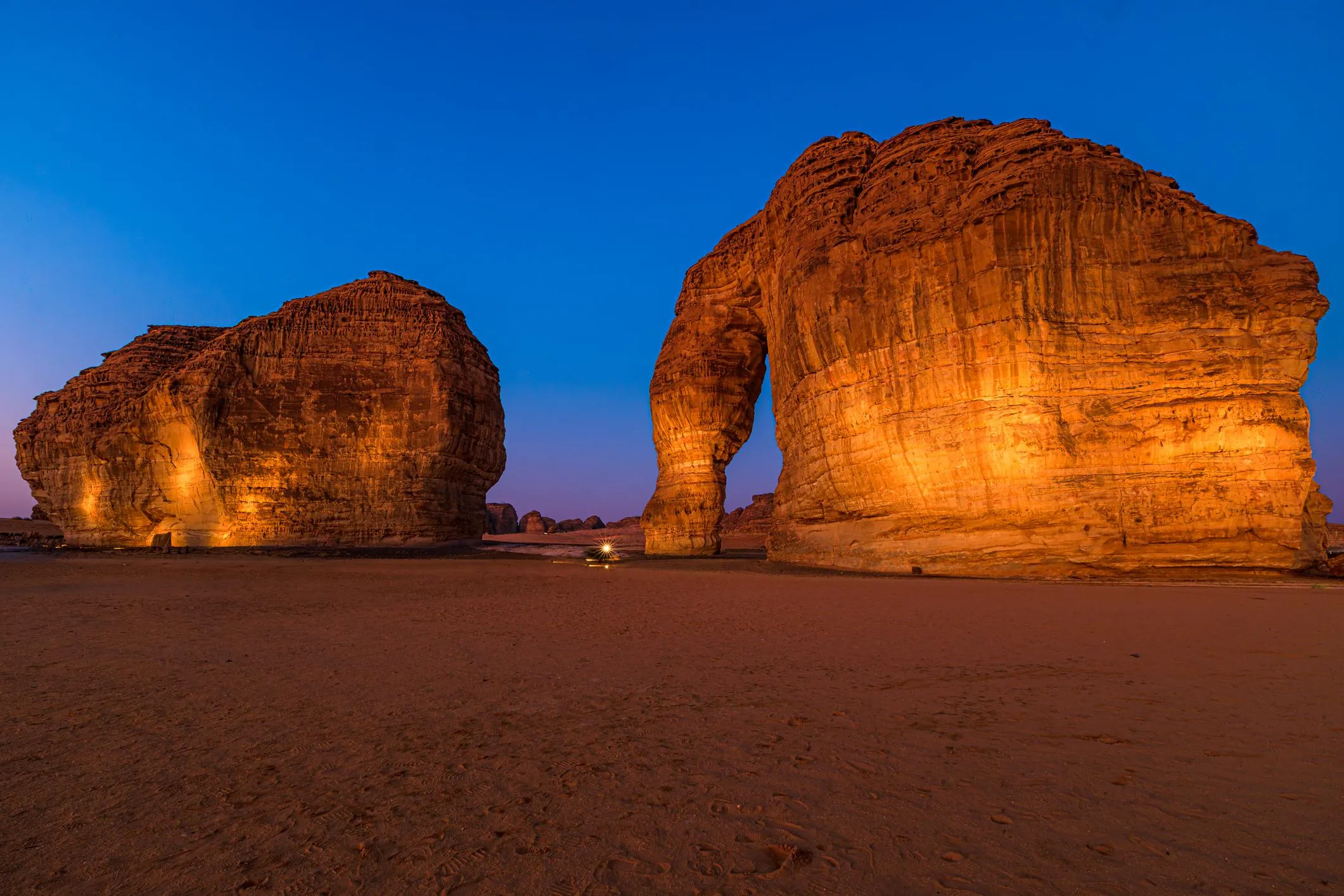
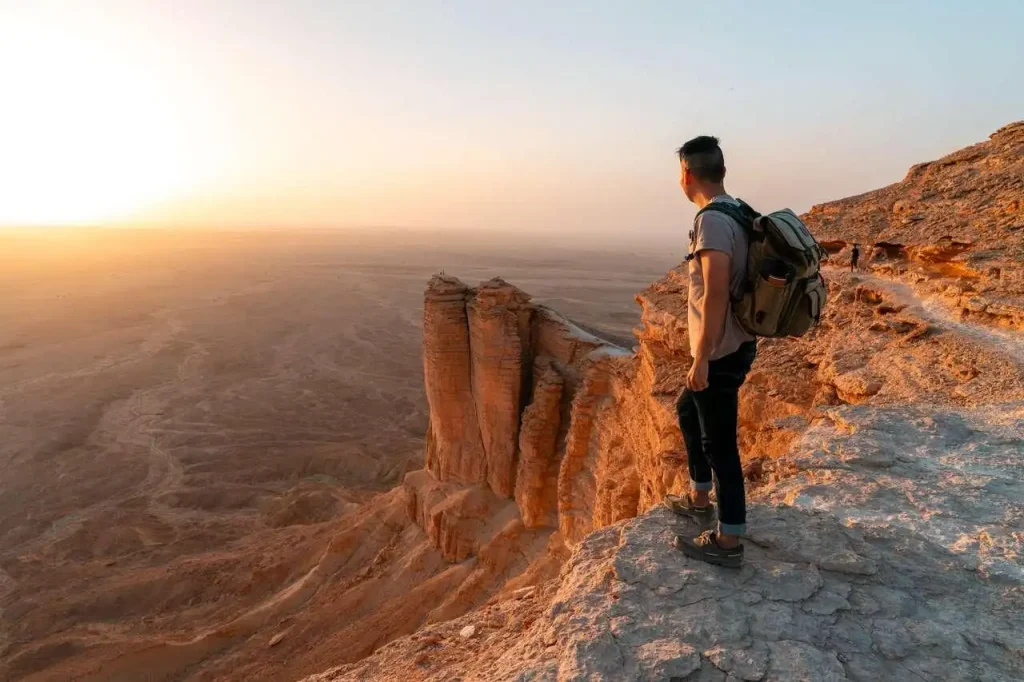
The Edge of the World, also known as Jebel Fihrayn, is famous for its high cliffs and expansive views across the surrounding landscape. The dramatic drop-offs and open horizon make it one of the most memorable natural excursions from Riyadh.

An edge of the world riyadh tour is particularly appealing to travelers who enjoy scenery, photography, and outdoor exploration. Sunset is a popular time to visit because the light can create striking views across the cliffs. However, the timing should be planned carefully to allow enough time to reach the viewpoint and return safely.

The experience is different from a Red Sand Dunes safari. Instead of focusing on quad bikes and dune activities, visitors spend more time appreciating the landscape and walking to suitable viewpoints.

Keep these considerations in mind:

  • Wear comfortable walking shoes with good grip.
  • Follow the guide’s instructions and remain away from cliff edges.
  • Avoid approaching exposed areas for photographs.
  • Bring water, especially when visiting during warmer months.
  • Confirm the return schedule if your tour includes sunset.

The terrain may be challenging for some visitors, so ask about the walking distance and difficulty level before booking. You can explore the Edge Of The World Tour if this landscape is your main reason for taking a desert trip.

Heet Cave Stop

Heet Cave offers a different natural experience from the open desert landscape. It is known for its cave formations and underground setting, making it interesting for visitors who want to explore more than sand dunes and panoramic viewpoints.

A visit to Heet Cave may be arranged as a separate excursion or included as part of a wider itinerary, depending on the operator and access conditions. Before planning your visit, confirm whether the route involves walking on uneven ground, descending toward the cave, or navigating any difficult sections.

This stop may suit travelers who enjoy natural landscapes and photography, but it is not necessarily the best option for every family or visitor. Ask about current access, safety arrangements, and the level of physical effort required.

Heritage and Nature Stops Near the Desert

A desert trip does not have to be limited to outdoor adventure. The wider Riyadh region offers heritage and nature experiences that can add cultural interest to your itinerary. These stops are worth considering if you have more time and prefer a varied day outside the city.

Ushaiqer Heritage Village

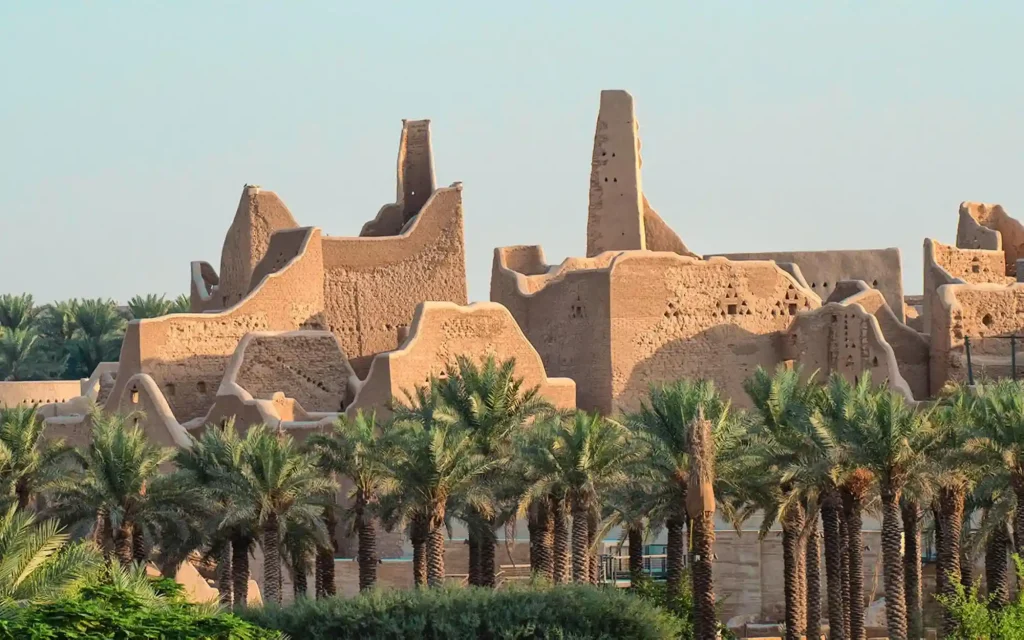
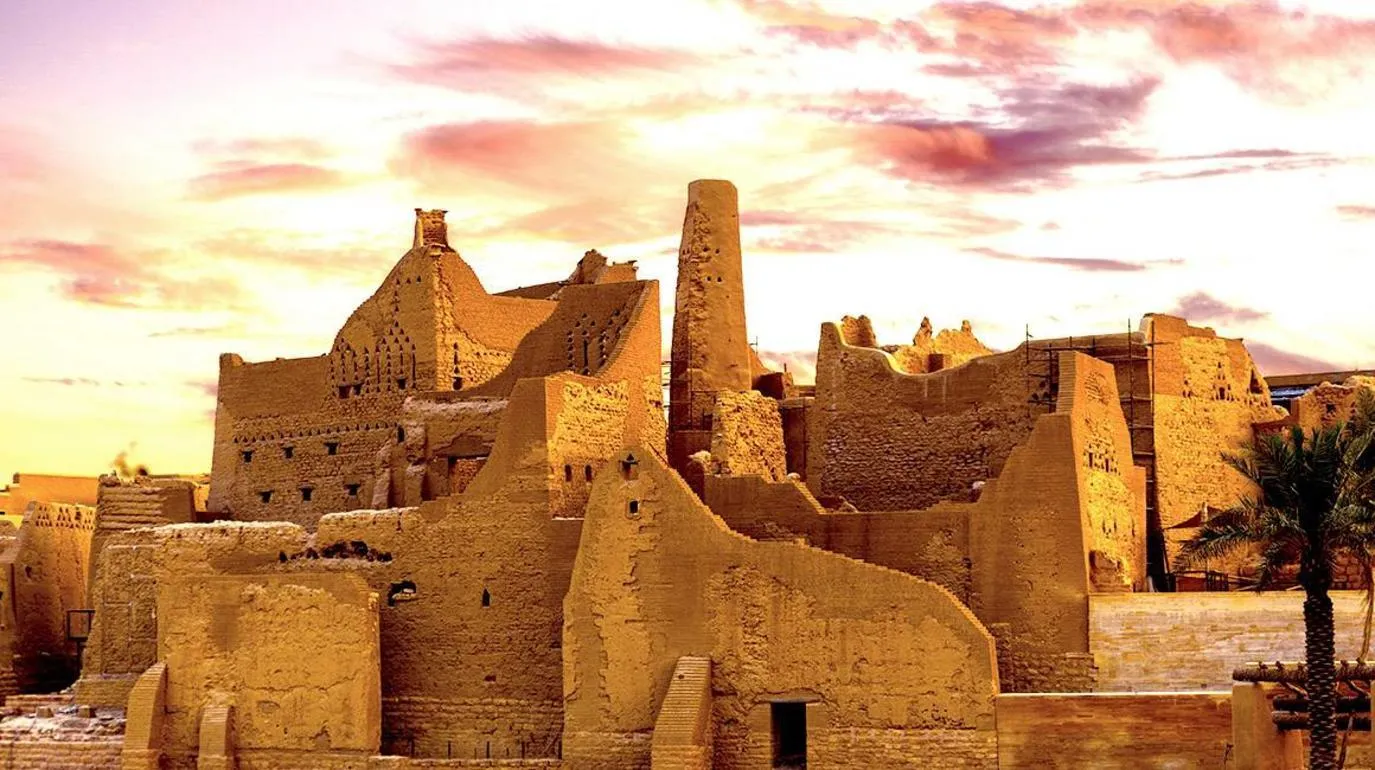
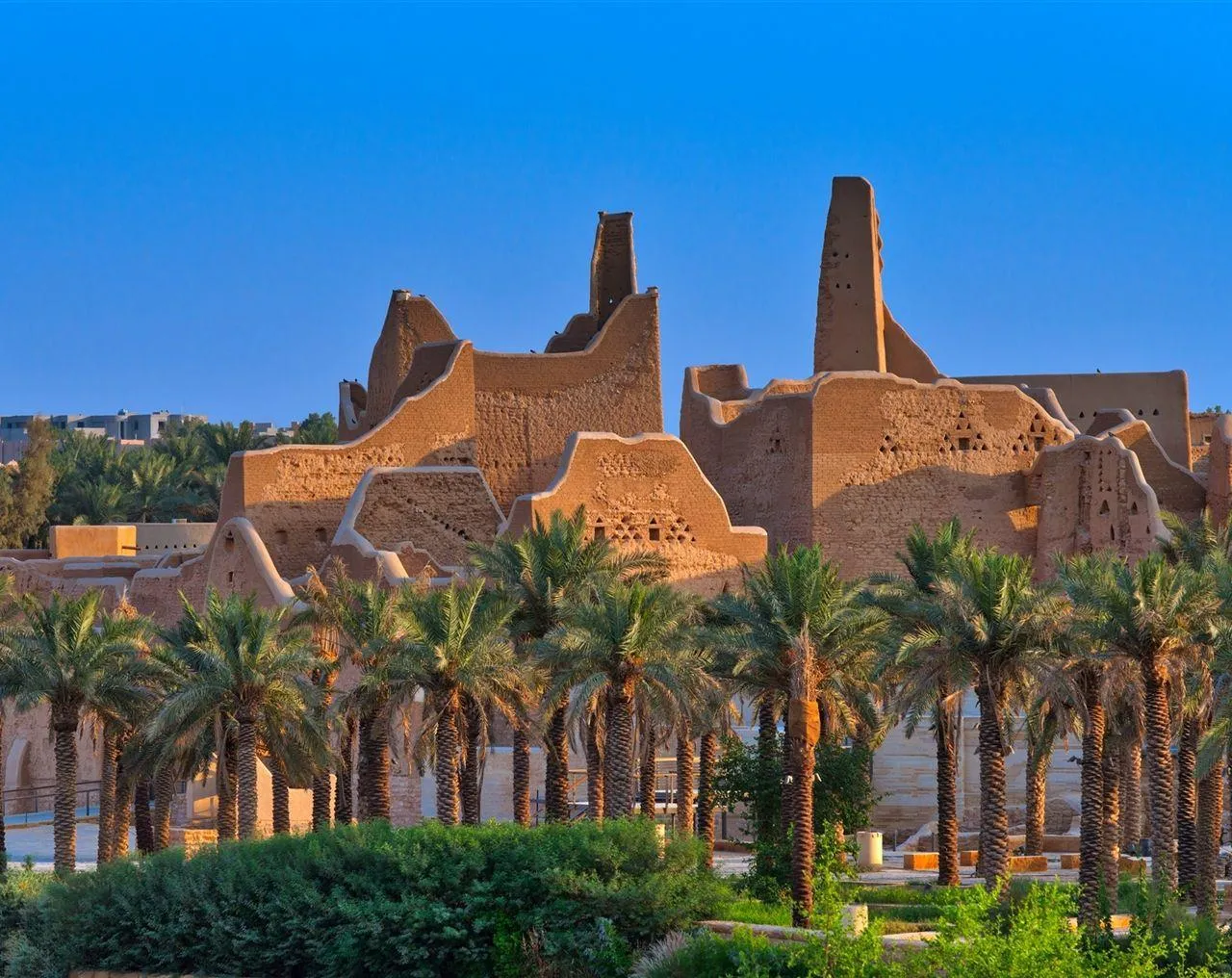
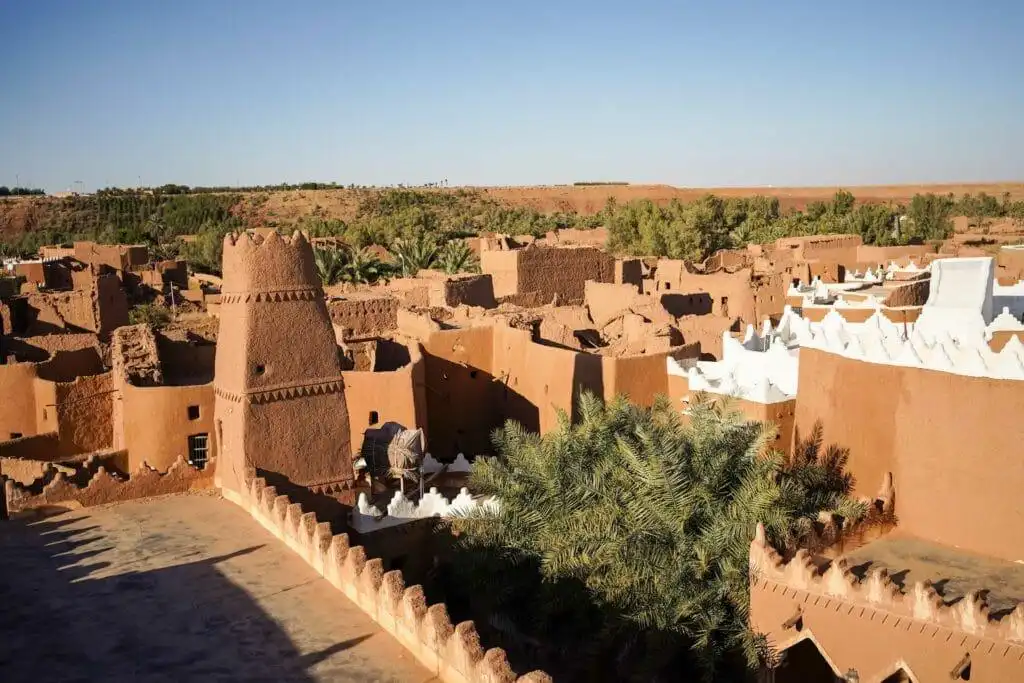
Ushaiqer Heritage Village is a traditional Najdi settlement known for its historic buildings, narrow lanes, and distinctive mud-brick architecture. It offers a glimpse into the region’s traditional way of life and provides a different perspective from Riyadh’s modern urban attractions.

Walking through the village allows visitors to appreciate traditional construction techniques, old courtyards, and the relationship between local architecture and the desert environment.

Ushaiqer is better suited to a dedicated heritage excursion than a quick stop on a short dune safari. Ask whether transportation, a local guide, and time to explore the village are included in the proposed itinerary.
Al Qasab Salt Flats

Al Qasab is associated with traditional salt production and its surrounding salt landscapes. A visit can add an interesting cultural and photographic stop to a wider day trip from Riyadh.

The area offers a different visual experience from the red dunes, particularly for travelers interested in local industries and landscapes. However, the suitability of a visit depends on the route and the activities available at the time of travel.

If you want to include Al Qasab in your plans, confirm the exact location, road journey, and whether the operator has arranged access to any relevant sites. It is best treated as a planned stop rather than an activity that is automatically included in a desert safari.

Nofa Wildlife Park

Nofa Wildlife Park offers a nature-focused alternative to traditional desert activities. It may appeal to families and travelers who want to include wildlife viewing in their time outside Riyadh.

Unlike dune bashing or quad biking, this type of visit is centered on observing animals and enjoying a different outdoor environment. Availability, access arrangements, and visitor experiences can vary, so check current visitor information before including it in your itinerary.

For families with children, this may be a more suitable option than a physically demanding desert walk. Ask about age-related conditions, visit duration, and any separate entry or activity fees.

Sunset Dinner and Overnight Desert Camps

If you prefer a relaxed experience, consider a desert evening built around food, hospitality, and scenery. These trips usually place less emphasis on adventure and more on enjoying the atmosphere after the heat of the day.

A desert safari with dinner riyadh can be a good choice for couples, families, and groups who want to spend time outdoors without committing to a full day of activities. Overnight camping takes the experience further by allowing guests to stay in the desert after sunset.

Traditional Dinner, Saudi Coffee and Campfire

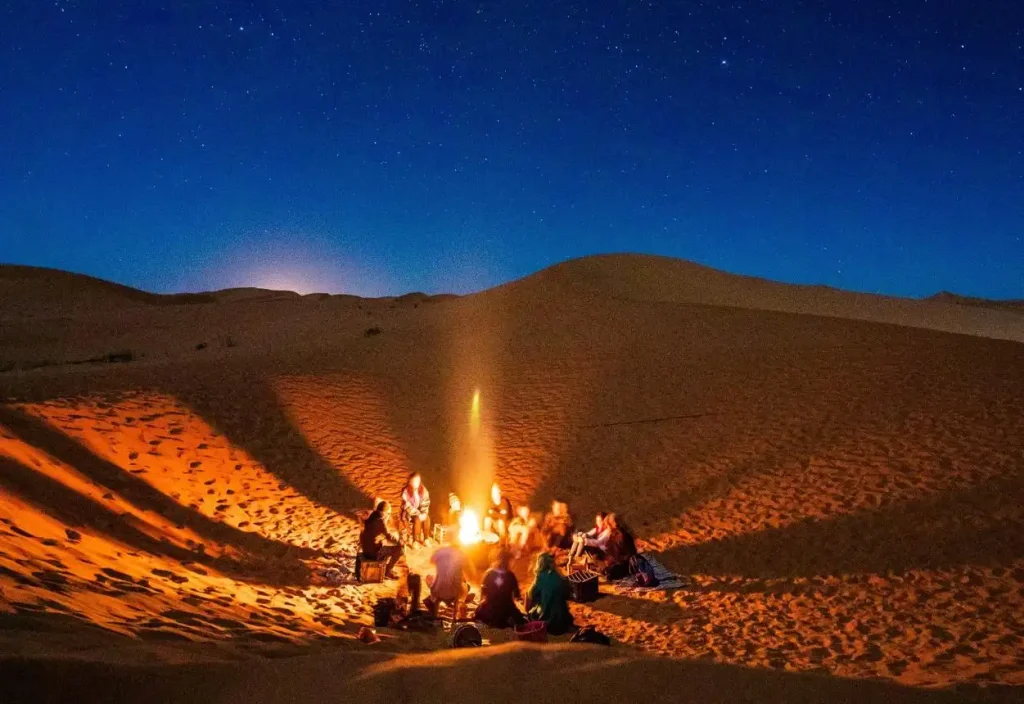
A desert dinner may include traditional Saudi dishes such as kabsa or a barbecue-style meal, depending on the package. Saudi coffee and tea can also be part of the hospitality experience, while a campfire provides a comfortable setting for conversation and relaxation.

Before choosing a dinner trip, ask the operator to confirm:

  • Whether dinner is included in the quoted price.
  • Whether the meal is a buffet, set menu, or barbecue.
  • Whether vegetarian or other dietary options are available.
  • Whether Saudi coffee, tea, and drinking water are provided.
  • Whether seating and a shaded area are arranged.
  • How much time is allocated for the dinner experience.

Do not assume that all evening tours include the same food or services. Some packages may offer refreshments only, while others provide a full meal and additional activities.

Overnight Camp and Stargazing

An overnight desert camp riyadh experience is suitable for travelers who want to spend more time away from the city. Rather than returning after dinner, guests stay overnight and enjoy the quieter atmosphere of the desert.

Depending on the arrangement, an overnight experience may include an evening meal, Saudi coffee, a campfire, time for stargazing, sleeping arrangements, and breakfast the following morning.

The level of comfort can vary considerably. Some camps provide basic arrangements, while others offer more comfortable private setups. Confirm the accommodation type before booking rather than relying on the word “camp” alone.

Ask these questions before confirming:

  • Is the sleeping area private or shared?
  • Are mattresses, blankets, and pillows provided?
  • Are toilets and washing facilities available?
  • Is breakfast included?
  • Is there a guide or staff member available overnight?
  • What happens if weather conditions affect the experience?

Desert temperatures can drop after sunset, particularly during winter. Bring suitable clothing even if the afternoon feels warm.

How Much Do Riyadh Desert Trips Cost?

The cost of Riyadh desert trips depends on the destination, duration, transport arrangements, group size, and activities included. A short shared safari and a private overnight camp are very different products, so comparing prices without checking the inclusions can be misleading.

For an accurate quote, provide the operator with your preferred date, number of travelers, ages of children if applicable, and the type of experience you want.

Shared vs Private Trips

A shared trip usually means joining other travelers in the same vehicle or tour group. It can be a practical option for solo travelers and visitors who want to keep their costs manageable.

A private desert safari offers more control over the schedule and experience. It may be more suitable for families, couples, or groups who prefer privacy and flexibility.

Factor Shared Trip Private Trip
Group arrangement You travel with other guests The experience is arranged for your group
Schedule Usually follows a set itinerary May offer greater flexibility
Privacy Limited Higher
Cost structure Often priced per person May be priced per vehicle or group
Best for Solo travelers and budget-conscious visitors Families, couples, and private groups

A private desert safari riyadh may offer greater flexibility, but the final price depends on the vehicle, group size, route, and selected activities. Ask whether the quotation is per person or for the entire vehicle.

What Is Included and What Costs Extra

A tour price may cover some or all of the following:

  • Transportation from a specified meeting point or hotel.
  • A 4×4 vehicle and a desert driver.
  • A guide or tour coordinator.
  • Dune bashing or other activities listed in the package.
  • Water, refreshments, or traditional coffee.
  • Dinner or breakfast for selected packages.
  • Camping equipment for overnight experiences.

Some services may be optional or charged separately. These can include quad biking, camel rides, sandboarding equipment, additional meals, private transfers, and special camping arrangements.

Before paying, request a written breakdown showing what is included, what costs extra, and whether any entrance or activity fees apply. This makes it easier to compare offers and avoid unexpected expenses.

Best Time for a Desert Trip in Riyadh

The best time for a desert trip in Riyadh is generally during the cooler months, when outdoor activities are more comfortable. October and November are particularly appealing as temperatures begin to ease after summer, making evenings and outdoor excursions more enjoyable.

The winter months can also be excellent for desert experiences, although nights may become cold. Spring can offer pleasant conditions during suitable periods, while summer requires more careful planning because daytime temperatures can be extremely high.

Autumn (October and November): These months are a good choice for dune activities, sunset trips, and outdoor photography. Temperatures become more manageable, especially later in the afternoon.

Winter (December to February): Winter is suitable for many desert excursions, but nighttime temperatures can fall significantly. Pack warm layers if your itinerary includes dinner or overnight camping.

Spring (March and April): Spring can provide comfortable conditions for outdoor activities, although temperatures rise as the season progresses. Check the forecast before confirming a long excursion.

Summer (May to September): Summer is generally the most challenging season for desert activities because of the heat. If you travel during this period, consider an evening experience, avoid strenuous activity during the hottest hours, and follow the operator’s safety advice.

For most visitors, a late-afternoon departure offers a good balance between daylight, outdoor activities, and sunset views. However, the ideal departure time depends on the destination, driving distance, and season.
What to Wear and Pack

Preparing properly can make a significant difference to your comfort during a desert excursion. The right clothing and equipment depend on the season, the length of the trip, and whether you plan to walk, ride a quad bike, or stay overnight.

What to wear:

  • Choose comfortable, loose-fitting clothing that allows you to move easily.
  • Wear closed shoes suitable for walking on sand and uneven ground.
  • Bring a hat or cap to protect yourself from direct sunlight.
  • Use sunglasses and sunscreen during daytime activities.
  • Pack a light jacket for evening trips and warmer layers for winter camping.

What to pack:

  • Drinking water, unless the operator confirms it is provided.
  • Sunscreen and personal toiletries.
  • A fully charged phone and a portable charger.
  • A small bag for personal belongings.
  • Any necessary medication.
  • A camera, if you want to photograph the landscape.
  • Warm clothing and suitable overnight essentials for camping.

If you are booking quad biking, check whether helmets and other protective equipment are supplied. Avoid carrying loose accessories that could interfere with riding or other activities.

Safety, Rules and Local Etiquette

Desert experiences can be enjoyable and memorable when they are planned responsibly. However, the environment presents risks that visitors should understand, particularly when driving over dunes, walking near cliffs, or exploring caves.

Choose an operator that explains the itinerary, provides suitable vehicles and equipment, and gives clear safety instructions. For dune driving, use an experienced driver familiar with desert terrain. Do not attempt to drive over dunes independently unless you have the appropriate vehicle, experience, and permission.
Keep these safety and etiquette points in mind:

  • Follow the guide’s instructions during dune bashing and outdoor activities.
  • Wear the required safety equipment when using quad bikes.
  • Stay within designated or recommended areas and avoid approaching cliff edges.
  • Carry enough water and protect yourself from the sun.
  • Do not enter caves or restricted areas without appropriate guidance and access.
  • Avoid photographing government or military facilities and other restricted locations.
  • Ask permission before photographing local people.
  • Respect the environment and take your rubbish with you.
  • Alcohol and illegal drugs are prohibited in Saudi Arabia.

Weather can also affect desert access and safety. Strong winds, poor visibility, or unsuitable conditions may require changes to the itinerary. Ask the operator how weather-related changes are handled and whether an alternative date or arrangement is available.

Which Trip Suits You: Families, Couples, Groups and Solo Women

The best desert experience depends on your travel style and the needs of everyone in your group. A physically demanding excursion may be ideal for adventure lovers but unsuitable for visitors with young children or limited mobility.

Families with children: Red Sand Dunes trips can offer a mix of scenery and activities, but parents should check minimum ages and safety requirements for dune bashing, quad biking, and camel rides. A relaxed sunset dinner may be a better choice for families who prefer fewer physical activities.

Couples: Sunset experiences and private desert dinners can provide a quieter atmosphere. Couples interested in spending more time outdoors may prefer an overnight camp, provided the accommodation and facilities meet their expectations.

Groups of friends: Quad biking, dune bashing, and sandboarding can make an enjoyable group outing. Compare private and shared options based on your group size and whether you want to follow a flexible schedule.

Solo women travelers: A planned tour with clear pickup arrangements, confirmed contact details, and a defined itinerary can make organizing a desert visit easier. Before booking, ask about the group composition, transportation, guide arrangements, and whether private options are available.

Nature and culture enthusiasts: The Edge of the World, Heet Cave, and heritage stops such as Ushaiqer offer alternatives to a conventional safari. Choose these experiences if landscapes, history, and photography matter more to you than adventure activities.

There is no single best option for every traveler. The most suitable trip is the one that matches your schedule, comfort level, interests, and budget.

How to Book a Riyadh Desert Trip (What to Ask the Operator)

Before booking, compare the actual experience rather than choosing only by the advertised price. Two tours may have similar names but very different itineraries, transport arrangements, and inclusions.

Use the following checklist when contacting the operator:

  1. Destination and route: Ask for the exact destination, meeting point, and planned stops.
  2. Duration: Confirm the total trip duration, including transfers, activities, and return journey.
  3. Transportation: Check whether hotel pickup and drop-off are included and what type of vehicle will be used.
  4. Activities: Confirm whether dune bashing, quad biking, camel rides, and sandboarding are included or optional.
  5. Meals and refreshments: Ask whether dinner, breakfast, water, coffee, and tea are covered by the price.
  6. Group size: Find out whether the tour is shared or private and whether a minimum number of participants is required.
  7. Children’s ages: Confirm age restrictions and any special conditions for children.
  8. Tour language: Ask which languages the guide or tour coordinator speaks.
  9. Cancellation policy: Request the cancellation deadline, refund conditions, and rules for changes.
  10. Weather arrangements: Check what happens if the operator needs to change or cancel the trip because of weather or access conditions.
  11. Payment: Confirm the total price, payment method, and whether optional activities require separate payment.
  12. Booking confirmation: Request written confirmation with the date, departure time, meeting point, and included services.

You can compare the available experiences through the Riyadh Desert Safari Tour, Riyadh Red Sand Dunes Tour, and Desert Safari By Quad Bike. If you are more interested in dramatic scenery than dune activities, consider the Edge Of The World Tour.

For bookings within 24 hours, contacting the team directly by phone or WhatsApp is the most practical way to check whether arrangements can be made for your preferred date.

Ready for the dunes? Choose your Riyadh desert trip and book with a local tour operator, or message Saudi Arabia Tours on WhatsApp at +966 53 462 9489.
FAQs About Riyadh Desert Trips

Are Riyadh desert trips safe?

Desert trips can be safe when organized responsibly with suitable vehicles, experienced drivers, appropriate equipment, and clear safety instructions. Follow the guide’s advice, avoid restricted areas, and check whether activities such as quad biking have age and safety requirements. Conditions can change with the weather, so confirm the operator’s safety arrangements before booking.

How long does a desert safari from Riyadh take?

The duration depends on the destination and activities included. A short evening experience may take less time than a full-day excursion or an overnight camp. The Edge of the World and heritage trips may also require additional driving and walking time. Always confirm the total duration, including transportation to and from Riyadh.

Are there family-friendly Riyadh desert trips?

Yes. Families can consider Red Sand Dunes excursions, relaxed sunset experiences, and selected nature trips. However, not every activity is suitable for every age. Parents should confirm minimum ages, child safety arrangements, walking requirements, and whether children can participate in dune bashing, quad biking, or camel rides.

Are there desert trips suitable for women traveling alone?

Solo women can consider joining an organized group excursion or arranging a private trip. Before booking, confirm pickup and drop-off arrangements, group details, the guide’s language, the meeting point, and the full itinerary. Choosing an operator that provides clear booking information and direct communication can make planning easier.

What is the best time of day for a desert safari in Riyadh?

Late afternoon is often a good choice because temperatures are usually more comfortable than during midday, and visitors can enjoy the changing light around sunset. The best departure time depends on the season, destination, and planned activities. During summer, evening trips may be more comfortable, but heat precautions remain important.

Can I try quad biking and dune bashing on the same trip?

Some packages combine these activities, while others offer them separately. Dune bashing usually involves riding as a passenger in a suitable 4×4 vehicle, whereas quad biking allows participants to ride an all-terrain vehicle themselves. Confirm the activities, age restrictions, equipment, and additional charges before booking.

What should I wear for an overnight desert camp?

Wear comfortable clothing suitable for outdoor conditions and bring warm layers for the night, especially during winter. Closed shoes are useful for walking on sand, while a hat and sunscreen help protect you during daylight hours. Confirm whether the camp provides blankets, bedding, and other overnight essentials.

Are meals included in Riyadh desert trips?

Not always. Some sunset and overnight packages include dinner, Saudi coffee, tea, or breakfast, while other tours provide only refreshments or activities. Check the written package details and ask about dietary requirements before paying.

Can I visit the Edge of the World and Red Sand Dunes on one day?

Combining both destinations may be possible with a customized itinerary, but it depends on travel time, access conditions, and how long you want to spend at each location. They offer different experiences, so trying to fit both into a short schedule may leave limited time for either. Ask the operator to assess the route before confirming.
Things to Do in Riyadh: Top Experiences & Tips (2026)

Things to Do in Riyadh

Riyadh offers much more than modern skyscrapers and shopping malls. Saudi Arabia’s capital brings together historic neighborhoods, traditional markets, cultural museums, desert adventures, international entertainment, and authentic Saudi dining experiences. Whether you are visiting for one day or planning a longer stay, there are plenty of things to do in Riyadh for different interests and budgets. As a local tour operator, we recommend planning your activities around the weather, travel distances, and the experiences you want to discover.

Top 10 Things to Do in Riyadh at a Glance

Riyadh has activities for history lovers, adventure seekers, families, couples, and travelers interested in Saudi culture. The following comparison helps you choose where to start based on your available time and preferred experience.

Quick comparison table (best for, time needed, best season)

Activity Best for Time needed Best time
Explore Masmak Fortress and Souq Al Zal History and culture lovers 2–3 hours Morning
Visit the National Museum Families and history enthusiasts 2–3 hours Morning or afternoon
Discover Diriyah and At-Turaif Culture and architecture 3–4 hours Late afternoon
Enjoy Kingdom Centre Sky Bridge Couples and photography enthusiasts 1–2 hours Sunset
Visit Al Faisaliah Tower and The Globe Couples and fine dining 2–3 hours Evening
Experience Boulevard City Families and entertainment lovers 3–5 hours Evening
Explore Boulevard World Families and international experiences 3–5 hours Evening
Take an Edge of the World trip Adventure and nature lovers 5–7 hours Daytime
Enjoy Riyadh Red Sand Dunes Outdoor adventure seekers 3–5 hours Late afternoon
Discover Saudi food and local markets Food lovers and cultural travelers 2–3 hours Evening

These durations are planning estimates rather than fixed schedules. Driving time, traffic, seasonal events, and attraction opening hours can affect how long each experience takes.

For travelers with limited time, Riyadh day tours can combine several major attractions without spending too much time organizing transportation.

Is Riyadh Worth Visiting? What to Expect as a First-Timer

Yes. Riyadh is worth visiting if you want to experience a different side of Saudi Arabia, where traditional Najdi architecture and historic neighborhoods exist alongside modern entertainment districts and contemporary restaurants.

The city is particularly interesting because its attractions are spread across different areas. You can explore the history of the First Saudi State in Diriyah, learn about the country’s development at the National Museum, enjoy panoramic skyline views, and finish the day with traditional Saudi food.

Unlike compact European cities, Riyadh is a large metropolitan destination where walking between major attractions is rarely practical. Most visitors rely on private vehicles, ride-hailing services, organized tours, or the metro for selected routes.

Your experience also depends on the season. Winter and early spring are generally more comfortable for outdoor sightseeing, while summer visitors should prioritize indoor attractions and evening activities.

A local guide can make a significant difference, particularly if this is your first visit. You can understand the historical background of each location, discover local food, and arrange a realistic itinerary around traffic and opening hours rather than trying to visit everything independently.

Best Time to Visit Riyadh and What’s On This Season

The best time to visit Riyadh depends on the activities you want to enjoy. Outdoor sightseeing, desert adventures, and walking around historic districts are much more comfortable during the cooler months, while indoor entertainment and shopping remain available throughout the year.

Weather and the best months

The best time to visit Riyadh is generally between November and March, when temperatures are more suitable for exploring outdoor attractions and planning desert excursions.

Winter days are usually pleasant compared with summer, although evenings can become cold, particularly in open desert areas. Pack a light jacket and comfortable walking shoes if you are planning to spend several hours outdoors.

Summer, from June through August, brings intense heat that can make daytime sightseeing uncomfortable. Temperatures can reach approximately 35–45°C during this season, so visitors should plan outdoor activities early in the morning or after sunset.

If you are wondering about things to do in riyadh in november, this is one of the most attractive periods for combining historic sightseeing with desert experiences and seasonal entertainment. The weather generally becomes more suitable for visiting Diriyah, exploring local markets, and enjoying outdoor dining.

Riyadh Season 2026 highlights (Boulevard City, Boulevard World, Wonder Garden, Suwaidi Park)

Riyadh Season 2026 is one of the biggest reasons to plan a winter visit to the Saudi capital. The seventh edition officially launched on October 21, 2026, bringing entertainment, sporting events, concerts, cultural experiences, and family activities to different locations across the city.

Here are the main destinations to consider:

  • Boulevard City: A major entertainment destination featuring restaurants, shows, performances, and seasonal attractions. It is a good choice for visitors who want to spend an evening enjoying Riyadh’s contemporary entertainment scene.

  • Boulevard World: A destination bringing together international-themed areas, food, shopping, performances, and attractions inspired by different countries and cultures.

  • Wonder Garden: A family-oriented entertainment experience featuring themed attractions, rides, and colorful garden-inspired settings. Its seasonal opening and available activities should be checked before visiting.

  • Al Suwaidi Park: A cultural and community-focused destination associated with international cultures, performances, and food experiences. Check the current season calendar for its confirmed opening dates and program.

The attractions do not necessarily open simultaneously, and their schedules can change throughout the season. Check the official Riyadh Season program and ticketing platform before arranging your visit, particularly if you are traveling on a specific date.

If you want to combine seasonal entertainment with other city highlights, a Riyadh City Tour can help you organize a sightseeing day around your preferred activities.

Prayer times and how they affect your day

Prayer times are an important part of planning a day in Riyadh. The five daily prayers influence the rhythm of local life, and some smaller businesses may temporarily close around prayer times, although closures are not universal.

For a smoother visit:

  • Check daily prayer times before arranging restaurant visits and shopping stops.

  • Allow some flexibility between attractions rather than scheduling every activity back-to-back.

  • Confirm museum, restaurant, and market opening hours, especially during Ramadan and public holidays.

  • Remember that Friday schedules may differ from other days.

Large shopping centers, entertainment destinations, and many restaurants may maintain different operating arrangements from smaller local businesses. It is better to check individual opening hours than assume everything closes during every prayer break.

Historic and Cultural Things to Do in Riyadh

Riyadh’s historical attractions provide a valuable introduction to Saudi heritage, traditional architecture, and the development of the Saudi state. These experiences are especially rewarding for travelers who want to understand the city beyond its modern skyline.

Masmak Fortress, Deera Square and Souq Al Zal

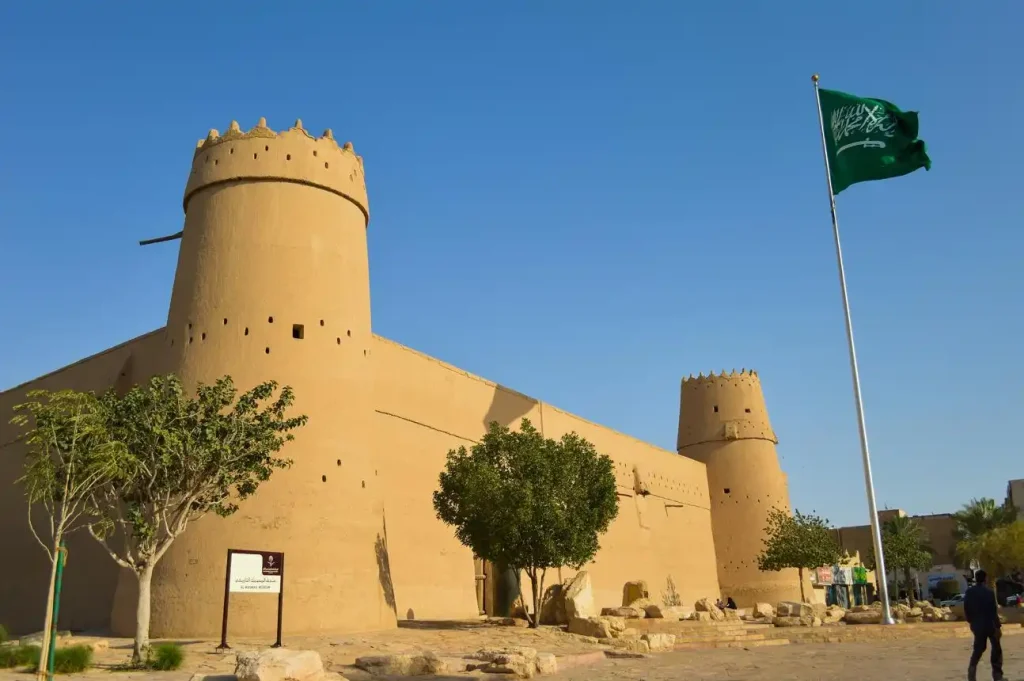
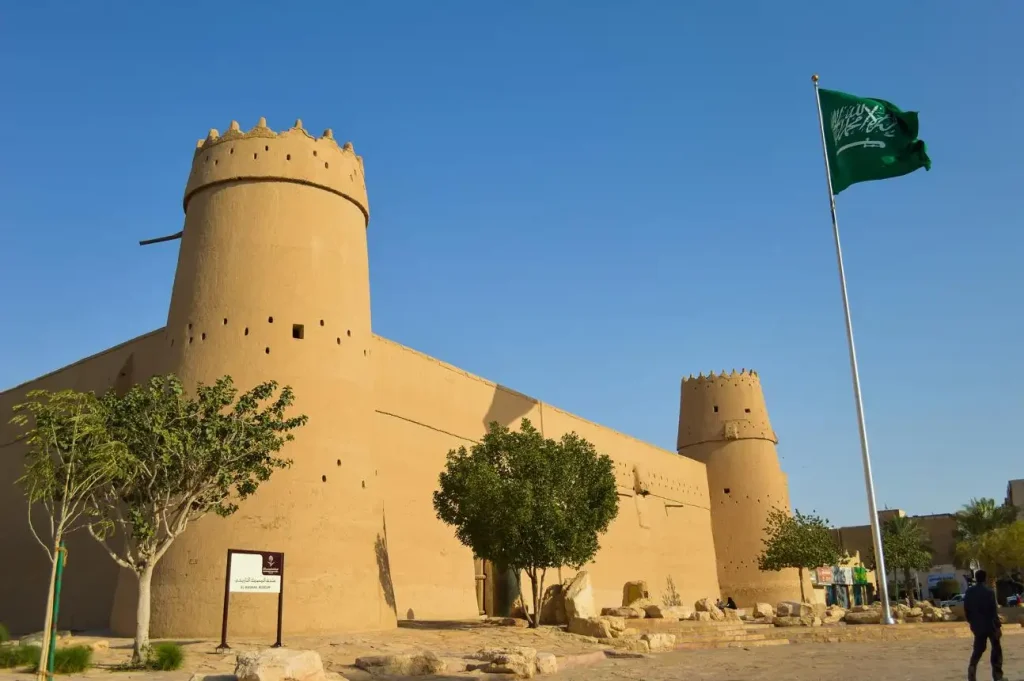
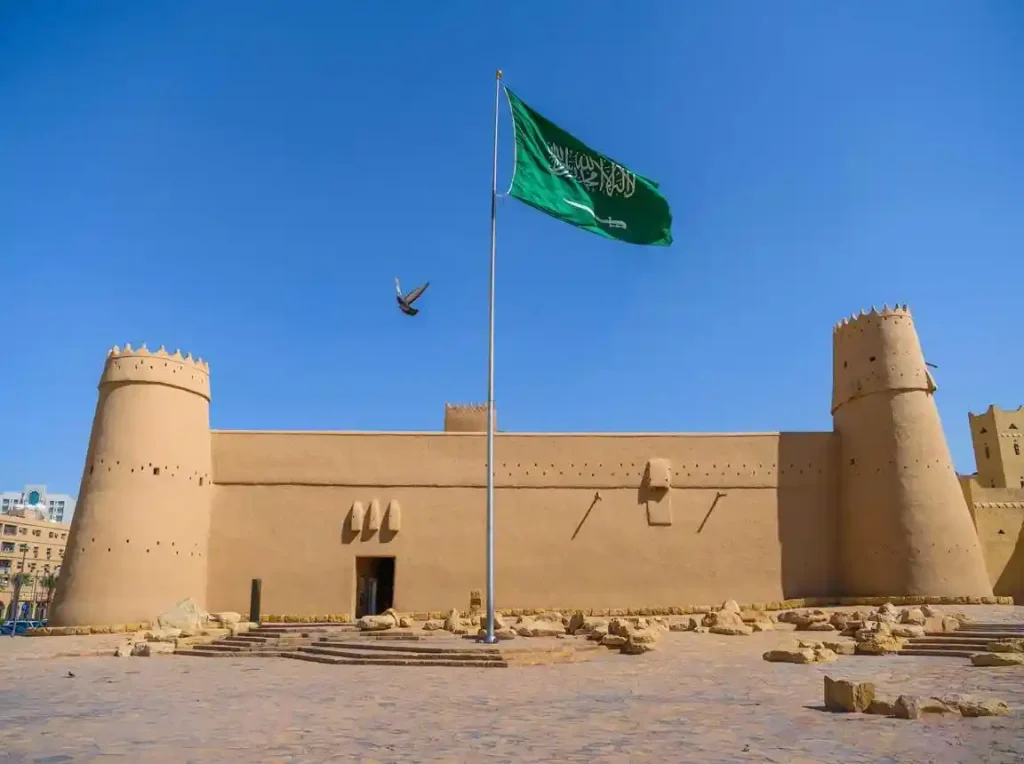
Start your cultural exploration at Masmak Fortress, one of Riyadh’s best-known historical landmarks. Built using traditional mud-brick construction, the fortress played an important role in the events that led to the recapture of Riyadh in 1902.

Inside, visitors can learn about the city’s history through displays, historical objects, photographs, and exhibits connected with the unification of Saudi Arabia.

Nearby, Deera Square provides a connection to the traditional urban center. It is worth understanding the area’s historical context and respecting local customs when visiting public spaces.

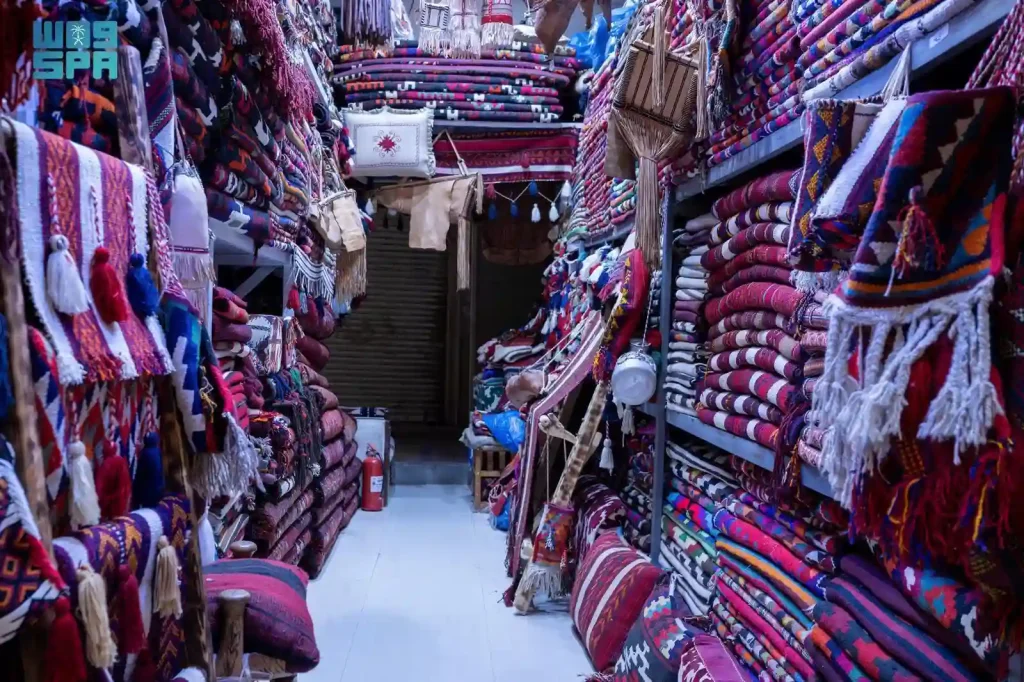
Continue to Souq Al Zal, a traditional market where you can browse carpets, antiques, handicrafts, perfumes, and heritage-inspired products. It is also a good place to observe local shopping traditions and look for distinctive souvenirs.

Allow approximately two to three hours for this area, depending on how much time you spend shopping and exploring. Check the fortress’s current visiting schedule before setting out.

National Museum and King Abdulaziz Historical Center

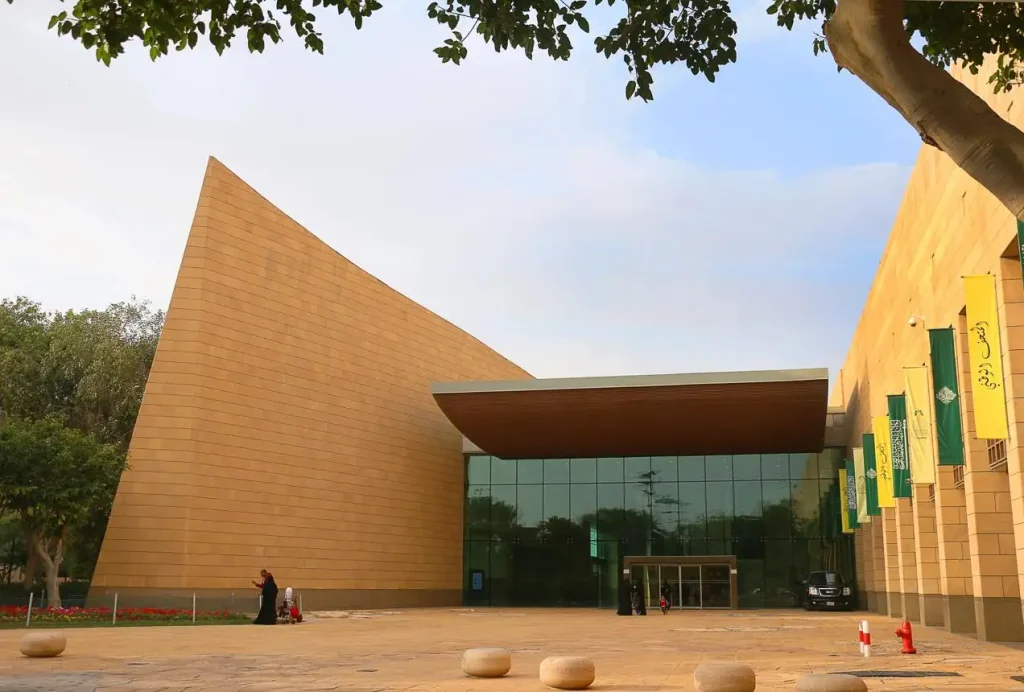
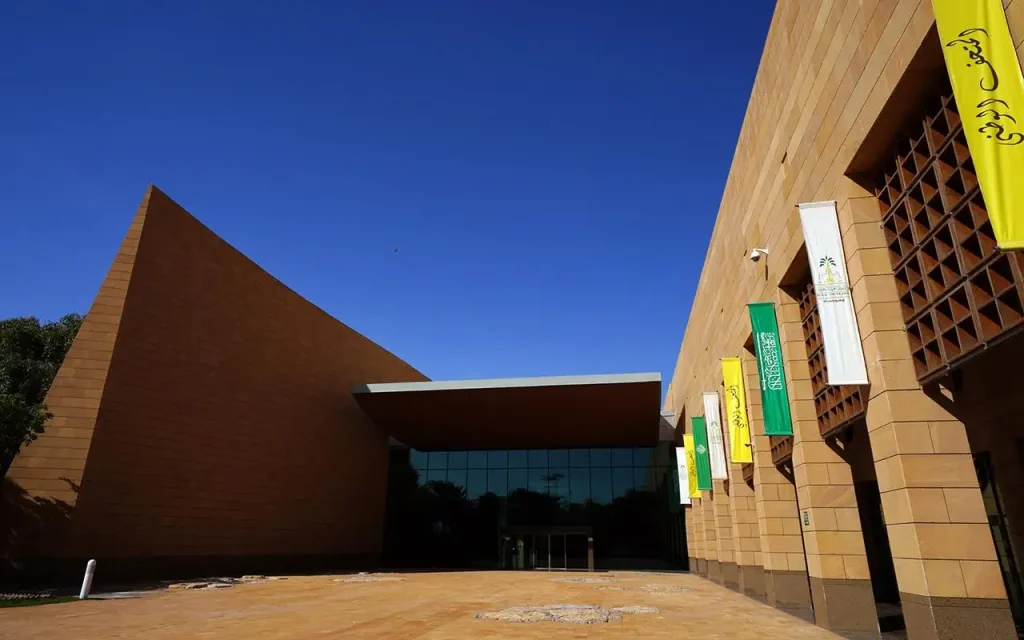
The National Museum of Saudi Arabia is one of the most useful places to visit if you want to understand the Kingdom’s history, geography, civilizations, and cultural development.

Its exhibition galleries take visitors through different historical periods, beginning with the natural history of the Arabian Peninsula and continuing through pre-Islamic civilizations, Islamic history, and the establishment of modern Saudi Arabia.

The museum is part of the King Abdulaziz Historical Center, a cultural area that also includes gardens and historical buildings.

The nearby Murabba Palace adds another dimension to the visit, offering an opportunity to learn about the country’s modern royal history and traditional architectural influences.

The Saudi National Museum’s visitor information lists free entry. Its published schedule includes different opening hours throughout the week, with Friday afternoon and evening visits available and Sunday closures. Check the current schedule before traveling, particularly during holidays and special events.

Diriyah and At-Turaif District

Diriyah is one of the most important cultural destinations near Riyadh. It is closely connected with the origins of the First Saudi State and offers visitors a chance to explore traditional Najdi architecture and the history of the Kingdom.

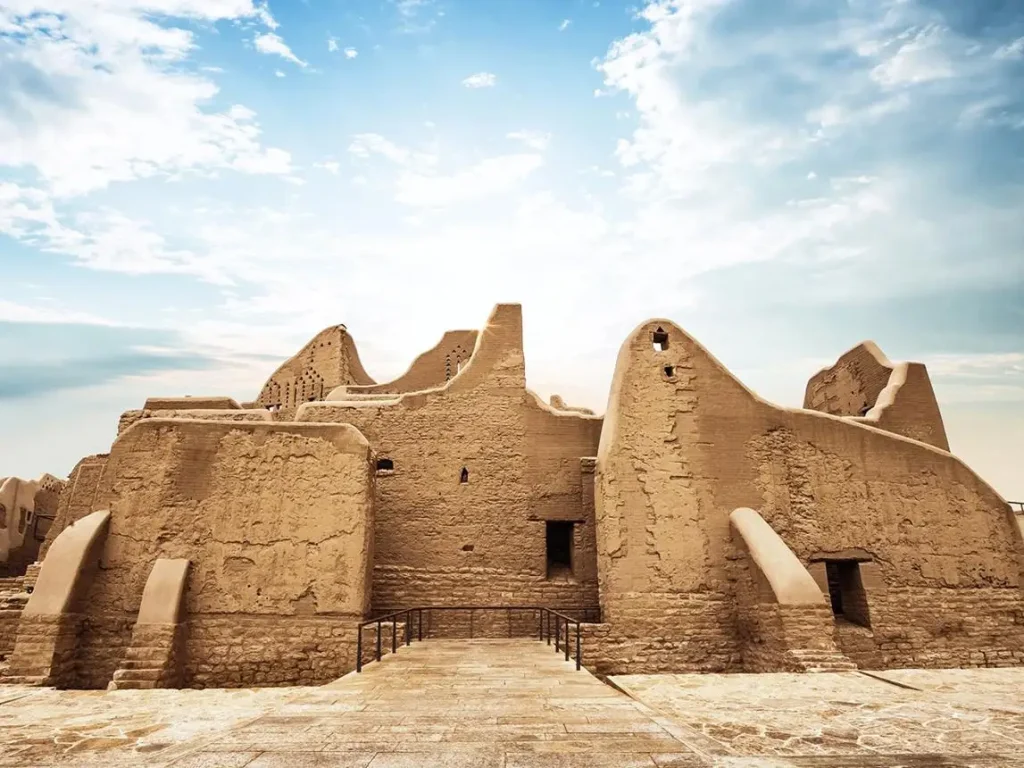
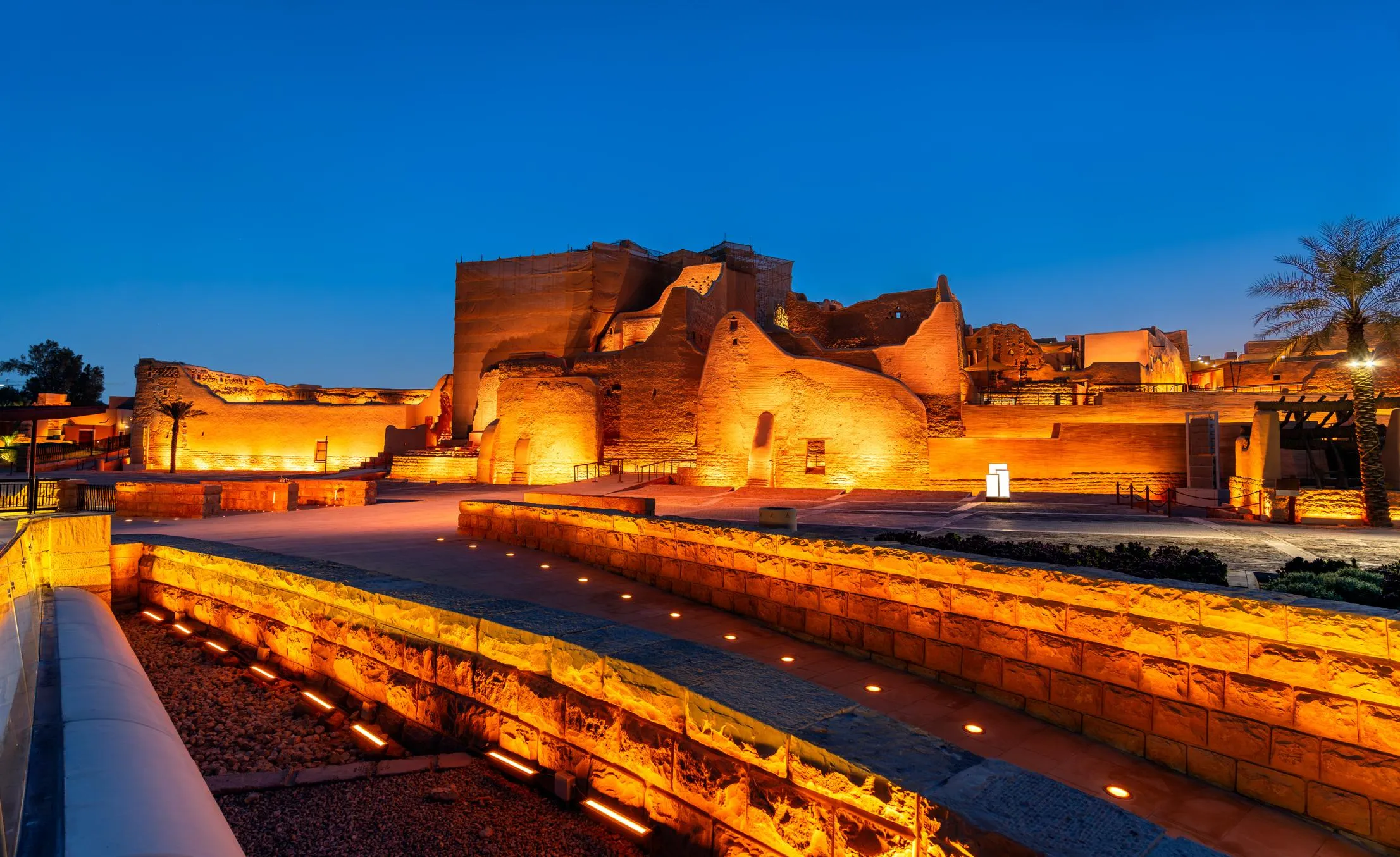
The main attraction is At-Turaif District, a UNESCO World Heritage Site known for its historic palaces, mud-brick buildings, and architectural details.

You can explore its museums and heritage spaces, learn about the area’s historical significance, and appreciate the distinctive design of traditional Najdi buildings.

After exploring the historic district, continue to Bujairi Terrace, where restaurants, cafes, and views of the surrounding heritage area create a more contemporary experience.

Access arrangements and ticket requirements can vary, so check the official booking information before visiting.

A Trip to Al Diriyah is a practical option if you prefer to explore the heritage district with local context and organized transportation.

Traditional dining at Najd Village

Food is an essential part of discovering Saudi culture, and Najd Village is a popular choice for experiencing traditional Saudi-inspired dining in a setting influenced by Najdi architecture and hospitality.

Try local dishes such as:

  • Kabsa: A traditional rice dish prepared with meat or chicken and a blend of spices.

  • Jareesh: A comforting dish made from crushed wheat, commonly cooked with meat or chicken.

  • Mutabbaq: A stuffed pastry that can contain savory fillings such as minced meat, vegetables, and eggs.

Traditional meals are often served in generous portions and are ideal for sharing. Ask about local specialties and portion sizes when ordering, particularly if you are traveling with a group.

For visitors who want to discover more than one restaurant or sample different regional flavors, a Riyadh Food Tour offers a convenient way to explore the city’s food culture.

Skyline Views and Modern Riyadh

Modern Riyadh offers a different sightseeing experience, with impressive towers, luxury hotels, contemporary shopping destinations, and entertainment districts. These attractions are especially enjoyable in the late afternoon and evening, when the city becomes more active and the skyline lights up.

Kingdom Centre Sky Bridge

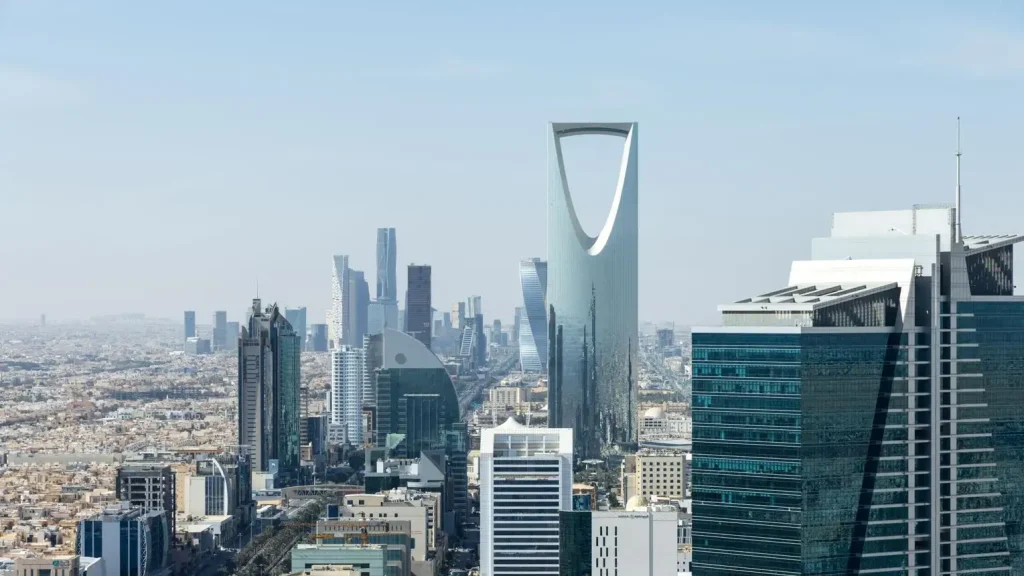
The Kingdom Centre is one of the most recognizable landmarks in Riyadh. Its distinctive architectural design makes it an important part of the city’s modern skyline.

The highlight for visitors is the Sky Bridge, an elevated observation walkway approximately 300 meters above ground level. From here, you can enjoy panoramic views of Riyadh, take photographs, and appreciate the scale of the Saudi capital.

It is particularly attractive for couples and photography enthusiasts. Sunset is a good time to visit because you can see the city in daylight before watching the lights appear across the skyline.

Allow around one to two hours for the experience, including transportation and time for photographs. Ticket prices and availability should be checked before visiting, as they may change.

Al Faisaliah Tower and The Globe

Another major landmark is Al Faisaliah Tower, recognized by its distinctive golden sphere near the top of the building.

The sphere houses The Globe, a fine-dining restaurant offering panoramic views of the city. Its elevated location and distinctive interior make it an interesting choice for a special evening.

The Globe serves modern European cuisine, making it different from traditional Saudi restaurants. It is particularly suitable for couples, special occasions, and visitors looking for a memorable dining experience.

Dinner reservations are recommended. Confirm the latest menu, schedule, dress code, and reservation conditions directly with the restaurant.

Boulevard City and Riyadh Park Mall

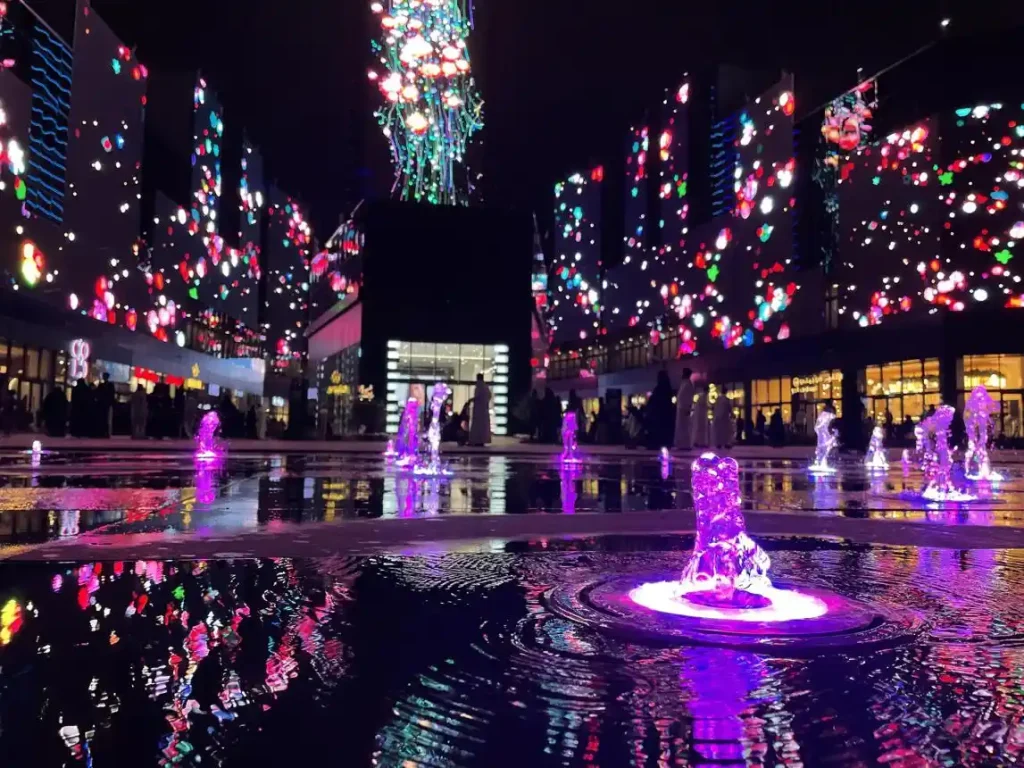
If you want to experience the contemporary side of the city, Boulevard City should be on your itinerary, especially during Riyadh Season.

The destination brings together entertainment, dining, shopping, performances, and seasonal attractions. It is particularly suitable for families, groups of friends, and travelers who enjoy lively evening environments.

You can spend several hours exploring its restaurants and entertainment spaces, checking the event schedule, and enjoying the atmosphere.

Another option is Riyadh Park Mall, a modern shopping destination where visitors can enjoy retail stores, restaurants, cafes, and indoor entertainment.

The two destinations offer different experiences. Boulevard City is more closely associated with seasonal entertainment, while Riyadh Park Mall is a practical choice for shopping and indoor leisure throughout the year.

Desert Adventures and Day Trips from Riyadh

One of the most memorable things to do in Riyadh is to leave the city and explore the surrounding desert landscapes. The region offers dramatic cliffs, red sand dunes, natural caves, and outdoor experiences that reveal a completely different side of central Saudi Arabia.

These trips require more preparation than ordinary city sightseeing. Distance, road conditions, weather, and mobile coverage should all be considered before departure.

Edge of the World (and the Second Edge)

Edge of the World is one of the most famous natural attractions near Riyadh. Its dramatic cliffs form part of the Tuwaiq Escarpment, creating an extraordinary landscape overlooking a wide desert valley.

The experience is about more than reaching a viewpoint. Visitors can appreciate the geological formations, walk along designated safe areas, photograph the landscape, and enjoy the open desert atmosphere.

The so-called Second Edge is another viewpoint in the wider escarpment area. Its suitability depends on the selected route, access conditions, and the capabilities of the vehicle.

How far is Edge of the World from Riyadh?

The distance depends on your starting point in Riyadh and the access route. It is commonly planned as a half-day or longer excursion rather than a quick city stop. Travel time can vary considerably because the final approach may involve unpaved desert roads.

Important considerations include:

  • Use a suitable four-wheel-drive vehicle for the chosen route and access conditions.

  • Avoid approaching cliff edges, especially when taking photographs.

  • Carry enough drinking water, food, and essential supplies.

  • Do not rely on continuous mobile coverage outside the city.

  • Check road access, weather conditions, and any gate restrictions before departure.

  • Avoid visiting during extreme summer heat or after dark.

A local guide can help with route selection, vehicle requirements, and safe access to suitable viewpoints. Our Edge of the World tour is designed for travelers who want to experience this landscape as part of an organized excursion.

Red Sand Dunes: quad biking, camels and sandboarding

The Riyadh Red Sand Dunes offer an accessible introduction to desert adventure for visitors who want more activity than traditional sightseeing.

The landscape is known for its reddish sand and rolling dunes, providing a setting for several outdoor experiences.

Popular activities include:

  • Quad biking: Ride an all-terrain vehicle across designated dune areas under suitable supervision.

  • Camel riding: Experience a traditional form of desert transportation and enjoy a slower way to explore the landscape.

  • Sandboarding: Slide down suitable sandy slopes using a sandboard.

  • Desert photography: Capture the changing colors of the dunes, especially around sunrise and sunset.

Late afternoon is generally a comfortable time for a desert visit during the cooler months. Avoid the hottest part of the day in summer, and follow the activity operator’s safety instructions.

Not every activity is available at every location or on every date. Confirm equipment, age requirements, supervision, and inclusions before booking.

A Riyadh Red Sand Dunes tour is a good option if you want to experience the dunes without organizing a suitable vehicle and activity arrangements independently.

Heet Cave

Heet Cave is a natural attraction south of Riyadh, known for its limestone formations and underground water.

Unlike the wide-open desert landscape of the Edge of the World, Heet Cave offers a different experience centered on geology and natural exploration.

Visitors are attracted by the cave’s entrance, rock formations, and the water found inside. However, conditions can be challenging, and the route may involve uneven surfaces and steep sections.

Before planning a visit, consider the following:

  • Check current access conditions and whether the site is open to visitors.

  • Wear suitable footwear with good grip.

  • Avoid entering unsafe or flooded sections.

  • Do not attempt cave exploration without understanding the terrain.

  • Follow local safety guidance and avoid visiting alone.

Heet Cave is better suited to travelers who enjoy nature and outdoor exploration than visitors looking for a conventional sightseeing stop..

Al Qara Hill and Jawatha Mosque (Al Ahsa)

If you have additional time in Saudi Arabia, consider extending your trip to Al Ahsa.

Located in the Eastern Province, Al Ahsa offers a different landscape from Riyadh, combining palm groves, historical sites, traditional settlements, and natural formations.

Two important attractions are:

Al Qara Hill: Known for its distinctive rock formations and cave passages, the hill offers an interesting geological experience. Its natural spaces have made it one of the region’s recognizable attractions.

Jawatha Mosque: A historic mosque associated with the early Islamic period and an important part of Al Ahsa’s religious heritage.

These destinations are not immediate attractions within Riyadh. They require a separate intercity journey and are better included in a longer Saudi Arabia itinerary rather than squeezed into a standard Riyadh day tour.

Wadi Namar and Wadi Hanifa

For a quieter outdoor experience, visit Wadi Namar or Wadi Hanifa.

Wadi Namar is known for its lake and surrounding recreational area, offering a pleasant setting for photographs and relaxed outdoor time when conditions are suitable.

Wadi Hanifa is a long natural valley running through the Riyadh region. Its landscapes provide a contrast to the surrounding urban development, with open spaces and areas for walking and enjoying nature.

Both destinations can work well for visitors who want to spend some time outdoors without committing to a full desert excursion.

Check local access conditions and facilities before visiting, especially after rainfall, when some areas may be affected by changing water levels.

Things to Do in Riyadh at Night

Riyadh becomes particularly lively after sunset, when temperatures become more comfortable and restaurants, cafes, shopping destinations, and entertainment venues attract visitors.

If you are searching for things to do in riyadh at night, consider these experiences:

  • Visit Boulevard City: Enjoy seasonal performances, restaurants, entertainment, and lively outdoor spaces.

  • Explore Boulevard World: Discover international food, cultural attractions, themed areas, and evening entertainment during Riyadh Season.

  • Spend time at The 303: Explore this contemporary lifestyle and dining destination for cafes, restaurants, and social experiences.

  • Visit local cafes: Riyadh has a diverse cafe culture, ranging from specialty coffee shops to traditional Arabic coffee experiences.

  • Watch a movie: Shopping centers and entertainment complexes offer cinemas with international and regional films.

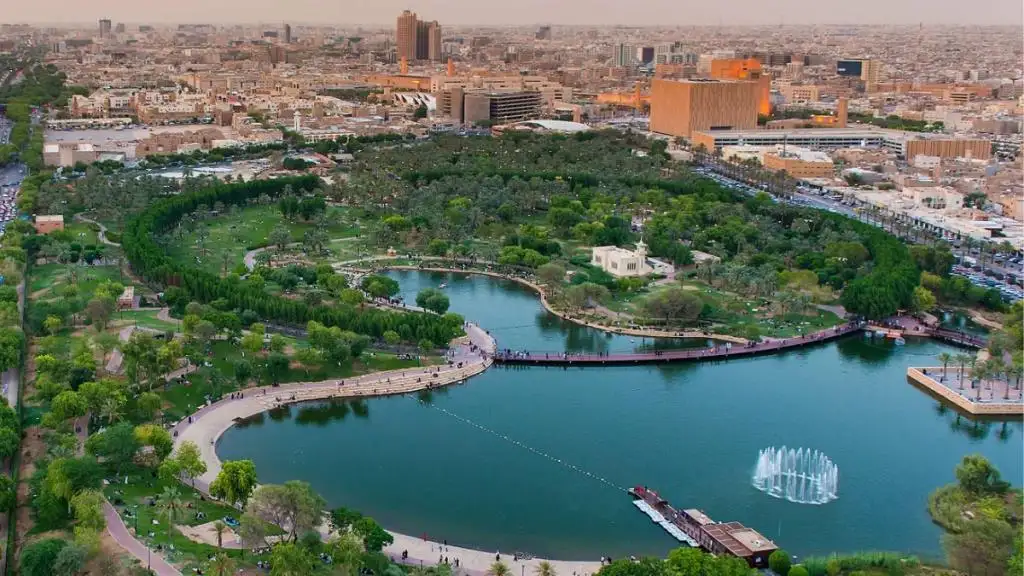
  • Visit King Abdullah Park: Enjoy its landscaped surroundings and check whether the musical fountain is operating during your visit.

For a more organized evening, a Riyadh by Night Tour can combine selected city attractions, dining stops, and illuminated landmarks.

The best evening plan depends on the day of the week and seasonal entertainment schedules. Check individual venues before departure rather than assuming all attractions operate at the same hours.

Things to Do in Riyadh for Every Type of Traveler

Riyadh offers different experiences depending on who you are traveling with. Families may prefer parks and interactive attractions, couples may enjoy dining and skyline views, while solo visitors can combine museums, cultural tours, and independent exploration.

With kids and family (zoo, King Abdullah Park, theme parks)

Families looking for things to do in riyadh with kids can choose from wildlife experiences, outdoor spaces, seasonal attractions, and indoor entertainment.

Some suitable options include:

  • Riyadh Zoo: A family-friendly attraction featuring animals from different parts of the world. Check current opening hours and ticket availability before visiting.

  • King Abdullah Park: A landscaped public park where families can enjoy open spaces and outdoor relaxation. Check the availability of individual facilities and fountain shows.

  • Wonder Garden: A seasonal Riyadh Season attraction with family entertainment and themed experiences. Confirm its operating dates before planning a visit.

  • Boulevard World: An entertaining option for children and adults interested in international-themed areas, food, and attractions.

  • Indoor entertainment centers: Shopping malls provide options such as cinemas, games, and family activities, particularly useful during hot weather.

For families with younger children, avoid overloading the itinerary. Choose two or three main activities and leave time for meals and rest.

For couples

There are plenty of things to do in riyadh for couples, whether you prefer quiet cultural experiences, outdoor adventures, or special dining occasions.

Consider these ideas:

  • Enjoy panoramic city views from Kingdom Centre Sky Bridge.

  • Book an evening dinner at The Globe in Al Faisaliah Tower.

  • Explore Diriyah and enjoy dinner at Bujairi Terrace.

  • Take a private desert excursion to the Red Sand Dunes.

  • Discover traditional Saudi dishes through a food-focused experience.

  • Spend an evening exploring Boulevard City during Riyadh Season.

Couples who value flexibility may prefer a private tour, especially when combining several locations or arranging a special occasion. You can select the pace, choose preferred stops, and allow more time for dining and photography.

For solo and women travelers

Riyadh can be a rewarding destination for solo travelers, including women traveling independently. The city offers museums, shopping destinations, cafes, restaurants, cultural sites, and organized tours that make it possible to explore according to your own interests.

For women planning a solo visit, useful activities include:

  • Visiting the National Museum and exploring Saudi heritage.

  • Shopping for traditional products at Souq Al Zal.

  • Discovering Diriyah and its historical architecture.

  • Enjoying cafes, restaurants, and cultural experiences.

  • Joining a guided city or food tour.

  • Booking a private driver or organized excursion for destinations outside the city.

It is sensible to plan transportation in advance, share your itinerary with someone you trust, and check the arrangements of any tour provider before booking.

Saudi Arabia offers different travel experiences for independent visitors, and women do not need to travel as part of a group to explore the country. For more practical information, read our guide to women traveling alone in Saudi Arabia.

Free and budget-friendly options

Not every enjoyable experience in Riyadh requires an expensive ticket. There are several ways to explore the city while keeping your travel budget under control.

Some options to consider include:

  • Saudi National Museum: Check its visitor information for current admission arrangements.

  • King Abdulaziz Historical Center: Explore the surrounding public areas and gardens.

  • Wadi Hanifa: Enjoy selected outdoor areas and natural scenery.

  • Souq Al Zal: Browse traditional market stalls without necessarily purchasing anything.

  • Bujairi and Diriyah surroundings: Enjoy the heritage atmosphere while checking the separate access arrangements for At-Turaif and individual venues.

  • Public parks: Visit accessible recreational areas such as Wadi Namar, subject to current access conditions.

The best approach is to combine free cultural experiences with one or two paid attractions that matter most to you.

Remember that free entry to a public area does not necessarily mean that every museum, event, restaurant, or seasonal attraction inside it is free. Always check the latest admission arrangements.

Riyadh Itineraries: 1 Day, 2 Days and 3 to 4 Days

Planning your activities by geographical area is one of the easiest ways to make the most of your time in Riyadh. Since the city is large and traffic can affect journey times, grouping nearby attractions helps reduce unnecessary driving.

Here are three practical itinerary suggestions.

One day in Riyadh

If you only have one day, focus on the historic center, one modern landmark, and an evening experience.

Time Suggested activity
9:00 AM Start at Masmak Fortress and explore the surrounding historic area.
10:30 AM Browse Souq Al Zal and discover traditional Saudi products.
12:00 PM Enjoy lunch and allow time for prayer and rest.
2:00 PM Visit the National Museum and King Abdulaziz Historical Center, subject to opening hours.
4:30 PM Head toward Kingdom Centre for shopping and the Sky Bridge experience.
7:00 PM Enjoy dinner or explore Boulevard City, depending on the seasonal program.

This plan provides a useful introduction to Riyadh without trying to cover every major attraction.

If you prefer to spend less time organizing transportation, a Riyadh City Tour can help you combine the main city highlights in one organized experience.

Two days in Riyadh

If you are wondering what to do in riyadh in 2 days, divide your visit between historic Riyadh and its modern attractions, leaving the second day for Diriyah and evening entertainment.

Day Time Suggested activity
Day 1 Morning Masmak Fortress and Souq Al Zal.
Day 1 Afternoon National Museum and King Abdulaziz Historical Center.
Day 1 Evening Kingdom Centre Sky Bridge and dinner.
Day 2 Morning Explore Diriyah and its cultural surroundings.
Day 2 Afternoon Enjoy lunch and explore Bujairi Terrace.
Day 2 Evening Visit Boulevard City or enjoy a Riyadh food experience.

This riyadh itinerary offers a balanced introduction to the city, combining heritage, architecture, dining, and entertainment.

You can adjust the schedule depending on museum hours, Diriyah access arrangements, and seasonal events. For example, visiting At-Turaif in the evening may work better than planning it as a morning stop.

Three to four days with desert and Diriyah

With three to four days, you have enough time to explore the city at a comfortable pace and add an outdoor adventure.

Day Main focus Suggested activities
Day 1 Historic Riyadh Masmak Fortress, Deera Square, Souq Al Zal, and the National Museum.
Day 2 Modern Riyadh Kingdom Centre, Al Faisaliah Tower, shopping, and Boulevard City.
Day 3 Desert adventure Edge of the World or Riyadh Red Sand Dunes.
Day 4 Culture and local experiences Diriyah, Bujairi Terrace, and a traditional Saudi food experience.

If you have only three days, combine the city activities into two days and dedicate the third to one desert destination.

For a more structured cultural experience, consider the 4 Days Riyadh Heritage Tour Package.

Avoid combining Edge of the World and the Red Sand Dunes into a rushed single day unless the route, vehicle, timing, and activities have been carefully arranged. Each deserves sufficient time, particularly when traveling with children or visitors unfamiliar with desert conditions.

Guided Tour or Self-Drive? How to Get Around Riyadh

Choosing between an organized tour and independent transportation depends on your itinerary, budget, and comfort with driving in a large city.

Self-driving gives you flexibility, while a guided experience can simplify transportation, attraction planning, and visits to destinations outside the urban area.

Why desert trips need a 4×4 and a local guide

Desert destinations around Riyadh require more preparation than ordinary city attractions. A standard city car may not be suitable for unpaved roads, soft sand, or certain access routes.

A four-wheel-drive vehicle is recommended for routes that require off-road driving, particularly around the Edge of the World and selected desert areas.

A local guide can help with:

  • Selecting an appropriate route based on current access conditions.

  • Understanding the terrain and identifying suitable stopping points.

  • Checking vehicle requirements and weather conditions.

  • Planning around limited mobile coverage.

  • Avoiding unsafe areas near cliffs and steep slopes.

  • Coordinating the excursion and return journey.

Do not assume that every desert destination requires exactly the same vehicle or access arrangements. Requirements depend on the route, road conditions, and the chosen activity.

Avoid independent nighttime desert driving, particularly if you are unfamiliar with the area. During summer, extreme temperatures also make daytime excursions unsuitable.

Private tours vs group departures

Both private and group tours can be suitable for visiting Riyadh, but they offer different advantages.

Comparison Private tour Group tour
Cost Usually higher overall Often more economical per person
Flexibility More control over stops and timing Follows a planned schedule
Experience Personalized attention Shared experience with other travelers
Transportation Arranged around your itinerary Usually follows a fixed route
Best for Couples, families, and small groups Solo travelers and budget-conscious visitors

A private tour is particularly useful when visiting multiple attractions, traveling with children, or planning a desert excursion.

Group departures can be a practical choice if you are comfortable following a set schedule and want to share the experience with other visitors.

At Saudi Arabia Tours, the focus is on arranging experiences around travelers’ interests, available time, and preferred destinations. The right option depends on the actual tour arrangements and availability for your travel dates.

Taxis, ride-hailing and private drivers

Riyadh is a large city, and getting between attractions can take considerable time. Transportation should therefore be part of your itinerary rather than something you decide at the last minute.

Here are the main options:

Ride-hailing services: Uber and Careem are convenient for traveling between hotels, shopping centers, restaurants, and popular attractions. They are particularly useful when you do not want to rent a car.

Private drivers: Hiring a private driver can be helpful if you have several stops in different areas or want more flexibility throughout the day.

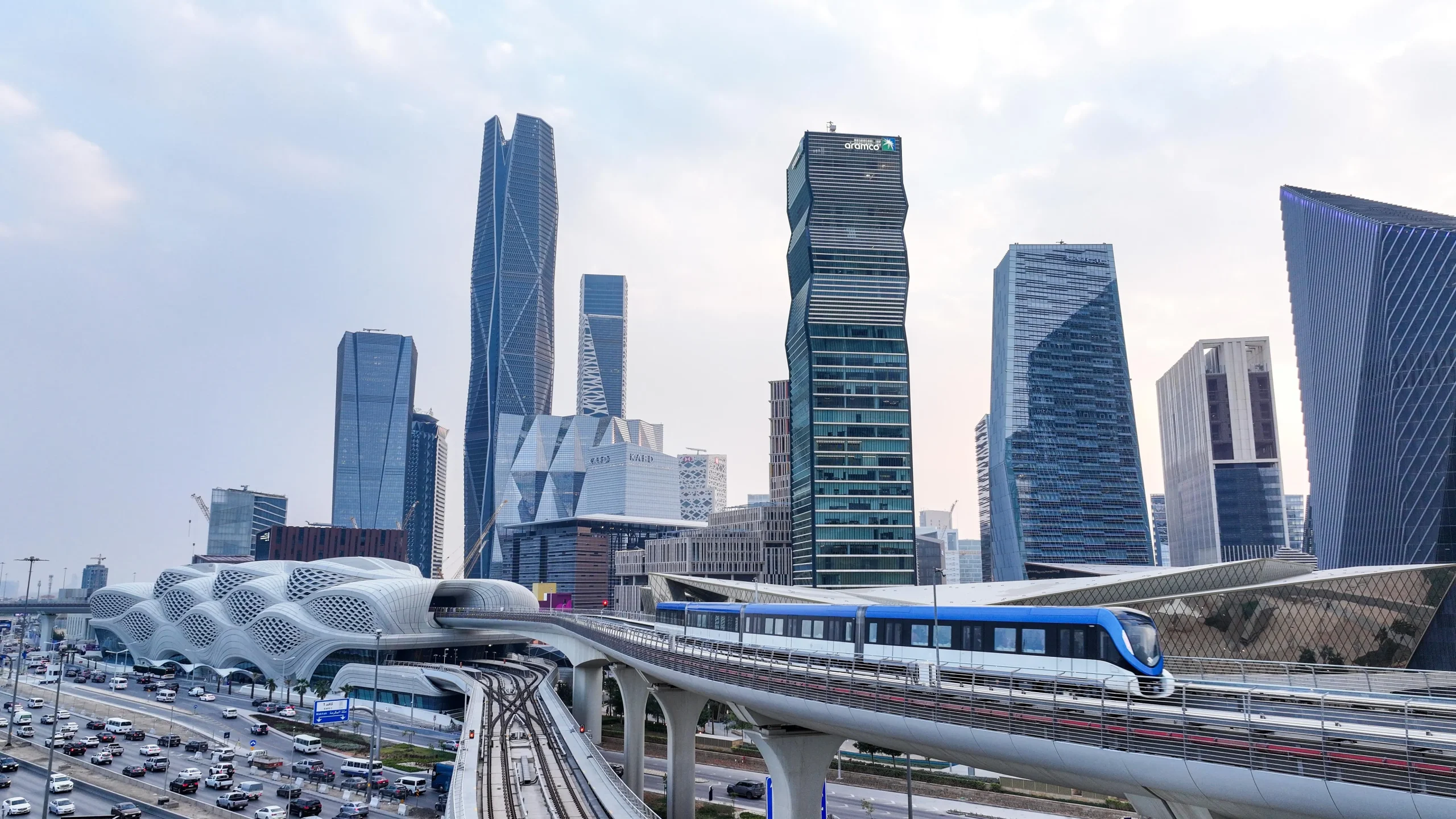
Riyadh Metro: The metro is useful for selected routes, especially when traveling between connected districts and avoiding road traffic. Riyadh’s public transport network includes six metro lines, supported by buses. Check the current Darb platform for operating hours, fares, and route information.

Rental cars: Renting a car can be useful if you are comfortable driving in Riyadh and want to explore destinations outside the city. However, parking, traffic, and desert-road conditions should be considered.

For visitors planning a combination of city sightseeing and desert activities, a private tour may be more convenient than arranging several different transportation options independently.

Practical Tips: Dress Code, Cash, Photography and Etiquette

A little preparation can make your Riyadh visit more comfortable and help you enjoy local experiences respectfully.

Dress code: Choose modest, comfortable clothing suitable for the weather and the places you plan to visit. Women visitors are not generally required to wear an abaya or cover their hair, but modest dress is recommended. Avoid clothing that is excessively revealing.

Cash and payments: Carry a small amount of Saudi riyals for traditional markets, smaller purchases, or situations where cash is more convenient. Cards and contactless payments are widely used in modern shopping centers, hotels, and restaurants.

Photography: Riyadh offers many interesting photography opportunities, from traditional architecture to modern skyscrapers. Always respect privacy and ask permission before photographing local people, particularly families. Follow photography restrictions inside museums and other attractions.

Prayer times: Check local prayer schedules and allow flexibility in your daily itinerary. Some businesses may temporarily close, while others continue operating.

Weather preparation: Bring sunscreen, sunglasses, comfortable shoes, and enough water for outdoor activities. During winter, carry an additional layer for cooler evenings and desert excursions.

Transportation: Plan your journeys according to the distance between attractions. A location that looks close on a map may require a longer drive because of road layouts and traffic.

Booking ahead: Reserve popular seasonal entertainment, special dining experiences, and organized desert excursions in advance when possible. Always check current schedules, prices, and cancellation conditions.

Respect local culture: Learn a few basic Arabic greetings, follow local customs, and be considerate when visiting religious and historical locations.

If you are researching things to do in riyadh today, check the current opening hours, event schedules, weather, and available transportation before leaving your hotel. Seasonal attractions can change their programs, and some experiences require advance booking.

Things to Do in Riyadh: FAQs

How many days do you need in Riyadh?

Two to three days are generally enough to explore Riyadh’s main historical attractions, modern landmarks, and entertainment destinations. One day can cover selected city highlights, while four days allow you to add a desert excursion and spend more time exploring Diriyah and local food experiences.

What are the best free things to do in Riyadh?

Some of the best budget-friendly experiences include visiting the Saudi National Museum, exploring the public areas of King Abdulaziz Historical Center, browsing Souq Al Zal, and enjoying selected outdoor areas of Wadi Hanifa. Check individual attraction access arrangements because some locations and special experiences require separate tickets.

What can you do in Riyadh at night?

Popular evening activities include visiting Boulevard City, exploring Boulevard World during Riyadh Season, dining at traditional Saudi restaurants, enjoying cafes, watching a movie, and visiting illuminated landmarks such as Kingdom Centre. You can also explore Diriyah and enjoy dinner at Bujairi Terrace, subject to its operating hours.

Is Edge of the World worth it and how far is it?

Yes. Edge of the World is worth visiting if you enjoy natural landscapes, hiking, photography, and desert adventures. Its dramatic cliffs offer some of the most impressive scenery in the Riyadh region.

The distance depends on your starting point and the access route. It is best planned as a half-day or longer excursion, with additional time allowed for off-road travel. A suitable vehicle, advance route planning, sufficient water, and awareness of mobile coverage limitations are important.

Can you visit Riyadh as a solo woman?

Yes. Women can visit Riyadh independently and enjoy museums, restaurants, shopping destinations, cultural attractions, and organized tours. Planning transportation in advance, dressing modestly, and following local customs can help make the experience more comfortable. A private tour is another option if you prefer organized transportation and local assistance.

What is the best day trip from Riyadh?

Edge of the World is one of the most popular day trips for visitors interested in nature and dramatic desert landscapes. Riyadh Red Sand Dunes are another good option for travelers who prefer quad biking, camel riding, and sandboarding.

Diriyah is an excellent alternative for visitors interested in history and Saudi heritage, while Heet Cave may appeal to those looking for a different natural experience. Your best choice depends on your interests, available time, and current access conditions.

Places to Visit in Riyadh: Best Attractions by Area (2026)

Places to Visit in Riyadh
Riyadh combines historic neighborhoods, modern landmarks, cultural museums, green spaces, and desert landscapes in a city that stretches across a large area. Choosing the right places to visit in Riyadh is not only about knowing which attractions are worth seeing. It is also about understanding where they are, how far apart they are, and how much time you need to explore each district.

This 2026 guide organizes Riyadh’s main attractions by location, from Old Riyadh and Diriyah to the modern northern districts, parks, and destinations outside the city. It also includes practical visiting information, suggested routes, family-friendly options, and tips to help you plan your sightseeing without spending too much time on the road.

Riyadh at a Glance: Map, Districts and Distances

Riyadh is a large city, and its main attractions are spread across several districts. Old Riyadh is ideal for exploring Saudi history, Diriyah offers heritage and traditional architecture, while Olaya and the northern districts showcase the capital’s modern skyline, shopping destinations, and entertainment venues.

The easiest way to plan Riyadh sightseeing is to group nearby attractions together instead of crossing the city several times in one day.

Area Main places to visit Suggested time
Old Riyadh (Ad-Dirah) Masmak Fortress, Deera Square, Souq Al Zal 2–3 hours
Al Murabba Murabba Palace, National Museum, King Abdulaziz Historical Center 2–4 hours
Diriyah At-Turaif, Bujairi Terrace 3–4 hours
Olaya and northern Riyadh Kingdom Centre, Al Faisaliah, Boulevard City, Riyadh Park 3–5 hours
Eastern and central parks King Abdullah Park, Salam Park, Wadi Hanifa 2–3 hours
Outside Riyadh Edge of the World, Red Sand Dunes, Heet Cave Half day or full day

The distances below are approximate driving estimates from the Olaya area, not fixed journey times. Traffic, road access, parking, and event schedules can change how long each trip takes.

How the city is laid out (Olaya, Old Riyadh, Diriyah, Diplomatic Quarter)

Riyadh’s main sightseeing areas can be understood through four useful geographical zones.

  • Old Riyadh and Ad-Dirah: Located in the historic center, this area includes Masmak Fortress, Deera Square, and Souq Al Zal. It is the best starting point for visitors interested in traditional markets and the city’s early history.

  • Al Murabba: Close to central Riyadh, this district contains Murabba Palace, the King Abdulaziz Historical Center, and the National Museum. These attractions can be combined in one visit.

  • Olaya and northern Riyadh: This modern part of the city includes Kingdom Centre, Al Faisaliah Tower, Riyadh Park Mall, and major entertainment destinations such as Boulevard City.

  • Diriyah and the Diplomatic Quarter: Diriyah lies northwest of central Riyadh and is known for its historic mudbrick architecture. The Diplomatic Quarter, southwest of Olaya, offers landscaped streets, green spaces, and walking routes.

For a practical sightseeing plan, consider Old Riyadh and Al Murabba one day, then Diriyah and northern Riyadh on another. This arrangement reduces unnecessary driving and leaves more time at each attraction.

Why you should group places by area to save time

Unlike compact historic cities where many attractions are within walking distance, Riyadh is designed around road transportation. Even places that appear close on a map may require a car or taxi to reach comfortably.

Grouping nearby riyadh tourist places helps you avoid repeating the same routes and gives you more flexibility around prayer times, restaurant visits, and traffic. It also makes it easier to decide whether you need a half-day tour, a full-day itinerary, or a private driver.

If you prefer to visit several landmarks with a local guide, a Riyadh City Tour can help organize the main stops into a more convenient route.

Old Riyadh (Ad-Dirah): Heritage Places to Visit

Old Riyadh is the right place to begin if you want to understand the city’s history and the events that shaped modern Saudi Arabia. Its traditional streets, historic buildings, and markets offer a different experience from the modern commercial districts.

Most of the main attractions in this area can be explored together, although walking conditions and access may vary between individual sites.

Masmak Fortress


Area: Ad-Dirah, central Riyadh.
Approximate distance from Olaya: 5–7 km by road.
Suggested visit: 45–75 minutes.
Entry: Check current visitor arrangements before arrival.
Best time: Morning or late afternoon.

Masmak Fortress is one of the most recognizable riyadh historical places. Built from clay and mudbrick, the fortress played an important role in the recapture of Riyadh in 1902, an event closely connected to the foundation of modern Saudi Arabia.

Inside, visitors can explore displays, photographs, historical objects, and explanations of the fortress’s role in the city’s past. Its traditional architecture and central courtyard also make it an interesting stop for photography and cultural sightseeing.

Allow enough time to explore the exhibitions rather than treating Masmak as a quick photo stop. It is particularly suitable for first-time visitors who want a clear introduction to Riyadh’s history.

Deera Square and Souq Al Zal

Area: Ad-Dirah, near Masmak Fortress.
Approximate distance from Olaya: 5–7 km by road.
Suggested visit: 45–90 minutes.
Entry: Public streets and traditional market areas; individual shops set their own prices.
Best time: Late afternoon or early evening.

Deera Square and Souq Al Zal introduce visitors to the traditional commercial atmosphere of central Riyadh. Souq Al Zal is known for carpets, antiques, traditional objects, handicrafts, and locally inspired souvenirs.

The market is a good place to look for gifts and observe everyday trading traditions. You may find old-style coffee pots, woven items, decorative pieces, and products associated with Saudi heritage.

Combine the market with Masmak Fortress because the two stops are close to each other. If you are interested in local flavors and traditional dishes, you can also include a food experience through a Riyadh Food Tour.

Murabba Palace and King Abdulaziz Historical Center

Area: Al Murabba, central Riyadh.
Approximate distance from Olaya: 6–8 km by road.
Suggested visit: 60–90 minutes for the palace and surrounding historical center.
Entry: Access arrangements may vary by building and exhibition.
Best time: Morning or early afternoon.

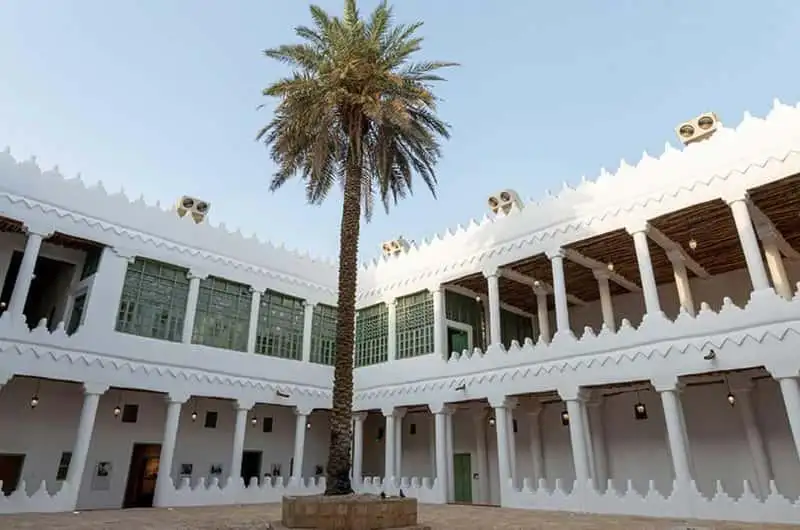
Murabba Palace was built during the reign of King Abdulaziz and reflects an important period in the development of modern Riyadh. Its traditional Najdi-inspired design, courtyards, and historical rooms provide insight into royal life and the country’s early administrative history.

The palace is part of the wider King Abdulaziz Historical Center, which includes cultural and public spaces. Visitors interested in architecture and Saudi history should allow time to explore the surrounding area rather than focusing only on the palace building.

This stop works especially well with the National Museum because both are located in the same general district.

National Museum of Saudi Arabia

Area: King Abdulaziz Historical Center, Al Murabba.
Approximate distance from Olaya: 6–8 km by road.
Suggested visit: 1.5–2.5 hours.
Entry: The official Visit Saudi listing states that admission is free; confirm current arrangements before visiting.
Best time: Morning or early afternoon.

The National Museum of Saudi Arabia is one of the most informative places to visit in Riyadh city for travelers who want to understand the country’s history, geography, culture, and development.

Its exhibitions cover different periods, from prehistoric life and ancient civilizations to the Arabian Peninsula, the emergence of Islam, and the formation of the modern Kingdom. The museum uses historical objects, models, films, and interactive displays to make the collections easier to understand.

Check the museum’s official visitor information before setting out because opening days and hours can change during public holidays, Ramadan, and special occasions. It is best to avoid arriving close to closing time, as the museum may stop admitting visitors before its listed closing hour.

Diriyah: The Birthplace of the Saudi State

Diriyah is one of the most important destinations for anyone interested in Saudi history. Located northwest of central Riyadh, it was the original home of the First Saudi State and is now a major heritage and cultural destination.

The area combines restored historic architecture, museums, restaurants, landscaped spaces, and modern visitor facilities. It is also one of the most rewarding places to include in a Riyadh sightseeing itinerary.

At-Turaif District (UNESCO World Heritage Site)

Area: Diriyah, northwest of Riyadh.
Approximate distance from Olaya: 15–20 km by road.
Suggested visit: 1.5–2.5 hours.
Entry: Ticketing and access conditions depend on the current visitor program.
Best time: Late afternoon or evening.

At-Turaif is a UNESCO World Heritage Site and one of the most significant diriyah attractions. The district preserves traditional Najdi mudbrick architecture, including historic palaces, defensive structures, and buildings connected to the early Saudi state.

Walking through the restored streets gives visitors a sense of how the settlement developed and how its architecture responded to the local environment. The district is particularly impressive for visitors interested in history, photography, and traditional building techniques.

At-Turaif is not simply a collection of old buildings. Its historical importance makes it one of the essential stops for understanding the origins of the Saudi state.

Bujairi Terrace and Diriyah dining

Area: Diriyah, near At-Turaif.
Approximate distance from Olaya: 15–20 km by road.
Suggested visit: 1–2 hours, or longer for dinner.
Entry: Access arrangements can vary by date and visitor pass.
Best time: Late afternoon and evening.

Bujairi Terrace offers a modern dining and leisure experience beside Diriyah’s historic district. Visitors can enjoy restaurants, cafés, views of the surrounding heritage area, and a relaxed atmosphere after exploring At-Turaif.

It is a good choice for couples, families, and travelers who want to combine cultural sightseeing with a meal. The contrast between the historic architecture and contemporary dining spaces makes the area especially attractive in the evening.

For a more organized visit, consider a Trip to Al Diriyah that combines the main heritage attractions with time to enjoy the district.

Tickets, opening hours and the best time to go

At-Turaif and Bujairi Terrace have separate visitor arrangements, so do not assume that access to one automatically covers every attraction in the area.

The official Diriyah visitor information currently lists At-Turaif as opening daily from 5:00 PM to midnight, with last entry at 11:00 PM. Bujairi Terrace has longer daily operating hours, with later closing times on selected days. These schedules may change, so check the official Diriyah website or ticketing platform on the day of your visit.

Ticket prices and access offers can also vary according to the season and current promotions. Book in advance when a specific date or event matters to your plans.

For a comfortable experience, arrive in the late afternoon, explore the heritage district, and stay for dinner at Bujairi Terrace. This gives you time to see the architecture in daylight and enjoy the atmosphere after sunset.

Modern Riyadh Landmarks

Modern Riyadh is defined by its distinctive skyline, large shopping centers, entertainment districts, and contemporary architecture. These attractions are especially appealing to visitors who want to see how the Saudi capital has developed into a major business and leisure destination.

Kingdom Centre and the Sky Bridge

Area: Olaya, central-northern Riyadh.
Approximate distance from Olaya: Within the district, depending on your starting point.
Suggested visit: 45–90 minutes.
Entry: The Sky Bridge has a separate admission arrangement; check current ticket prices.
Best time: Late afternoon or sunset.

Kingdom Centre is one of Riyadh’s most recognizable modern landmarks. Its distinctive curved opening near the top makes it easy to identify across the city’s skyline.

The Sky Bridge is the main visitor attraction, offering panoramic views over Riyadh from an elevated position. It is a popular stop for photography, particularly around sunset when the city’s buildings and roads become more visible.

The surrounding area also has shopping and dining options, making it easy to combine the visit with a meal or a short shopping break.

Al Faisaliah Tower

Area: Olaya, central Riyadh.
Approximate distance from Olaya: Within the central Olaya district.
Suggested visit: 30–60 minutes, depending on dining plans.
Entry: Access to observation or dining facilities depends on the venue and reservation conditions.
Best time: Late afternoon or evening.

Al Faisaliah Tower is another major feature of Riyadh’s skyline. Its pyramid-shaped design and glass sphere near the top distinguish it from the city’s other skyscrapers.

The tower is best appreciated as part of a wider visit to Olaya. Visitors can enjoy the surrounding shopping and dining areas, take photographs of the building, and explore nearby modern attractions.

If you want a skyline-focused sightseeing route, Kingdom Centre and Al Faisaliah can be combined in the same half-day plan.

Boulevard City and Riyadh Front

Area: Boulevard City is in Hittin, northern Riyadh; Riyadh Front is in the Airport Road area.
Approximate distance from Olaya: Around 10–15 km to Boulevard City and approximately 20–25 km to Riyadh Front, depending on the route.
Suggested visit: 2–4 hours for each destination.
Entry: Event and attraction tickets vary.
Best time: Afternoon and evening.

Boulevard City is one of the capital’s best-known entertainment destinations. It brings together restaurants, cafés, performances, shopping, and seasonal experiences in a lively setting.

During Riyadh Season 2026, the area is part of the wider entertainment program, with individual attractions and events opening according to their own schedules. Check the current program before visiting because not every experience operates on the same dates.

Riyadh Front offers a different atmosphere, with retail outlets, restaurants, cafés, and leisure spaces. It is a convenient stop for travelers who want shopping and dining options, particularly when arriving from or departing through King Khalid International Airport.

Riyadh Park Mall and other top malls

Area: Northern Riyadh.
Approximate distance from Olaya: Around 10–15 km by road.
Suggested visit: 1.5–3 hours.
Entry: General mall access is free; individual attractions and entertainment activities may charge separately.
Best time: Afternoon or evening.

Riyadh Park Mall is a useful option for visitors looking for shopping, restaurants, cafés, and indoor entertainment. It is particularly practical during the hotter months when outdoor sightseeing can be uncomfortable.

Other shopping destinations worth considering include Kingdom Centre Mall, Al Nakheel Mall, and Granada Mall. The best choice depends on where you are staying and which attractions you plan to visit on the same day.

If shopping is not your main priority, choose one mall that fits your route rather than spending several hours traveling between different commercial districts.

Museums and Culture in Riyadh

Beyond its major historic landmarks, Riyadh has museums and cultural spaces that introduce visitors to aviation, traditional life, art, and the country’s changing cultural scene.

These attractions are useful alternatives for travelers who want to explore beyond the usual skyline and shopping stops.

Saqer Al-Jazirah Aviation Museum

Area: Eastern Riyadh, near King Salman Road.
Approximate distance from Olaya: Around 15–20 km by road.
Suggested visit: 1–2 hours.
Entry: Confirm current admission and visitor arrangements before arrival.
Best time: Morning or early afternoon.

Saqer Al-Jazirah Aviation Museum explores the development of Saudi aviation and the history of the Royal Saudi Air Force. Its collection includes aircraft, aviation equipment, historical displays, and information about the role of aviation in the Kingdom.

The museum is particularly interesting for families with older children, aviation enthusiasts, and visitors looking for a different type of cultural experience.

Check the current visitor schedule before making the journey, as access arrangements may differ from those of central museums.

Museum of Antiquities and Folklore

Area: King Saud University, western Riyadh.
Approximate distance from Olaya: Around 10–15 km by road.
Suggested visit: 45–90 minutes.
Entry: Confirm public access and opening arrangements in advance.
Best time: During the daytime.

The Museum of Antiquities and Folklore at King Saud University is associated with archaeological discoveries and traditional cultural objects. Its collections offer insight into earlier periods of life on the Arabian Peninsula and the customs that shaped local communities.

Because university museums may have specific visitor policies, it is important to confirm access before traveling. Do not assume that the museum operates like a public attraction with unrestricted daily admission.

Misk Art Institute

Area: Riyadh, with cultural activities and exhibitions hosted at different venues.
Approximate distance from Olaya: Depends on the exhibition location.
Suggested visit: 1–2 hours for an exhibition or event.
Entry: Depends on the program.
Best time: Check the event schedule.

Misk Art Institute supports contemporary art and creative development in Saudi Arabia. Its exhibitions, workshops, and cultural programs provide an opportunity to explore the country’s growing creative scene.

Rather than treating it as a single permanent sightseeing stop, check the institute’s current exhibitions and event calendar. This is especially useful for visitors interested in contemporary Saudi artists, visual culture, and creative industries.

Parks, Valleys and Green Escapes

Riyadh is not only about buildings and shopping centers. The city also has parks, landscaped valleys, and outdoor spaces where visitors can take a break from traffic and explore a quieter side of the capital.

These places are particularly attractive during the cooler months, although opening hours and access to individual facilities should always be checked.

King Abdullah Park and the fountain show

Area: Al Malaz, central-eastern Riyadh.
Approximate distance from Olaya: Around 8–10 km by road.
Suggested visit: 1–2 hours.
Entry: Confirm current admission and fountain schedules.
Best time: Evening.

King Abdullah Park is one of the well-known public green spaces in Riyadh. Its landscaped gardens, walking areas, and open spaces make it suitable for families and visitors looking for a relaxing break.

The park is also associated with a large illuminated fountain. If you want to see a fountain display, confirm its current operating schedule rather than relying on old visitor information.

For a comfortable visit, arrive in the evening when temperatures are generally more pleasant, especially during the warmer months.

Salam Park and Al Rawda Park

Area: Salam Park is in central Riyadh; Al Rawda Park is in the eastern part of the city.
Approximate distance from Olaya: Around 7–10 km to Salam Park and 12–16 km to Al Rawda Park.
Suggested visit: 1–2 hours for each park.
Entry: Check current park access arrangements.
Best time: Late afternoon or evening.

Salam Park is a convenient green escape for visitors staying near the central districts. Its open areas and landscaped surroundings make it suitable for a relaxed walk or family outing.

Al Rawda Park offers another option for visitors exploring eastern Riyadh. It is best treated as a neighborhood leisure stop rather than an attraction that requires a special cross-city journey.

Choose the park that fits your route and accommodation location to avoid spending more time driving than enjoying the outdoor space.

Wadi Hanifa and Wadi Namar

Area: Wadi Hanifa extends through western Riyadh; Wadi Namar is in the southern part of the city.
Approximate distance from Olaya: Varies by access point, with Wadi Namar generally around 15–20 km away.
Suggested visit: 1–2 hours.
Entry: Public access arrangements vary by site and facilities.
Best time: Late afternoon or early evening.

Wadi Hanifa is a long natural valley that runs through Riyadh and offers a different perspective on the city’s landscape. Selected sections have landscaped paths and outdoor areas where visitors can enjoy walking, photography, and time beside the valley.

Wadi Namar is another popular outdoor destination, known for its lake, surrounding landscape, and leisure areas. It can be a pleasant place for an evening visit, especially when the weather is mild.

Conditions at both locations can vary, so check access and maintenance updates before traveling. Avoid assuming that every section has the same facilities or lighting.

Diplomatic Quarter walking trails

Area: Diplomatic Quarter, southwest of central Riyadh.
Approximate distance from Olaya: Around 10–15 km by road.
Suggested visit: 1–2 hours.
Entry: Public access depends on current site rules and security arrangements.
Best time: Early morning or late afternoon.

The Diplomatic Quarter is known for landscaped streets, green spaces, public art, and walking routes. It provides a quieter environment compared with the busier commercial districts.

Visitors can enjoy the architecture and outdoor surroundings while exploring selected pedestrian areas. Follow local signs and access rules, particularly near diplomatic buildings and secured facilities.

It is a good option for travelers who want a relaxed outdoor experience without leaving the city.

Places to Visit Outside Riyadh (Day Trips)

Some of the most memorable places to visit near Riyadh are outside the urban area. These destinations include dramatic cliffs, desert landscapes, caves, and natural attractions.

They are not ordinary city stops. Most require a dedicated vehicle, advance planning, and enough time for the drive and return journey.

Edge of the World: distance, drive time and safety

Area: Tuwaiq Escarpment, northwest of Riyadh.
Approximate distance from Olaya: Around 90–120 km, depending on the access route.
Suggested visit: Half day to a full day.
Entry: Access conditions and any site restrictions should be checked before departure.
Best time: Cooler months, particularly late afternoon for views.

The Edge of the World is one of the most famous natural landmarks near the capital. Its dramatic cliffs rise above a wide open landscape, creating panoramic views across the surrounding desert.

The destination is often included in riyadh day trips because it offers a striking contrast to the city’s modern buildings. Visitors can walk along selected viewpoints, photograph the cliffs, and enjoy the open desert scenery.

However, the journey requires more preparation than a typical city excursion. Some access routes are rough, and a suitable 4×4 vehicle is recommended. Mobile coverage may be limited in remote sections, and visitors should not approach cliff edges for photographs.

Avoid visiting during extreme heat or after dark. Weather, road conditions, and access restrictions can affect whether the trip is suitable on a particular day.

A guided Edge of the World tour is a practical option if you prefer local route knowledge, organized transportation, and assistance with planning the excursion.

Red Sand Dunes and Al Thumama

Area: Eastern and northeastern desert areas around Riyadh.
Approximate distance from Olaya: Around 40–60 km to popular desert areas, depending on the chosen site.
Suggested visit: 3–5 hours.
Entry: Desert access and activity prices vary by operator and location.
Best time: Late afternoon during the cooler season.

The Red Sand Dunes are among the most popular outdoor destinations around Riyadh. Their reddish landscape provides a setting for desert photography and activities such as sandboarding, camel rides, and quad biking where available.

Al Thumama is another well-known desert area associated with outdoor recreation and camping. The experience depends on the exact location, activity provider, and current site conditions.

Visitors should avoid driving into soft sand without the right vehicle and experience. If you plan to try desert activities, choose an organized operator that provides suitable equipment and explains the safety rules.

A Riyadh Red Sand Dunes tour can make the visit easier to organize, particularly if you do not have experience driving in desert terrain.

Heet Cave

Area: Southeast of Riyadh, near the Al Kharj road.
Approximate distance from Olaya: Around 35–45 km by road.
Suggested visit: 1–2 hours, excluding travel time.
Entry: Check current access and safety conditions.
Best time: Cooler parts of the day.

Heet Cave is a natural cave area known for its underground water and distinctive geological setting. It attracts visitors interested in nature and photography, but it should not be treated as a fully developed tourist attraction with guaranteed facilities.

Access conditions can change, and some sections may be unsuitable for inexperienced visitors. Wear appropriate footwear, avoid entering unsafe areas, and do not approach water or steep surfaces without understanding the conditions.

Before planning the visit, confirm whether the site is accessible and whether any restrictions are in place.

Al Kharrarah and Al Qara Hill

Area: Al Kharrarah is southwest of Riyadh; Al Qara Hill is in Al Ahsa, much farther east.
Approximate distance from Olaya: Al Kharrarah is roughly 70–100 km depending on the access point. Al Qara Hill is several hundred kilometers away and requires a separate regional trip.
Suggested visit: Half day for Al Kharrarah; a full day or longer for Al Qara Hill and Al Ahsa.
Entry: Check current access, facilities, and ticket arrangements.
Best time: Cooler months and daytime hours.

Al Kharrarah is known for its desert landscape and seasonal water features. After rainfall, parts of the area may become especially attractive for photography and outdoor exploration. Conditions are not guaranteed, however, and visitors should check recent weather and road reports before setting out.

Al Qara Hill is located in Al Ahsa, not within Riyadh. Its rock formations, caves, and distinctive landscape make it an interesting destination for travelers exploring the Eastern Province.

Because Al Qara Hill is too far for an ordinary short excursion from Riyadh, it is better planned as part of a wider trip to Al Ahsa rather than combined with central Riyadh sightseeing.

Places to Visit in Riyadh at Night

Riyadh becomes more active after sunset, especially during the cooler months. Evening is also a practical time to explore outdoor attractions when daytime temperatures are high.

Some of the best places to visit in Riyadh at night include:

  • Boulevard City: A lively entertainment district with restaurants, cafés, events, and seasonal attractions.

  • Bujairi Terrace: A good choice for dinner and views near Diriyah’s historic district.

  • Kingdom Centre: Visit the Sky Bridge around sunset or early evening, subject to its operating schedule.

  • King Abdullah Park: A relaxing outdoor option when the park and fountain facilities are operating.

  • Wadi Namar: A scenic place for an evening visit when access and lighting conditions are suitable.

  • Olaya and Al Faisaliah: Suitable for dining, shopping, and seeing the modern city after dark.

For visitors who prefer to explore with transportation and a planned route, the Riyadh by Night Tour can help combine selected evening attractions without needing to arrange every transfer independently.

Places to Visit in Riyadh with Family and Kids

Riyadh has a range of family-friendly attractions, from museums and parks to shopping centers and seasonal entertainment venues. The best choices depend on the children’s ages, the weather, and how much time your family wants to spend outdoors.

Consider these options when planning places to visit in Riyadh with family:

  • National Museum: A useful educational visit for school-age children interested in history and culture.

  • King Abdullah Park: Offers open spaces and a relaxed environment for family outings.

  • Riyadh Zoo: A popular family attraction, but confirm its current opening status and visitor arrangements before planning your visit.

  • Boulevard City: Offers entertainment and seasonal activities, with individual attractions and tickets varying by program.

  • Riyadh Park Mall: Provides indoor dining, shopping, and entertainment options.

  • Saqer Al-Jazirah Aviation Museum: A different experience for children interested in aircraft and aviation history.

For families with young children, avoid scheduling too many attractions in one day. Riyadh’s distances and traffic can make an ambitious itinerary tiring, especially when it includes outdoor stops.

Choose one main area for the morning and another for the evening, with enough time for meals and rest.

Seasonal Places and Festivals (Riyadh Season 2026, Janadriyah)

Riyadh’s cultural calendar adds another dimension to sightseeing. Some attractions operate throughout the year, while festivals and seasonal entertainment zones are available only during specific periods.

Riyadh Season 2026

Riyadh Season 2026 is a major part of the city’s entertainment calendar. The announced season opens on October 21, 2026, with a program of sporting events, concerts, performances, and family entertainment. Individual zones have their own opening dates and schedules.

Key destinations and experiences include:

  • Boulevard City: A major entertainment area with performances, restaurants, and seasonal attractions.

  • Boulevard World: A destination featuring international cultural zones, food, shopping, and entertainment.

  • Wonder Garden: A seasonal attraction with rides and family activities; check its announced operating dates.

  • Al Suwaidi Park: A seasonal venue included in the wider Riyadh Season program, with its schedule subject to official announcements.

Not every zone opens on the same date, and tickets are not necessarily included in one general season pass. Check the official Riyadh Season program and ticketing platform before visiting.

If your trip takes place in November, you may find a wider range of seasonal entertainment operating across the city. However, confirm the opening date of each attraction rather than assuming that all zones are available throughout the season.

Janadriyah Festival

The Janadriyah Festival is associated with Saudi heritage, traditional crafts, folk performances, and cultural displays. It has historically been an important event for visitors interested in the Kingdom’s regional traditions.

However, its schedule and format should not be assumed to be the same every year. Check official announcements before including it in your itinerary, particularly if you are planning travel around a specific festival date.

Mosques and Respectful Sightseeing Tips

Mosques are important parts of Saudi Arabia’s cultural and religious landscape. Visitors should approach religious sites respectfully and understand that access rules differ between locations.

The following guidelines can help make your visit more comfortable:

  • Dress modestly: Choose clothing that covers the shoulders and knees. Some religious sites may have additional dress requirements.

  • Check visitor access: Do not assume that every mosque is open to non-worshippers or tourists. Confirm access with the site or its official visitor information.

  • Respect prayer times: Some businesses and attractions may adjust services around prayer times, while religious sites may restrict movement during worship.

  • Ask before photographing people: Be considerate when taking pictures, especially around worshippers, families, and private areas.

  • Follow signs and staff instructions: Some spaces may be reserved for worshippers or have separate visitor routes.

  • Keep noise low: Avoid loud conversations and phone calls in prayer areas.

If you are visiting a mosque as part of a sightseeing route, confirm the rules beforehand. The same principle applies to historic religious buildings and cultural sites.

Ready-Made Routes: Half Day, Full Day and Two Days

Planning by geographical area is one of the easiest ways to make the most of your stay in Riyadh. The following routes combine nearby attractions and leave enough time for travel, meals, and breaks.

Half-day route: Old Riyadh and Al Murabba

This route is suitable for visitors with limited time who want to explore the capital’s historical side.

Suggested order:

  1. Start at Masmak Fortress in Ad-Dirah.

  2. Walk through the nearby Deera Square area and visit Souq Al Zal.

  3. Drive to Al Murabba and explore Murabba Palace, subject to access.

  4. Finish at the National Museum and King Abdulaziz Historical Center.

Suggested duration: 4–5 hours, depending on museum access and time spent at each stop.

This route works best during the morning or early afternoon. Check the opening schedules of the palace and museum before setting out, as their operating arrangements may differ.

Full-day route: Old Riyadh, Olaya and modern landmarks

If you have a full day, you can combine heritage sightseeing with the city’s modern landmarks.

Suggested order:

  1. Visit Masmak Fortress and Souq Al Zal in the morning.

  2. Explore the National Museum and Al Murabba district.

  3. Take a break for lunch.

  4. Head to Kingdom Centre and the Sky Bridge.

  5. Visit Al Faisaliah Tower and the surrounding Olaya district.

  6. End the day with dinner or an evening visit to a nearby entertainment destination.

Suggested duration: 7–9 hours, depending on traffic and attraction schedules.

This route gives first-time visitors a useful overview of the contrast between historic and modern Riyadh.

Two-day route: Riyadh heritage, Diriyah and modern attractions

A two-day stay gives you more flexibility and reduces the pressure to fit every attraction into one long day.

Day 1: Old and modern Riyadh

  • Morning: Masmak Fortress, Deera Square, and Souq Al Zal.

  • Early afternoon: Murabba Palace and the National Museum.

  • Late afternoon: Kingdom Centre and the Sky Bridge.

  • Evening: Dinner in Olaya or an entertainment destination.

Day 2: Diriyah and northern Riyadh

  • Morning or afternoon: Explore Diriyah and At-Turaif, depending on current access hours.

  • Late afternoon: Visit Bujairi Terrace.

  • Evening: Enjoy dinner in Diriyah or continue to Boulevard City if its attractions are operating.

This plan is a practical answer to what visitors often mean when searching for a riyadh itinerary that covers the city’s essential landmarks without excessive driving.

For a longer cultural experience, the 4 Days Riyadh Heritage Tour Package may be suitable for travelers who want more time for the capital’s historic sites and surrounding destinations.

Full-day route: A desert excursion outside Riyadh

If you want to experience the landscape beyond the city, reserve a separate day for one desert destination.

Option 1: Edge of the World

  • Depart early enough to allow for the drive and changing road conditions.

  • Explore suitable viewpoints with a knowledgeable guide.

  • Allow time for photography and a break.

  • Return to Riyadh before dark.

Option 2: Red Sand Dunes

  • Travel to a suitable desert area.

  • Enjoy available activities such as sandboarding or camel rides.

  • Choose an organized quad-biking experience if available.

  • Return after sunset or according to your tour schedule.

Do not combine the Edge of the World and Red Sand Dunes in one rushed day unless the route, road conditions, and operator’s plan have been checked carefully.

Getting Between Places: Taxis, Ride-Hailing and Private Drivers

Getting around Riyadh requires some planning because the main attractions are spread across different districts. Walking is useful within selected areas, such as parts of Diriyah or Souq Al Zal, but it is rarely practical for traveling between major landmarks.

Taxis and ride-hailing

Ride-hailing services are convenient for moving between central districts, malls, museums, and restaurants. They are particularly useful when you want to visit one or two attractions without arranging a full-day vehicle.

Before ordering a ride, confirm the correct entrance or pickup point. Large shopping centers and entertainment destinations may have several access areas, and busy event periods can affect pickup times.

Private drivers

A private driver can be a practical choice for families, groups, and visitors who want to cover several attractions in one day. It also helps when your itinerary includes places that are not close to public transport or require waiting between stops.

For a more structured sightseeing experience, organized Riyadh day tours can combine transportation and local guidance according to your interests.

Organized tours and desert transportation

Desert excursions require more preparation than ordinary city transfers. Routes may include rough tracks, soft sand, and areas with limited mobile coverage.

A suitable 4×4 vehicle and an experienced local driver are important for destinations such as the Edge of the World and the Red Sand Dunes. Avoid taking a standard rental car onto unpaved desert routes unless the vehicle and route are explicitly suitable.

If you are unfamiliar with the area, an organized tour can reduce the planning burden and help you understand local access and safety conditions.

Places to Visit in Riyadh: FAQs

What is the most famous place in Riyadh?

Masmak Fortress is among Riyadh’s most famous historical landmarks because of its connection to the recapture of the city in 1902 and the formation of modern Saudi Arabia. Kingdom Centre is another widely recognized landmark, while Diriyah and At-Turaif are essential for visitors interested in the country’s early history.

The best choice depends on your interests. Visit Masmak for central Saudi history, Kingdom Centre for modern architecture and skyline views, or Diriyah for heritage and traditional architecture.

How many days are enough to see Riyadh’s main places?

Two days are enough for a first introduction to Riyadh’s main attractions if you organize your visits by area. You can dedicate one day to Old Riyadh, Al Murabba, and modern landmarks, then use the second day for Diriyah and northern Riyadh.

Three or four days are better if you also want to visit museums, parks, and a destination outside the city, such as the Edge of the World or Red Sand Dunes.

What are the best places to visit in Riyadh for families?

Families can consider the National Museum, King Abdullah Park, Riyadh Park Mall, Boulevard City, and Saqer Al-Jazirah Aviation Museum. Riyadh Zoo may also be an option when it is open to visitors.

Choose attractions according to children’s ages and the weather. Indoor museums and malls are useful during hot periods, while parks and outdoor destinations are more comfortable in cooler weather.

Are Riyadh’s attractions open on weekends and Fridays?

Opening days and hours vary by attraction. Some museums and historic sites operate on different schedules on Fridays, while seasonal entertainment venues may follow event-specific hours.

For example, the National Museum’s published schedule includes different Friday hours from its weekday schedule. Diriyah attractions also have their own operating arrangements. Always check the official visitor information before traveling, especially on Fridays, public holidays, and during Ramadan.

What are the best day trips from Riyadh?

The Edge of the World is one of the best-known day trips for visitors who want dramatic cliffs and desert scenery. The Red Sand Dunes are a good option for outdoor activities, while Heet Cave appeals to travelers interested in natural landscapes.

Historical Places in Riyadh: Complete Visitor Guide (2026)

Historical Places in Riyadh

Riyadh’s history is closely connected to the formation of the Saudi state, from the establishment of the First Saudi State in Diriyah in 1727 to the recapture of Riyadh in 1902. Today, visitors can explore this history through restored palaces, traditional markets, historic neighborhoods, and museums that preserve important parts of the Kingdom’s cultural heritage.

This guide to the historical places in Riyadh goes beyond a simple list of attractions. It explains the story behind each site, what to see there, how much time to allow, and how to combine nearby landmarks into practical half-day, full-day, and two-day itineraries. Whether you are interested in architecture, museums, or traditional Saudi life, these routes will help you explore the capital’s heritage at a comfortable pace.

Why Riyadh’s History Matters

Riyadh is more than Saudi Arabia’s modern administrative and business center. Its surrounding settlements, historic districts, and restored landmarks tell the story of political change, trade, architecture, and daily life in central Arabia.

Understanding the background of each attraction makes a heritage visit more meaningful. Instead of seeing an old palace or fortress as an isolated building, you can connect it to the people and events that shaped the country.

A Short Timeline: From the First Saudi State to the 1902 Recapture

The story of modern Saudi Arabia is closely linked to two important dates and places.

In 1727, Imam Muhammad bin Saud established the First Saudi State in Diriyah, making the settlement an important political center in the Arabian Peninsula. Its influence expanded during the following decades, and the historic district of At-Turaif became a symbol of this early period.

After the First Saudi State ended in the early nineteenth century, the political center shifted through several stages. Riyadh later became the base of the Second Saudi State under Imam Turki bin Abdullah in 1824.

A major turning point came in 1902, when King Abdulaziz and his companions recaptured Riyadh from the Rashidi forces. The event took place at Masmak Fortress and marked the beginning of the process that eventually led to the unification of the Kingdom of Saudi Arabia in 1932.

These milestones explain why Diriyah and Masmak Fortress are essential stops for anyone interested in Saudi history. Visiting both sites provides a clearer picture of the country’s development across different generations.

Najdi Mud-Brick Architecture Explained

Traditional Najdi architecture developed in response to the climate, available building materials, and social needs of central Arabia. Many historic buildings were constructed using mudbrick, clay, stone, timber, and locally available materials.

Several features distinguish this architectural style:

  • Thick mudbrick walls: Helped reduce the effect of high outdoor temperatures and provided insulation.

  • Small exterior openings: Offered privacy and helped control sunlight entering the rooms.

  • Internal courtyards: Created private outdoor spaces for family activities and ventilation.

  • Decorative geometric details: Added visual character to entrances, windows, and upper sections of buildings.

  • Simple earthy colors: Reflected the natural materials used in construction and the surrounding desert environment.

You can see these features throughout At-Turaif, Murabba Palace, and restored traditional buildings in heritage villages. Looking closely at the walls, courtyards, and entrances helps explain how Najdi architecture combined practicality with local identity.

Riyadh Historical Sites at a Glance (Comparison Table)

The main historical attractions are spread across central Riyadh and the northwest. Planning them by area is the easiest way to reduce driving and leave enough time for each visit.

The following table provides approximate visit durations and practical guidance. Travel times depend on your starting point, traffic, and the day’s road conditions.

Historical site Area Suggested visit time Best suited for
At-Turaif District Diriyah 1.5–2.5 hours History and architecture enthusiasts
Bujairi Terrace Diriyah 1–2 hours Dining and cultural sightseeing
Masmak Fortress Ad-Dirah 45–75 minutes First-time visitors and families
Souq Al Zal Ad-Dirah 45–90 minutes Shopping and traditional culture
Murabba Palace Al Murabba 45–75 minutes Saudi history and architecture
King Abdulaziz Historical Center Al Murabba 1–2 hours Cultural sightseeing
National Museum Al Murabba 1.5–2.5 hours Families and museum visitors
Ushaiqer Heritage Village Outside Riyadh 2–3 hours Heritage and traditional village life

For most visitors, Masmak Fortress, Souq Al Zal, Murabba Palace, and the National Museum can be combined into a central Riyadh heritage route. Diriyah deserves a separate visit, especially if you want time to explore At-Turaif and enjoy Bujairi Terrace.

Diriyah and At-Turaif: The UNESCO World Heritage Site

Diriyah is one of the most important historical destinations in Saudi Arabia. Located northwest of Riyadh, it was the original home of the First Saudi State and remains closely connected to the country’s national identity.

The most significant part of the historic settlement is At-Turaif, a UNESCO World Heritage Site recognized for its traditional Najdi architecture and historical importance. Its restored buildings, palaces, and narrow streets offer a valuable introduction to the early Saudi state.

What to See Inside At-Turaif

At-Turaif contains the remains of a historic settlement that once served as a political and administrative center. Its architecture reflects the building traditions of Najd, with mudbrick structures, courtyards, defensive features, and decorative details.

As you explore the district, look for:

  • Historic palaces: Buildings associated with the ruling family and the administration of the First Saudi State.

  • Traditional residential structures: These show how families lived within the settlement and how buildings were arranged around shared spaces.

  • Defensive features: The layout and architectural elements reflect the importance of protecting the settlement.

  • Restored pathways and public spaces: These help visitors understand the relationship between the historic buildings and the surrounding landscape.

  • Interpretive displays: Information at selected locations explains the district’s history and the role of Diriyah in the development of the Saudi state.

Allow enough time to explore rather than rushing through the site for photographs. The historic architecture is more interesting when you understand how the buildings were used and how the settlement functioned.

Al Bujairi and Wadi Hanifah Views

Bujairi Terrace is a modern dining and leisure destination located near the historic district. It combines restaurants, cafés, and visitor facilities with views of the surrounding heritage landscape.

After exploring At-Turaif, Bujairi Terrace is a convenient place to take a break, enjoy traditional or contemporary dining, and spend time in the area without needing to drive elsewhere.

The wider Diriyah landscape is also connected to Wadi Hanifah, a natural valley that runs through the Riyadh region. Its presence helps explain why this location was suitable for settlement and agriculture in the past.

Visitors can enjoy views of the valley and the surrounding architecture from selected areas. Follow marked routes and visitor instructions, particularly around restored heritage structures and restricted sections.

Best Time to Visit Diriyah

Late afternoon and evening are generally the most comfortable times to visit Diriyah, particularly during the warmer months. Arriving later in the day also allows you to experience the contrast between the historic buildings in daylight and the illuminated surroundings after sunset.

Winter, from approximately November to March, is usually more suitable for outdoor heritage sightseeing because temperatures are generally milder.

Check the official Diriyah visitor information before your visit. At-Turaif and Bujairi Terrace may follow different schedules, and ticketing arrangements can change according to the season, events, and visitor programs.

For a more organized experience, a local Diriyah heritage visit can help you combine the main historic attractions with time for dining and photography.

Masmak Fortress: Where the 1902 Recapture Happened

Masmak Fortress is one of the most recognizable historical landmarks in Riyadh. Located in the old city center, it is closely associated with the recapture of Riyadh by King Abdulaziz in 1902.

Its historical importance makes it an essential stop for visitors who want to understand how the modern Saudi state began.

The Story Behind the Fortress

Masmak Fortress was built in the nineteenth century as a defensive structure. Its thick walls, towers, and traditional construction reflect the military and architectural needs of the period.

Its most famous historical moment came in January 1902, when King Abdulaziz and his companions launched the operation to recapture Riyadh. The confrontation took place at the fortress and became a defining event in the history of the Kingdom.

The event is particularly important because it marked the beginning of King Abdulaziz’s campaign to restore his family’s rule and unify the country.

Today, Masmak is not simply an old defensive building. It represents a turning point in Saudi history and provides a connection between the historic center of Riyadh and the formation of the modern Kingdom.

What You Will See Inside the Museum

The fortress has been adapted into a museum where visitors can learn about the 1902 recapture and the history of Riyadh.

Inside, you can explore:

  • Historical photographs and documents related to the fortress.

  • Displays explaining the recapture of Riyadh.

  • Traditional weapons and objects connected to the period.

  • Architectural features that show how the fortress was designed for defense.

  • Exhibitions introducing the history of the city and the development of the Saudi state.

Pay attention to the traditional doors, thick walls, towers, and central courtyard. These details help explain how the fortress functioned before becoming a museum.

A visit usually takes less than an hour, making Masmak easy to combine with Souq Al Zal and other attractions in Ad-Dirah.

Souq Al Zal (Deerah Souq) and Old Riyadh

Souq Al Zal, also known as Deerah Souq, is one of the traditional markets that preserve the commercial atmosphere of old Riyadh. It is located close to Masmak Fortress, making it a natural next stop on a historical walking route.

The market offers a different experience from modern shopping centers, with traditional goods, local trading customs, and shops that reflect the city’s heritage.

What to Buy and How to Bargain

Souq Al Zal is known for products associated with Saudi and Arabian culture. Depending on the shops available during your visit, you may find:

  • Traditional carpets and rugs.

  • Antiques and decorative objects.

  • Traditional coffee pots and serving accessories.

  • Handmade items and heritage-inspired souvenirs.

  • Traditional clothing and accessories.

  • Collectible objects and old household items.

If you are buying something without a fixed price, polite bargaining is part of the shopping experience. Ask about the material, age, and condition of an item before agreeing to buy it, especially when purchasing antiques or collectibles.

It is also useful to compare prices in more than one shop. Keep some cash available for smaller purchases, although payment options differ between individual vendors.

Remember that many shops may pause business around prayer times. If you arrive during a quiet period, allow time for the market to become active again.

Walking Through Al Dirah Neighbourhood

The area around Souq Al Zal offers a glimpse of the historic commercial center of Riyadh. Its traditional market streets and older buildings create a different atmosphere from the city’s modern business districts.

Walking between Masmak Fortress and the market is one of the easiest ways to explore this part of the city. Wear comfortable shoes, stay aware of vehicle movement, and follow local directions when crossing busy streets.

The neighborhood is best explored during daylight or in the late afternoon when shops are active. It can also be combined with a visit to the nearby historical landmarks as part of a wider Riyadh heritage tour.

Murabba Palace and the King Abdulaziz Historical Center

Murabba Palace is an important landmark associated with King Abdulaziz and the development of Riyadh during the early twentieth century. Its construction reflected the expansion of the city beyond its older defensive center and the growing administrative role of the capital.

The palace is known for its traditional architectural design, with courtyards, large rooms, and details that reflect the building methods of its period.

The wider King Abdulaziz Historical Center brings together cultural and historical facilities, landscaped areas, and buildings connected to Saudi heritage. It provides a useful setting for understanding how the country developed during the reign of King Abdulaziz.

Visitors should allow time to explore the palace and the surrounding center rather than treating the visit as a quick photo stop. Access to individual buildings and exhibitions may vary, so check the current visitor arrangements before traveling.

This location is particularly convenient to combine with the National Museum because both attractions are within the Al Murabba area.

The National Museum of Saudi Arabia

The National Museum of Saudi Arabia is one of the most informative cultural attractions in Riyadh. Located within the King Abdulaziz Historical Center, it introduces visitors to the history, geography, culture, and development of the Arabian Peninsula and the Kingdom.

The museum is organized into eight main galleries, taking visitors through different periods and themes, from the formation of the universe and early human history to the Arabian Peninsula, the rise of Islam, and the modern Saudi state.

The exhibitions use archaeological objects, manuscripts, models, photographs, and multimedia displays to explain historical events and cultural changes. This makes the museum suitable for visitors with different levels of knowledge, including families and international travelers.

Allow around 1.5 to 2.5 hours for a comfortable visit. If you are particularly interested in archaeology or Saudi history, you may want to spend longer.

Admission information and operating hours should be checked through the museum’s official visitor channels before arrival. Published information can differ across travel websites, so avoid relying on old prices or schedules.

Heritage Day Trips Beyond Riyadh

Riyadh’s historical attractions are not limited to the city itself. The surrounding region includes traditional settlements and heritage destinations that offer a different perspective on life in central Saudi Arabia.

These trips require more time and transportation planning than visits to central Riyadh.

Ushaiqer Heritage Village

Ushaiqer Heritage Village is a traditional settlement in the Shaqra area, northwest of Riyadh. The drive usually takes approximately two hours and fifteen minutes, depending on traffic, road conditions, and your starting point.

The village is known for its traditional Najdi architecture, narrow lanes, old houses, and historic community spaces. Its buildings provide an opportunity to see how settlements in central Arabia developed around family homes, courtyards, and shared neighborhood areas.

Visitors can explore restored houses, traditional architectural details, and heritage displays where access is available. The village is particularly interesting for travelers who want to understand rural life and building traditions beyond the capital.

Plan enough time for the return journey, and confirm which heritage buildings are open before departure. A visit is more comfortable during the cooler months, especially if you want to explore the outdoor streets on foot.

Combining Ushaiqer with Al Qasab Salt Flats

Al Qasab is known for its traditional salt production and is located in the wider Shaqra region. Combining it with Ushaiqer can create a fuller heritage-focused excursion, connecting traditional village architecture with a local economic activity that has been part of the area’s identity.

However, the exact route and time needed depend on the sites you plan to visit and their accessibility. Confirm the condition of the roads and whether the salt production area can be visited before setting out.

This excursion is best planned as a full-day trip rather than squeezed into a short visit from Riyadh. A private vehicle or organized tour is usually more practical because public transport options to these smaller destinations may be limited.

Ready-Made Itineraries

A well-planned heritage itinerary should balance time inside museums, outdoor exploration, and travel between districts. The following routes provide practical starting points for different lengths of stay.

One Full Day of Riyadh History

This route combines the most important historical landmarks in central Riyadh.

Suggested time Stop What to do
9:00 AM Masmak Fortress Explore the fortress and learn about the 1902 recapture
10:15 AM Souq Al Zal Browse traditional products and heritage items
11:30 AM Transfer to Al Murabba Travel by taxi or private vehicle
12:00 PM Murabba Palace Explore the palace if visitor access is available
1:00 PM Lunch break Choose a restaurant in the surrounding area
2:00 PM National Museum Explore the main galleries
4:30 PM King Abdulaziz Historical Center Enjoy the surrounding cultural area

This schedule is a suggested framework, not a guarantee that every site will be open at those exact times. Adjust the order according to official opening hours and prayer times.

If you prefer to have transportation and explanations arranged in advance, a guided Riyadh City Tour can help cover the central landmarks more efficiently.

Half Day in Diriyah

Diriyah is a strong choice if you have only half a day and want to focus on one important historical destination.

Suggested time Stop What to do
4:00 PM Arrive in Diriyah Allow time for parking and entry
4:30 PM At-Turaif Explore the historic district and its architecture
6:30 PM Bujairi Terrace Enjoy the views and take a break
7:00 PM Dinner or café visit Experience the dining area
Evening Return to Riyadh Travel back according to traffic

The suggested timing works best when At-Turaif’s current operating schedule allows an afternoon or evening visit. Check the official schedule before booking transportation.

A Relaxed Two-Day Plan

If you prefer a slower pace, divide Riyadh’s heritage attractions across two days.

Day 1: Central Riyadh

  • Start at Masmak Fortress and explore its museum.

  • Walk through Souq Al Zal and the surrounding Ad-Dirah neighborhood.

  • Travel to Al Murabba.

  • Visit Murabba Palace, subject to access arrangements.

  • Spend the afternoon at the National Museum and King Abdulaziz Historical Center.

Day 2: Diriyah

  • Travel to Diriyah and explore At-Turaif.

  • Take time to understand the history of the First Saudi State.

  • Enjoy the views around the heritage district.

  • Visit Bujairi Terrace for a meal or coffee.

  • Return to central Riyadh in the evening.

This plan avoids rushing between districts and gives you more time to understand the historical background of each site.

For travelers who want a longer experience with additional cultural stops, a 4 Days Riyadh Heritage Tour Package can provide more flexibility for exploring the capital and its surrounding heritage destinations.

Practical Tips: Best Season, Tickets, Dress Code, Prayer Times, Photography

A little preparation can make a major difference when visiting Riyadh’s heritage attractions. Opening arrangements, ticket requirements, and visitor rules are not identical across all sites.

  • Best season: November to March is generally more comfortable for outdoor sightseeing. Summer temperatures can make walking through open heritage areas difficult, particularly around midday.

  • Tickets: Do not assume that every historical attraction is free. Some sites have free admission, while others use tickets, reservations, or seasonal visitor passes. Check the official website of each attraction before traveling.

  • Opening hours: Museums, heritage districts, and cultural venues may follow different schedules. Hours can also change during Ramadan, public holidays, and special events.

  • Dress code: Choose modest, comfortable clothing suitable for walking. Religious and cultural sites may have additional requirements.

  • Prayer times: Some shops and businesses may temporarily pause service around prayer times. Build flexibility into your itinerary, especially when visiting traditional markets.

  • Photography: Photography rules vary by site. Look for signs and ask staff before photographing restricted interiors, exhibits, or people.

  • Comfortable footwear: Historic districts often include uneven surfaces, stone pathways, and outdoor sections. Comfortable shoes are useful.

  • Advance planning: Reserve tickets when required and check access to restored buildings before making a long journey.

For the best experience, avoid scheduling several outdoor attractions during the hottest part of the day. Combine indoor museums with outdoor heritage visits and leave enough time for breaks.

Guided Tour or Self-Guided? How to Choose

Both guided and independent visits can work well in Riyadh. The right option depends on your interests, available time, transportation arrangements, and how much historical context you want during the visit.

A self-guided trip gives you more flexibility. You can spend longer at a museum, stop for shopping, or change your plans according to the weather. It is a good option if you are comfortable arranging transportation and checking the visitor information for each attraction.

A guided tour is often more useful when you want to understand the historical connections between sites. A knowledgeable local guide can explain the significance of the First Saudi State, the 1902 recapture of Riyadh, and the architectural details that may be easy to overlook during an independent visit.

Consider a guided experience if:

  • You have only one day and want to visit several historical landmarks efficiently.

  • You are unfamiliar with Riyadh’s districts and transportation options.

  • You want explanations of the history behind At-Turaif, Masmak Fortress, and Murabba Palace.

  • You are traveling with family or a group and prefer organized transfers.

  • You want to combine cultural sightseeing with local food and traditional markets.

Before booking, confirm what the tour includes, whether transportation and admission tickets are covered, the guide’s qualifications, the group size, and the cancellation policy.

A private Riyadh history tour can be a practical option for travelers who want a more flexible schedule and local guidance across the city’s main heritage districts.

FAQs About Historical Places in Riyadh

What are the oldest historical areas in Riyadh?

Diriyah is one of the most important historic settlements in the Riyadh region and was the capital of the First Saudi State, established in 1727. Within modern Riyadh, the Ad-Dirah district is closely connected to the city’s older urban center and includes Masmak Fortress and Souq Al Zal.

Is entry to Riyadh’s historical sites free?

Admission policies differ between attractions. Some museums and heritage areas may offer free access, while other sites require tickets or reservations. Diriyah’s At-Turaif district, for example, has its own visitor and ticketing arrangements. Always check the official website before visiting because prices and access policies can change.

How many days are enough to explore Riyadh’s historical places?

One full day is enough for a first introduction to the central historical landmarks, including Masmak Fortress, Souq Al Zal, Murabba Palace, and the National Museum, subject to opening hours. Two days are better if you also want to explore Diriyah at a relaxed pace. Add another day if you plan to visit Ushaiqer Heritage Village.

Are Riyadh’s historical sites suitable for families?

Yes. Masmak Fortress, the National Museum, Diriyah, and selected heritage attractions can be interesting for families. Museums are particularly useful for introducing children to Saudi history, while outdoor sites provide opportunities to explore traditional architecture. Parents should check walking distances, access arrangements, and visitor facilities before choosing a route.

Can I visit Diriyah and Masmak Fortress on the same day?

Yes, but they are in different parts of the city. You can visit Masmak Fortress and Souq Al Zal in the morning, then travel to Diriyah later in the day. Check At-Turaif’s opening schedule before planning the transfer, especially if you want to explore the heritage district in the evening.

What is the best way to explore historical Riyadh?

For central attractions, taxis and ride-hailing services are convenient for moving between districts, while walking works well within selected heritage areas. A private driver or organized guided tour is useful when you want to visit several sites in one day or travel to destinations outside the city.

Want to see these sites with a licensed local guide? Book a private Riyadh historical tour or message Saudi Arabia Tours on WhatsApp: +966 53 462 9489.

Saudi Arabia Entry Requirements: Complete Guide for Travelers

Saudi Arabia Entry Requirements

Understanding the saudi arabia entry requirements before your trip helps you avoid delays and prepare all necessary documents in advance. Entry rules can vary depending on your nationality, visa type, health requirements, and travel purpose. Are you sure you have everything needed before arriving at the Saudi border?

This guide explains passport rules, visa requirements, insurance, customs regulations, medication rules, and border procedures. For more travel preparation information, you can explore back to the full Saudi Arabia travel guide before planning your journey.

Passport Requirements

A valid passport is one of the main requirements for entering Saudi Arabia. Travelers should ensure their passport meets the required validity period before departure.

The saudi arabia passport validity requirement should be checked before booking flights because an invalid or insufficiently valid passport can cause travel problems.

Before traveling, confirm:

  • Your passport is valid for the required period.
  • Your personal information matches your travel documents.
  • Your passport has enough blank pages if required.

Travelers should also make sure their passport details match the information submitted during the visa application process to avoid issues at border control.

Prophet Mosque Medina plaza umbrellas at dusk

Visa Requirements by Traveler Type

Visa requirements depend on the traveler’s nationality, purpose of visit, and type of travel. Some visitors may qualify for an electronic visa, while others may need different visa arrangements.

Travelers should review our full visa guide before departure to understand the correct visa type and required documents.

Common traveler categories include:

  • Tourists visiting Saudi Arabia for leisure.
  • Business travelers attending meetings or events.
  • Religious travelers visiting for approved religious purposes.
  • Visitors entering for specific approved activities.

Each traveler should confirm their eligibility and complete the required application process before arrival.

Aerial sunset view of Prophet Mosque Madinah courtyard

Mandatory Travel Insurance: What It Must Cover

Travel insurance may be required as part of the Saudi visa process depending on the visa type and traveler conditions.

The saudi arabia travel insurance requirement should be reviewed before applying to understand what coverage is included and what conditions must be met.

Travel insurance requirements may include coverage related to:

  • Medical emergencies.
  • Healthcare expenses during the stay.
  • Other approved travel-related conditions.

Checking insurance details before departure ensures travelers understand their coverage and avoid issues during their visit.

Prophet Mosque Madinah illuminated complex evening view

Currency and Customs Declaration Rules

Travelers entering Saudi Arabia should understand the rules related to carrying money, valuables, and personal belongings.

The saudi arabia currency declaration rules explain when travelers may need to declare certain amounts of money or financial instruments when entering or leaving the country.

Visitors should:

  • Keep financial documents available when needed.
  • Declare required amounts according to customs regulations.
  • Understand the rules for valuable items.

Knowing these requirements helps ensure a smoother arrival process and prevents unnecessary delays.

Elephant Rock AlUla starry night sky

Prohibited and Restricted Items

Saudi Arabia has customs regulations that control which items travelers can bring into the country.

Understanding saudi arabia customs rules helps visitors avoid carrying restricted items that may cause problems during inspection.

Travelers should be aware that certain products and materials may be prohibited or restricted, including items that violate local regulations.

Before packing, check the latest customs information and avoid bringing anything that may require special approval.

Elephant Rock AlUla sunlight arch in daytime desert

Bringing Prescription Medication: The SFDA Controlled Drug System

Travelers who need prescription medication should understand Saudi Arabia’s rules before arriving.

The saudi arabia prescription medication rules are managed through regulations that control certain medicines and substances to ensure safe use.

Visitors carrying medication should:

  • Carry prescriptions or medical documents when required.
  • Keep medicines in their original packaging.
  • Check whether their medication requires approval before travel.

Preparing medication documents in advance helps prevent problems during customs inspection and ensures travelers can access their required treatments.

Scenic view of desert canyon valley in AlUla

Health and Vaccination Requirements

Health requirements for entering Saudi Arabia may depend on the traveler’s situation, nationality, and travel purpose.

Visitors should check current health and vaccination requirements before departure to ensure they meet any necessary conditions.

Travelers should prepare by:

  • Checking required vaccinations if applicable.
  • Carrying health documents when required.
  • Following official health guidance before travel.

Reviewing health requirements early helps travelers avoid unexpected issues when preparing for their trip.

Aerial panorama of Grand Mosque Makkah and surrounding city

What Happens at Border Control

At border control, travelers will need to present their passport, visa information, and any required documents for inspection.

Border officers may verify:

  • Passport validity.
  • Visa status.
  • Travel information.
  • Required supporting documents.

Having all documents organized makes the entry process faster and easier. Travelers should answer questions clearly and provide accurate information when requested.

For visitors from the United States, additional preparation can be found in the US-specific travel guide to understand travel considerations before arrival.

Pilgrims around Kaaba and Makkah Clock Tower

Common Mistakes That Delay Entry

Many entry delays happen because of simple preparation mistakes. Checking your documents carefully before departure can prevent unnecessary problems.

Common mistakes include:

  • Traveling with an invalid passport.
  • Missing required visa documents.
  • Carrying restricted items.
  • Not preparing medication documents.
  • Providing incorrect travel information.

A final document review before leaving can help ensure a smoother arrival experience and reduce delays at the border.

Grand Mosque Makkah night aerial view with minarets

Questions About Your Documents?

If you are unsure about your entry documents, visa requirements, or travel preparation, reviewing your documents before departure can help avoid problems.

Make sure your passport, visa, insurance details, and supporting documents are ready before your trip to Saudi Arabia.

Saudi Arabia Tourist Visa: Requirements, Cost, Eligibility, and Application Guide

Saudi Arabia tourist visa complete application guide banner


Planning a trip to Saudi Arabia starts with understanding the visa requirements that apply to your nationality and travel plans. The Saudi Arabia tourist visa allows eligible visitors to explore the Kingdom, attend events, visit family, and perform Umrah outside the Hajj season. But which visa option suits your trip, and what documents should you prepare before applying? Understanding the application process, fees, and entry conditions helps you plan your journey with greater confidence and avoid common mistakes.

What Is the Saudi Arabia Tourist eVisa?

The Saudi eVisa is an electronic travel authorization that allows eligible foreign nationals to visit Saudi Arabia for tourism and other permitted activities. The saudi evisa generally allows multiple entries over one year, with a maximum stay of 90 days. Visitors may use it for leisure, events, family visits, and Umrah outside the Hajj season, but it does not authorize employment or Hajj.

Qasr al Farid tomb AlUla desert under golden clouds

Who Needs a Visa to Enter Saudi Arabia?

Most foreign visitors need an appropriate visa or entry authorization before traveling to Saudi Arabia. The available application route depends on nationality, residence status, other visas held, and the purpose of the visit. Travelers should confirm their eligibility and entry requirements before booking their trip.

Makkah Grand Mosque courtyard sunshine facing Kaaba

Eligible Countries

Citizens of countries included in the Saudi tourist eVisa program can generally apply online and may qualify for a visa on arrival. The eligible-country list covers several regions, including Europe, Asia, Africa, the Americas, and Oceania. Travelers should verify their passport nationality against the current list before starting an application.

Are You Eligible for the eVisa?

Eligibility depends on your passport nationality and individual circumstances. Some travelers can apply directly through the eVisa platform, while others may qualify through a valid visa or residence permit from another country. Checking the available application routes before booking helps you identify the appropriate process and prepare the required documents.

eVisa Eligible Countries

The Saudi eVisa program includes several nationalities, such as citizens of the United States, United Kingdom, Canada, Australia, Japan, and China, alongside other eligible countries. Applicants generally need a passport with at least six months of validity remaining when entering Saudi Arabia. Confirm the current saudi visa eligible countries list and passport conditions before applying.

Visa-on-Arrival Eligible Travelers

The saudi visa on arrival option may be available to eligible eVisa-country nationals and certain travelers holding qualifying visas or residence permits. Some visitors with valid US, UK, or Schengen visas may also qualify, provided they meet the applicable conditions, including previous use of the visa where required. Check your eligibility before relying on this option.

Dense Riyadh city skyline view with modern towers

How to Apply for the Saudi eVisa: Step-by-Step

The saudi visa application process begins by confirming your eligibility and preparing the required information. Applicants complete the online form, submit the requested details, and pay the displayed fees. Reviewing the application carefully before submission can help prevent errors that may delay processing or affect the outcome.

  1. Check your eligibility. Confirm that your nationality qualifies for the eVisa or identify another available visa route.
  2. Complete the application. Enter your personal and passport information exactly as shown on your travel document.
  3. Provide the required information. Upload the photograph and supporting details requested by the application system.
  4. Review and pay. Check all information carefully before paying the displayed application fees.
  5. Receive and verify your visa. Review the issued visa details, validity dates, and permitted stay before traveling.

Highway traffic on King Fahd Road Riyadh night skyline

Documents & Requirements

The documents required for a Saudi tourist visa depend on your nationality and application route. Applicants should prepare a valid passport, a suitable photograph, an email address, and a payment method for the online application. Additional documents may be requested when applying through a Saudi mission or another visa channel.

Passport Validity

Your passport generally needs at least six months of validity remaining from your intended date of entry into Saudi Arabia. Use the same passport for your application and travel, and check that the information on your visa matches your travel document. Renew an expiring passport before applying if necessary.

Photo Requirements

Prepare a recent personal photograph that meets the specifications shown in the application system. Check the required dimensions, background, file format, and image quality before uploading. A clear photograph that follows the stated instructions helps prevent avoidable application issues, while requirements may differ between online applications and embassy procedures.

Saudi Tourist Visa Cost and Fees

The saudi visa cost includes the base visa fee, while the final amount may also include medical insurance, VAT, and processing charges. The published base fee is SAR 300, with additional charges potentially increasing the total. Applicants should confirm the amount displayed during the application before making payment.

Fee component Amount or condition
Base tourist visa fee SAR 300.
Health insurance Additional charge may apply.
VAT and processing fees May be added to the displayed total.
Final payment Confirm the current amount during application.

The total cost can vary according to the application route and insurance options. Review the payment summary before submitting your application, and remember that fees may be non-refundable if your application is unsuccessful.

Riyadh KAFD financial district skyline at sunset

How Long Is the Visa Valid? (Validity & Maximum Stay)

The standard Saudi tourist eVisa is generally valid for one year from issuance and allows multiple entries. The maximum stay is usually 90 days, subject to the conditions stated on the issued visa. Visa validity and permitted stay are different, so a one-year visa does not allow visitors to remain continuously for the entire year.

Check the visa’s entry conditions and stay limit before traveling. Do not assume that you can extend the visa or remain beyond the authorized period. Travelers should follow the dates and conditions printed on their individual visa.

High aerial view of Makkah Grand Mosque complex

Processing Time: How Fast Will You Get Approved?

The saudi visa processing time can vary depending on the application and individual circumstances. Although the online process is designed to simplify submission, approval is not guaranteed immediately. Apply well before departure, provide accurate information, and avoid making non-refundable travel arrangements until your visa has been issued.

To reduce avoidable delays, review your passport details, upload documents that meet the stated requirements, and monitor the email address used during registration. If your application remains pending, follow the official platform’s instructions rather than submitting duplicate applications without guidance.

Tourist Visa and Umrah Visa and Stopover Visa: What’s the Difference?

Saudi Arabia offers different visa options depending on your travel purpose and length of stay. A tourist visa may permit Umrah outside the Hajj season, while a stopover visa is intended for eligible travelers passing through the Kingdom. A dedicated pilgrimage visa may be required depending on the purpose and timing of travel.

Visa type Main purpose Important condition
Tourist visa Tourism, events, family visits, and eligible Umrah trips. Does not authorize Hajj or employment.
Umrah visa Religious pilgrimage. Travelers must follow applicable pilgrimage rules and seasonal restrictions.
Stopover visa Short visit during eligible transit journeys. Availability and conditions depend on the itinerary and travel arrangements.

Travelers should confirm the visa category that matches their plans before departure. If your main purpose is Hajj, employment, or education, check the relevant visa requirements instead of assuming that a tourist visa covers these activities.

Pilgrims at Kaaba and Makkah Clock Tower panorama

What the Tourist Visa Does Not Allow

A Saudi tourist visa is intended for permitted visitor activities and does not replace other authorization required for work, study, or Hajj. Visitors must comply with their visa conditions and the laws that apply during their stay.

  • You cannot use a tourist visa to take up paid employment.
  • You cannot perform Hajj using a tourist visa.
  • You cannot assume that tourist visa permission covers every activity or travel purpose.
  • You must not remain in Saudi Arabia beyond the permitted stay.
  • You must follow applicable restrictions on Umrah during the Hajj season.

If your travel purpose falls outside the permitted activities, check the appropriate visa category before making arrangements.

Illuminated night aerial view of Grand Mosque Makkah

Common Mistakes That Delay Approval

Small errors can create problems during the application process or when checking travel documents. Reviewing your information carefully before submission and confirming that your application matches your passport and travel plans can help prevent avoidable issues.

  • Entering a name or passport number incorrectly.
  • Applying through the eVisa route without confirming nationality eligibility.
  • Using a passport that does not meet the validity requirement.
  • Uploading a photograph that does not meet the stated specifications.
  • Paying without reviewing the total fee and application details.
  • Waiting until shortly before departure to begin the process.
  • Assuming that visa issuance guarantees entry without further immigration checks.

Need Help With Your Trip After Your Visa Is Approved?

Once your visa is approved, you can focus on arranging your itinerary, accommodation, transportation, and activities. Check your entry conditions again before departure and keep a copy of your visa with your travel documents. If you’re traveling from the United States, review the relevant travel guidance and entry requirements before finalizing your plans.

Explore our guide to the Kingdom and use it to organize the rest of your journey around your travel dates, interests, and budget. From choosing destinations to planning activities, preparing ahead helps you make better use of your time in Saudi Arabia. For more travel inspiration, return to back to the full Saudi Arabia travel guide and review the full entry requirements checklist as part of step 2 of planning your trip.

FAQs

How much does a tourist visa for Saudi Arabia cost?

The base Saudi tourist visa fee is SAR 300. Additional charges may apply for health insurance, VAT, and processing, so the final amount can be higher. Check the total displayed during your application before payment.

What are the requirements for a tourist visa in Saudi Arabia?

Requirements depend on nationality and application route. Common requirements include a valid passport with at least six months of validity remaining from entry, a photograph that meets the application specifications, accurate personal details, and payment of the applicable fees.

Can I get a visit visa to Saudi Arabia from Egypt?

Yes, Egyptian citizens can apply for an appropriate Saudi visit visa, but an Egyptian passport is not included in the standard tourist eVisa eligible-country list. Applicants should check the available application route through the Saudi visa platform or the Saudi mission in Egypt.

Travelers who hold qualifying visas or residence permits may have additional options, depending on current rules and individual circumstances. Confirm eligibility before applying or booking travel.

What are the new visit visa rules in Saudi Arabia for 2026?

Saudi visa eligibility and application routes depend on nationality, travel purpose, and individual circumstances. Travelers should confirm the latest requirements through the official Saudi visa platform before applying, as rules and procedures can change.

Check whether you qualify for an eVisa, visa on arrival, or an application through a Saudi mission. Also confirm the permitted activities, visa validity, and maximum stay for your specific visa before traveling.

Things to Do in Saudi Arabia: Best Experiences for Every Traveler

Things to do in Saudi Arabia top activities travel banner

Saudi Arabia offers a wide variety of experiences that go beyond traditional sightseeing. From vast deserts and ancient heritage sites to Red Sea adventures and mountain landscapes, travelers can discover a destination filled with culture, nature, and unique activities. Are you looking for unforgettable adventures, historical discoveries, or relaxing experiences during your visit?

This guide highlights the best Things to do in Saudi Arabia, including desert activities, cultural attractions, outdoor adventures, food experiences, and modern city highlights. You can also explore back to the full Saudi Arabia travel guide to continue planning your journey and discover more destinations.

Desert Adventures: Safaris, Dune Bashing and Sandboarding

Saudi Arabia’s deserts offer some of the most exciting outdoor experiences in the Kingdom. Visitors can explore golden landscapes through thrilling activities that showcase the beauty of the Arabian desert.

A saudi arabia desert safari is one of the most popular ways to experience the desert, combining adventure, traditional culture, and breathtaking scenery.

Popular desert activities include:

  • Dune bashing across large sand dunes.
  • Sandboarding on desert slopes.

Hikers walking dunes for desert sandboarding in AlUla

  • Desert camping under the stars.
  • Exploring remote landscapes by 4×4 vehicles.

Adventure dune buggies on AlUla buggy desert safari

These saudi arabia adventure activities are suitable for travelers who want to experience the natural side of the Kingdom beyond major cities.

Heritage and History: Hegra, Diriyah and Al-Balad

Saudi Arabia has a rich history reflected in its archaeological sites, traditional neighborhoods, and cultural landmarks.

Visitors can explore ancient civilizations, historic architecture, and important heritage locations that tell the story of the Kingdom’s past.

Some of the most important heritage experiences include:

  • Hegra in AlUla, known for its ancient Nabataean tombs.
  • Diriyah and At-Turaif, which showcase Saudi Arabia’s historical roots.

Historic At-Turaif mud brick palace Diriyah at sunset

  • Al-Balad in Jeddah, famous for traditional buildings and historic streets.

Travelers interested in culture can see where to find each of these experiences when planning their route between major destinations.

Red Sea Experiences: Diving and Snorkeling

The Red Sea coastline provides some of Saudi Arabia’s most impressive marine experiences. Clear waters, coral reefs, and diverse marine life make the region attractive for underwater exploration.

red sea diving saudi arabia offers opportunities for both beginners and experienced divers to discover unique underwater environments.

Popular Red Sea activities include:

  • Scuba diving.
  • Snorkeling.
  • Exploring coral reefs.
  • Enjoying coastal landscapes.

The best time for these experiences depends on weather conditions and location, so travelers should consider the best season for each activity before planning their visit.

Panoramic view of Jeddah Red Sea coastal waterfront

Mountains and Nature: Asir and Rijal Almaa

Saudi Arabia’s mountain regions offer a completely different experience with cooler temperatures, scenic views, and traditional villages.

Asir and Rijal Almaa are among the most beautiful destinations for travelers who enjoy nature, photography, and cultural exploration.

Visitors can enjoy:

  • Mountain landscapes.
  • Traditional architecture.
  • Local villages.
  • Hiking and outdoor experiences.

Green hills along misty mountain road in Abha

These destinations provide a peaceful alternative to desert and city experiences while showcasing another side of Saudi Arabia’s natural beauty.

Traditional stone buildings in Rijal Almaa heritage village in Asir

Unique and Offbeat Experiences

Beyond the famous attractions, Saudi Arabia offers many unusual experiences for travelers looking for something different.

These unique experiences saudi arabia provide opportunities to explore hidden landscapes, traditional activities, and memorable moments away from typical tourist routes.

Edge of the World

Edge of the World near Riyadh is one of Saudi Arabia’s most dramatic natural attractions.

The towering cliffs and wide desert views create an unforgettable experience for visitors who enjoy photography, nature, and outdoor exploration.

Elephant Rock landmark AlUla daytime landscape

Stargazing in the Desert

Saudi Arabia’s remote desert areas provide excellent opportunities for stargazing due to wide open spaces and limited light pollution.

Watching the night sky in the desert creates a peaceful experience that connects travelers with the natural environment.

Elephant Rock AlUla at dusk under purple sky

Camel Riding

Camel riding is one of the most traditional experiences visitors can enjoy in Saudi Arabia.

It offers a connection to Arabian heritage and allows travelers to experience desert landscapes in a traditional way.

Modern City Experiences in Riyadh

Riyadh combines modern attractions with cultural experiences, making it an important stop for travelers exploring Saudi Arabia.

Visitors can enjoy:

  • Modern entertainment areas.
  • Shopping destinations.
  • Restaurants and cafes.
  • Museums and cultural attractions.
  • Historical neighborhoods.

The capital provides a balance between contemporary experiences and traditional Saudi culture.

Night pathway along At-Turaif illuminated ruins Diriyah

Food and Culinary Highlights

Saudi Arabian cuisine is an important part of the travel experience, offering traditional flavors that reflect the country’s diverse regions.

Visitors can explore local dishes and experience authentic dining experiences across different cities.

Popular culinary highlights include:

  • Kabsa.
  • Mandi.
  • Jareesh.
  • Traditional desserts.
  • Local coffee culture.

Food experiences allow travelers to understand Saudi culture through flavors, ingredients, and traditional preparation methods.

Which Experiences Suit Your Travel Style?

Saudi Arabia offers activities for different types of travelers. Choosing experiences that match your interests helps create a more enjoyable itinerary.

Transportation planning is also important because destinations are spread across different regions. Understanding how to get between activity locations helps organize your journey efficiently.

Adventure Seekers

Adventure travelers can enjoy desert safaris, dune activities, mountain exploration, diving, and outdoor experiences.

The Kingdom offers many options for visitors looking for excitement and unique landscapes.

Culture Lovers

Travelers interested in history and culture can explore Hegra, Diriyah, Al-Balad, museums, and traditional villages.

These experiences provide deeper insight into Saudi Arabia’s heritage and identity.

Palm trees framing Diriyah heritage district Riyadh

Relaxation Seekers

Travelers looking for relaxation can enjoy Red Sea destinations, scenic landscapes, comfortable resorts, and peaceful natural environments.

Choosing the right destinations allows visitors to enjoy Saudi Arabia at a slower pace.

Scenic view of Asir mountain village scenery

Which of These Require a Guided Tour? Turn This List Into an Itinerary (CTA)

Some experiences are easier to enjoy with a guided tour, especially desert adventures, remote locations, and multi-destination routes.

Contact us to turn these experiences into a complete Saudi Arabia itinerary with organized transportation, selected activities, and expert planning.

Travel to Saudi Arabia from USA: Complete Guide for American Visitors

Planning to travel to Saudi Arabia from USA requires understanding flights, visa requirements, travel timing, local culture, and important preparation steps before departure. Saudi Arabia has become an increasingly popular destination for American travelers looking for heritage sites, modern cities, desert experiences, and unique cultural attractions. Are you preparing your first visit and wondering what you need before booking your trip?

This guide covers everything US travelers need to know, from flights and eVisa requirements to travel advisories, time differences, and cultural tips. For more destination planning information, you can explore the Saudi Arabia travel guide before organizing your journey.

Flights from the US to Saudi Arabia: Routes and Costs

Finding the right flight is one of the first steps when planning a trip to Saudi Arabia from the United States. Travelers can choose between direct flights and connecting routes depending on their departure city, airline options, and budget.

Panoramic view of Riyadh modern skyline at dusk

The availability and price of flights from usa to saudi arabia depend on several factors, including:

  • Departure airport in the United States.
  • Travel season.
  • Airline availability.
  • Booking time.
  • Connection locations.

Major US departure cities often have more international flight options, while travelers from smaller cities may need connecting flights through major hubs.

Flight prices can vary significantly during peak travel periods, holidays, and major events. Comparing different airlines and booking dates helps travelers find better options.

Jeddah coastal waterfront aerial view along Red Sea

How Long Is the Flight? Direct vs Connecting Options

Flight duration from the United States to Saudi Arabia depends on the departure city and whether the flight is direct or includes connections.

Direct flights are generally faster and more convenient, while connecting flights may provide more affordable options depending on availability.

Flight Type Travel Time Consideration
Direct Flights Shorter total journey time with fewer travel steps
Connecting Flights Longer travel time but may offer more price options

Travelers should consider both cost and comfort when selecting their flight. Longer journeys may require planning for rest, meals, and arrival timing.
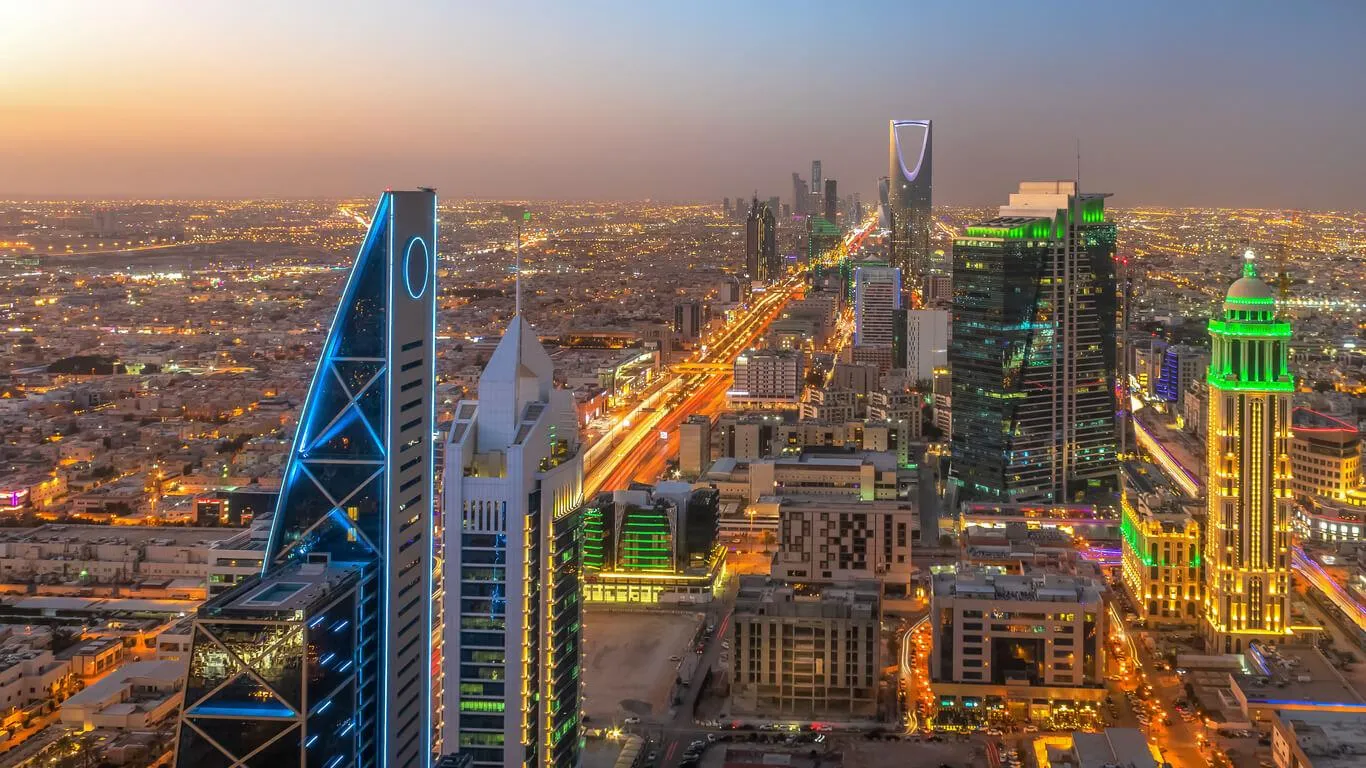
Jeddah Corniche promenade walkway facing turquoise waves

Best Time to Book for Lower Fares

Choosing the right booking period can help reduce flight expenses when traveling from the United States to Saudi Arabia.

The best time to book flights to saudi arabia depends on the season, demand, and route availability. Booking earlier often provides more choices and better prices, especially during busy travel periods.

Travelers should consider:

  • Avoiding last-minute bookings when possible.
  • Comparing different travel dates.
  • Checking prices during different seasons.
  • Planning around major holidays and events.

Flexible travel dates can make a significant difference in overall flight costs.

Aerial view of Jeddah seaside parks and highway

eVisa for US Citizens: What You Need

US citizens can apply for the Saudi electronic visa if they meet the eligibility requirements. The saudi evisa for us citizens makes the application process easier by allowing eligible travelers to complete the process online before traveling.
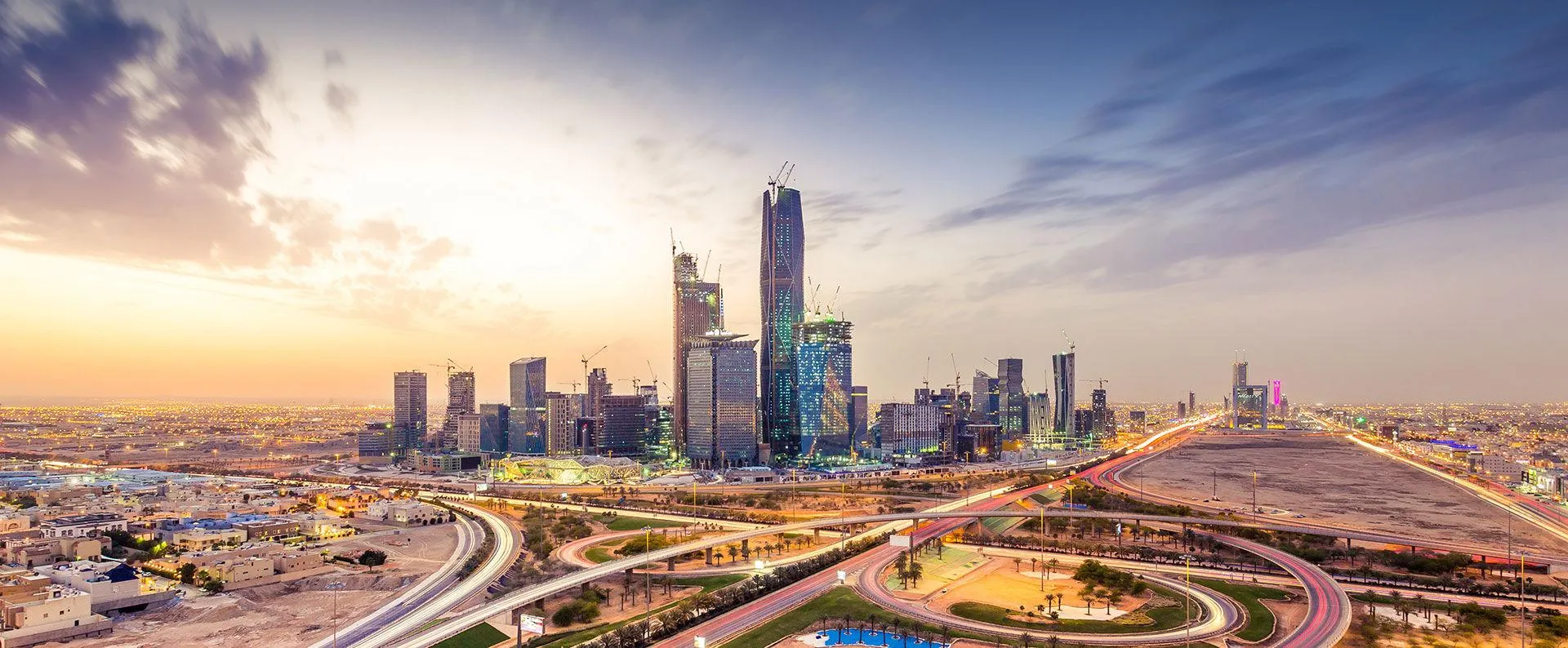
Aerial view of Kingdom Centre tower Riyadh city

Before applying, visitors should prepare the required information and documents, including:

  • Valid passport.
  • Personal details matching travel documents.
  • Required application information.
  • Approved payment method.

For complete details about visa requirements, travelers can review our full Saudi Arabia visa guide before submitting their application.

US travelers should also check the general entry requirements checklist to confirm they have everything needed before departure.

Current US State Department Travel Advisory (Check Before You Book)

Current US State Department Travel Advisory

Before traveling, US visitors should review the latest official travel information and understand current recommendations related to Saudi Arabia.

The saudi arabia travel advisory provides important updates that travelers should check before booking flights or finalizing their plans.

Travelers should stay informed about:

  • Entry requirements.
  • Local regulations.
  • Safety recommendations.
  • Travel conditions that may affect their plans.

Checking official updates before departure helps visitors make informed decisions and prepare properly for their journey.

Time Zone and Jet Lag Tips

Saudi Arabia operates on Arabian Standard Time, which creates a significant time difference for many travelers arriving from the United States.

The time difference can affect sleep patterns, especially after long international flights.

Riyadh illuminated night skyline with Al Faisaliah Tower

Helpful tips for adjusting include:

  • Adjusting your sleep schedule before departure.
  • Staying hydrated during the flight.
  • Getting natural light after arrival.
  • Avoiding heavy meals before sleeping.
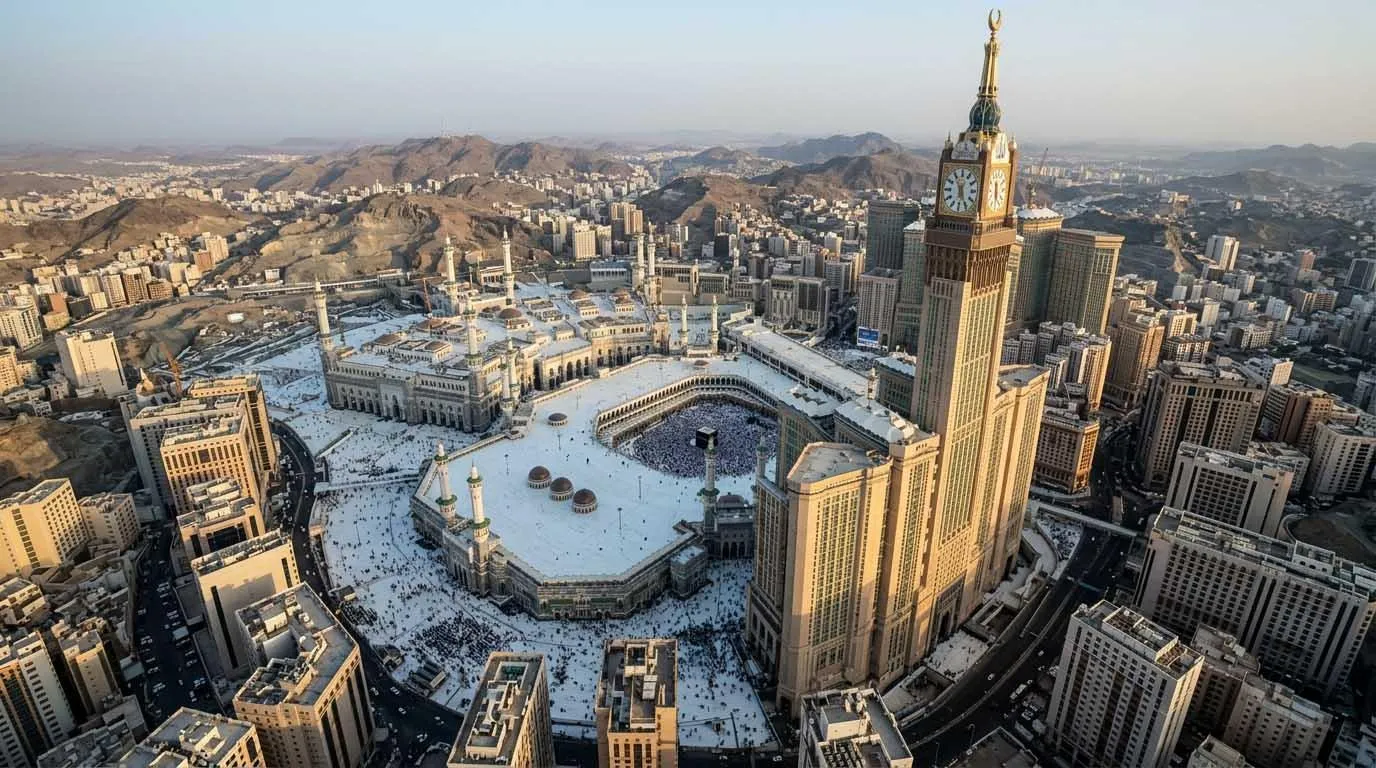
Planning your first day with lighter activities can help your body adjust gradually after a long journey.

Scenic view of misty clouds over Abha mountains

First-Time American Visitor: Culture and Dress Code Basics

For many us citizens visiting saudi arabia, understanding local culture and customs is an important part of preparing for the trip.

Saudi Arabia offers visitors a welcoming experience, but respecting local traditions helps create smoother interactions and a more enjoyable stay.

Travelers should consider:

  • Dressing respectfully in public areas.
  • Understanding local customs.
  • Respecting religious and cultural practices.
  • Learning basic etiquette before arrival.

Choosing suitable clothing and showing awareness of local traditions helps visitors feel more comfortable while exploring cities, historical locations, and cultural attractions.

There are many things worth doing while you’re there, from visiting heritage sites and exploring modern cities to experiencing desert landscapes and local cuisine.

Abha mountain highway at sunset with winding turns

Plan Your US-to-Saudi Arabia Trip With Local Experts (CTA)

Ready to travel from the United States to Saudi Arabia? Contact our team to plan your journey with local expertise, from choosing destinations and arranging transportation to creating a complete itinerary that matches your interests.

Modern architecture in Riyadh skyline during golden hour

We can help you organize a smooth Saudi Arabia experience with carefully planned routes, cultural activities, and travel support from start to finish.

How to Plan a Trip to Saudi Arabia: Complete Travel Planning Guide

Planning a trip to Saudi Arabia requires more than booking a flight and choosing a hotel. The Kingdom offers diverse experiences, from historic cities and cultural landmarks to deserts, mountains, and coastal destinations. A clear plan helps you choose the right season, manage your budget, prepare your documents, and build a smooth travel experience. Are you preparing your first trip to Saudi Arabia and unsure where to begin?

This guide walks you through every important step, including visa preparation, budgeting, destination selection, transportation, accommodation, packing, and essential travel information. Following this saudi arabia travel planning guide will help you organize your journey with confidence and avoid common planning mistakes.

Step 1: Decide When to Go

Elephant Rock AlUla illuminated against night sky

Choosing the right travel time is the first step in planning your Saudi Arabia trip. The best season depends on the destinations you want to visit and the activities you want to experience.

Saudi Arabia has different climates across its regions. Winter months are usually more comfortable for exploring cities, deserts, and outdoor attractions, while summer temperatures can be challenging in many areas.

Before selecting your dates, review our best-time-to-visit guide to understand how weather changes between regions and choose the period that matches your travel goals.

Your decision should consider:

  • Weather conditions in your chosen destinations.
  • Major events and festivals happening during your visit.
  • Accommodation availability during busy seasons.
  • Your preferred activities and outdoor experiences.

A good travel date makes your itinerary more comfortable and helps you enjoy more of what Saudi Arabia offers.

Dramatic Elephant Rock formation AlUla at sunset

Step 2: Check Your Visa Eligibility

Before booking flights or hotels, confirm your visa requirements. Understanding your eligibility early helps you avoid problems and ensures you have enough time to complete the application process.

Visa rules depend on your nationality, passport, and purpose of travel. Some travelers may qualify for an electronic visa, while others may need different arrangements before entering Saudi Arabia.

For complete details about requirements, documents, and application steps, check our full visa guide before moving forward with your travel plans.

As part of your saudi arabia trip checklist, make sure you prepare:

  • A valid passport.
  • Required visa documents.
  • Personal information matching your official documents.
  • Any additional requirements based on your nationality.

Completing this step early gives you more flexibility when arranging the rest of your trip.

Sunny day at Prophet Mosque Medina plaza

Step 3: Set a Realistic Budget

Creating a realistic budget is one of the most important parts of travel planning. Your total expenses will depend on your travel style, destinations, accommodation choices, transportation methods, food preferences, and activities.
Saudi Arabia can accommodate different travel budgets, from affordable trips to luxury experiences. Setting a budget before booking helps you make better decisions and avoid unexpected costs.

Review our full trip cost breakdown to understand expected expenses for flights, hotels, transportation, food, activities, and other travel needs.

Your budget should include:

  • Flight tickets.
  • Visa fees.
  • Accommodation.
  • Daily meals.
  • Transportation between cities.
  • Activities and tours.
  • Emergency expenses.

A clear budget allows you to design a trip that matches your expectations without unnecessary spending.

Step 4: Choose Your Destinations

Saudi Arabia offers many destinations, and choosing where to go depends on your interests and available travel time.

Some travelers prefer cultural experiences, while others focus on nature, adventure, beaches, or religious destinations. Building your itinerary around your priorities helps you make the most of your visit.

You can explore our guide to the best places to visit to compare destinations and select the locations that fit your travel style.

Popular destinations include:

  • Riyadh for modern experiences and heritage sites.
  • AlUla for ancient history and desert landscapes

Ancient Qasr al Farid tomb AlUla in desert sands

  • Jeddah for Red Sea attractions and historic neighborhoods.
  • Asir and Abha for mountains and natural scenery.
  • Mecca and Medina for religious travel.

Prophet Mosque Medina courtyard and green dome

When creating your saudi arabia itinerary planning, consider:

  • How many days you have available.
  • Distance between destinations.
  • Transportation options.
  • Activities you want to include.

Avoid trying to visit too many places in a short time. A balanced itinerary gives you more time to enjoy each destination.

Step 5: Book Flights and Plan Transport Between Cities

Transportation planning is essential because Saudi Arabia is a large country with significant distances between major destinations.

Domestic flights are often the fastest way to move between cities such as Riyadh, Jeddah, AlUla, and Abha. Other options include trains, buses, ride-hailing services, and rental cars depending on your route.

When planning transportation, consider:

  • Flight schedules.
  • Travel time between cities.
  • Transportation costs.
  • Whether you need flexibility for remote destinations.

A well-organized route reduces wasted time and allows you to enjoy more experiences during your stay.

For your first trip to Saudi Arabia, planning transportation before arrival can make the journey easier, especially if you are visiting multiple regions.

Pink sunset over Kingdom Centre Riyadh skyline

Step 6: Sort Your Accommodation

Choosing the right accommodation depends on your destinations, budget, and preferred travel style.

Major cities such as Riyadh and Jeddah offer a wide range of hotels, while destinations like AlUla may have fewer options and require earlier booking.

When selecting accommodation, consider:

  • Location and distance from attractions.
  • Reviews and services.
  • Transportation access.
  • Price compared with your overall budget.

Booking early is especially important during peak travel periods and major events when demand increases.

Your accommodation should support your itinerary rather than create additional transportation challenges. Staying in convenient locations can save time and make daily exploration easier.

Kingdom Tower Riyadh night skyline glowing in purple

Step 7: Pack for the Culture and Climate

Packing correctly helps you stay comfortable and respect local customs during your visit.

Saudi Arabia has different weather conditions depending on the region and season. Desert areas, coastal cities, and mountain destinations may require different clothing choices.

Your packing list should include:

  • Comfortable clothing suitable for the weather.
  • Appropriate outfits for public places.
  • Comfortable walking shoes.
  • Sun protection items.
  • Personal essentials and travel documents.

Understanding cultural expectations is also important. Visitors should choose clothing that respects local traditions, especially when visiting public spaces and cultural or religious locations.

A thoughtful packing approach makes your experience smoother and helps you adapt to different environments.

Step 8: Know Before You Go (Customs, Dress Code, Apps)

Learning basic information before arriving can make your trip easier and more enjoyable.

Travelers should understand local customs, payment methods, useful applications, and general expectations regarding public behavior.

Important things to know include:

  • Dress code expectations.
  • Local customs and traditions.
  • Digital payment options.
  • Useful travel applications.
  • Emergency contact information.

Downloading helpful apps before arrival can improve your experience with transportation, navigation, communication, and daily services.

Visitors should also be aware of cultural practices and respect local traditions throughout their journey. Good preparation helps create a positive experience for both travelers and local communities.

Spectacular aerial view of Medina at sunset

The Shortcut: What a Guided Package Handles For You

Planning a Saudi Arabia trip independently can take time, especially when arranging transportation, accommodation, activities, and daily schedules.

A guided package can simplify the process by handling important details such as:

  • Destination planning.
  • Transportation arrangements.
  • Hotel selection.
  • Tour organization.
  • Local support.

For travelers visiting Saudi Arabia for the first time, a guided experience can provide convenience and reduce the stress of managing multiple bookings.

It also helps travelers discover destinations efficiently while benefiting from organized planning and local knowledge.

High aerial view of Riyadh city center along King Fahd Road

Ready to Start Planning? (CTA)

Ready to begin your Saudi Arabia journey? Contact us and let our team help you create a complete itinerary based on your travel dates, interests, and budget.

From choosing destinations to arranging transportation and experiences, we can help turn your travel plans into a smooth and memorable trip.

Transportation in Saudi Arabia: Complete Guide to Getting Around the Kingdom

Transportation in Saudi Arabia complete travel banner

Understanding Transportation in Saudi Arabia is an essential part of planning a smooth journey across the Kingdom. With modern airports, high-speed trains, public transport networks, ride-hailing services, and car rental options, travelers can move easily between major cities and tourist destinations. Are you wondering which transportation option is the fastest, most affordable, or most suitable for your itinerary?

This guide explains the main ways to travel around Saudi Arabia, from domestic flights and rail networks to buses, taxis, and rental cars. For more travel planning information, you can explore Saudi Arabia travel guide before arranging your routes.

Domestic Flights: The Fastest Way Between Cities

Domestic flights are the fastest option for traveling between major Saudi cities, especially when covering long distances. Airports connect destinations such as Riyadh, Jeddah, AlUla, Medina, and Abha with regular flight services.

For travelers visiting multiple regions, flying can save significant time and make it easier to include more destinations in a short trip. Transportation choices should also be considered alongside how transport costs fit into your overall budget when planning your journey.

Haramain High-Speed Rail: Jeddah, Mecca and Medina

The Haramain High-Speed Rail connects key destinations including Jeddah, Mecca, and Medina, providing a comfortable and efficient travel option.

This railway service is especially useful for travelers visiting religious destinations or moving between cities along the western route. The haramain high speed rail offers a convenient alternative to road transportation with shorter travel times.

Haramain train station interior Jeddah modern terminal architecture

Riyadh Metro and City Public Transport

The Riyadh Metro is designed to improve transportation within the capital by connecting different areas through an organized public transport system.

Passengers boarding train at Riyadh Metro passenger station

The metro supports easier movement around Riyadh, especially for visitors exploring attractions, business areas, and city neighborhoods. Along with buses and other services, it provides more options for travelers who prefer not to drive.

The development of the riyadh metro makes city transportation more accessible for residents and visitors.

Riyadh Metro track KAFD with modern skyscrapers

Ride-Hailing Apps (Uber & Careem): Fares and Availability

Ride-hailing services are widely available in major Saudi cities and provide a convenient way to travel without renting a vehicle.

Apps such as Uber and Careem allow visitors to request rides, view estimated fares, and reach destinations easily. The availability of uber careem saudi arabia services makes local transportation simpler, especially for short city trips.

Prices can vary depending on distance, location, and demand during busy periods.

Palm lined walkway on Jeddah Corniche coastal road

Intercity Buses: The Budget Option

Intercity buses provide an affordable transportation option for travelers moving between Saudi cities.

They are suitable for visitors looking for lower-cost travel solutions while connecting destinations across the Kingdom. The saudi arabia intercity bus network offers routes between several major locations and can be a practical choice for budget-conscious travelers.

Driverless train on elevated Riyadh Metro rail system

Renting a Car in Saudi Arabia

Renting a car gives travelers more flexibility, especially when exploring destinations that are not easily connected by public transportation.

A rental vehicle can be useful for road trips, desert locations, and areas where visitors want more control over their schedule.

Scenic view of Jeddah waterfront drive sunset along Red Sea

Requirements

To rent a car in Saudi Arabia, travelers generally need a valid driving license, identification documents, and must meet rental company requirements.

Visitors should check the specific conditions before booking to ensure they have all necessary documents.

When It’s Worth It

Car rental is most useful when exploring multiple destinations, remote attractions, or areas where public transportation options are limited.

For example, travelers visiting desert areas or planning flexible routes may find car rental saudi arabia options more convenient than relying on fixed schedules.

Sample Route: Getting from Riyadh to AlUla to Jeddah

A multi-city journey through Saudi Arabia can combine different transportation methods depending on distance and travel preferences.

Route Recommended Transportation
Riyadh to AlUla Domestic flight for faster travel
AlUla to Jeddah Domestic flight or planned road trip
Jeddah to Other Cities Train, flight, or local transport options

A route combining Riyadh, AlUla, and Jeddah allows travelers to experience modern cities, historical attractions, and coastal destinations. For more destination planning, you can explore our full guide to the best places to visit.

Haramain high speed train platform ready for passengers

Do You Need to Plan Transport Yourself?

Transportation planning depends on your destinations, travel style, and available time. Some travelers prefer organizing every detail independently, while others choose prepared itineraries that include transportation arrangements.

Understanding the available options helps you choose the best method based on comfort, budget, and schedule.

Modern station and elevated Riyadh Metro bridge at sunset

Let Us Handle the Logistics (CTA)

Planning your Saudi Arabia transportation does not have to be complicated. Contact us and let our team organize your routes, transfers, and travel logistics to create a smoother journey across the Kingdom.